
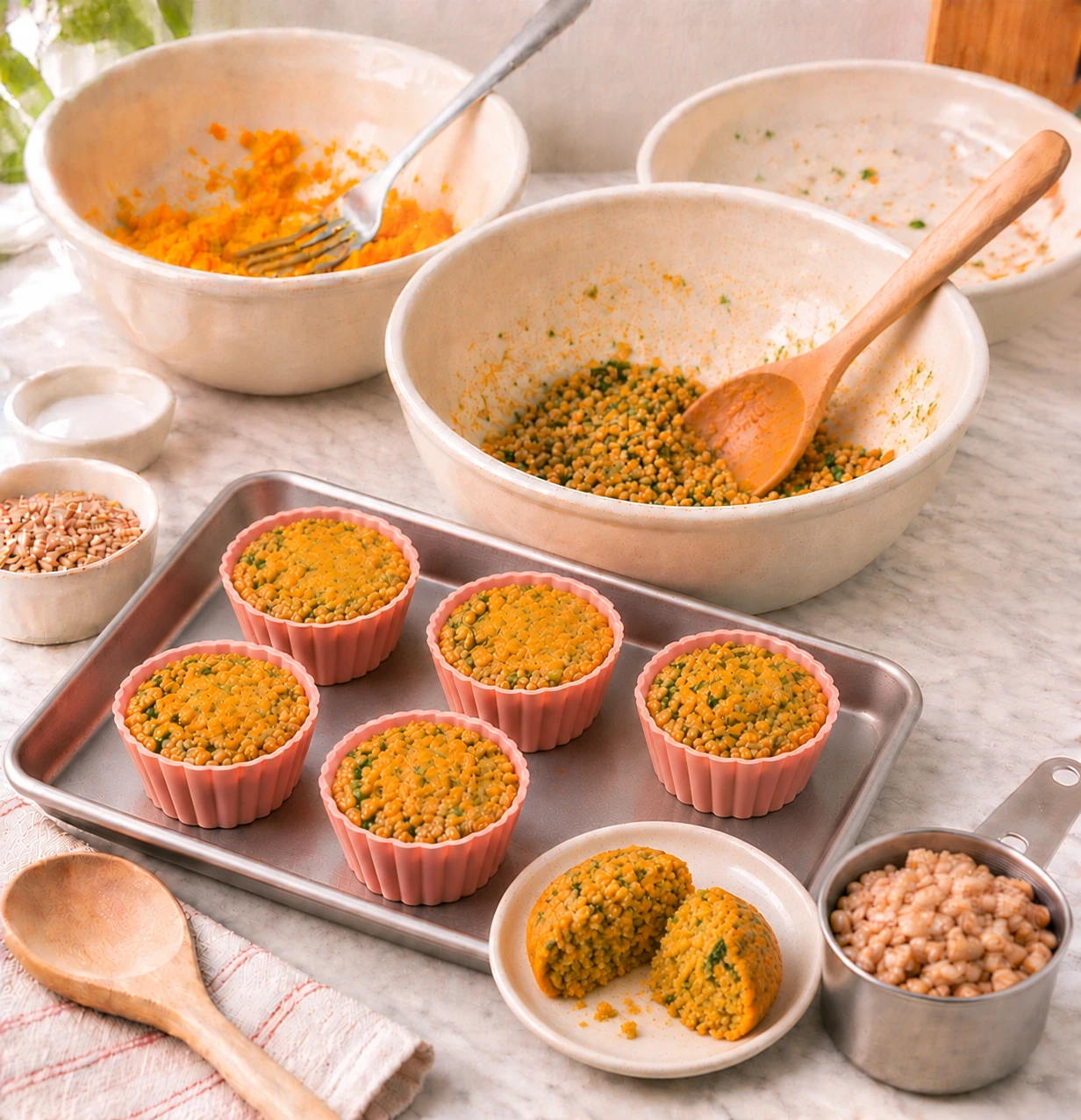
Winter squash, whole grains and fresh greens come together in these simple savory timbales, a homemade snack for companion birds. Made with plain cooked spelt, soft squash and finely chopped vegetables, they contain no added salt, sugar, oil or seasoning. Baking the mixture in individual portions gives it a different texture and shape from everyday bird chop, making snack time a little more interesting. The finished timbales should hold together while remaining soft enough to break apart easily, never hard or crunchy. Use fully cooked spelt and plain, carefully prepared vegetables. These are occasional enrichment snacks, not a substitute for a nutritionally balanced, species-appropriate diet. Introduce unfamiliar ingredients gradually and consult an avian veterinarian before making major dietary changes.
Safety first: Keep treats and extras under about 10% of your bird's daily food - the regular diet should do the heavy lifting.
Foods to avoid
Never add salt, sugar, honey, butter, cooking oil, stock, garlic, onion, chocolate, avocado or seasoning blends. Do not use mouldy, spoiled or improperly stored ingredients. Spelt contains gluten, so it should not be assumed suitable for every bird. Check individual ingredient suitability with an avian veterinarian, especially for birds with dietary restrictions. Avoid hard, undercooked kernels and large vegetable pieces. This snack is not a balanced staple food and should not displace a bird's established diet.
Ingredients
Instructions
Cook the Spelt Thoroughly: Rinse the whole spelt under running water, then place it in a saucepan with fresh water. Bring to a boil and simmer gently according to the grain package directions until every kernel is completely tender, without adding stock, salt, oil, butter or seasoning; drain thoroughly through a fine-mesh sieve and spread in a clean, shallow dish to cool. Press a few kernels between your fingers to check that they are soft throughout, with no hard or chalky centres, then measure the required amount once the grain has cooked and cooled.
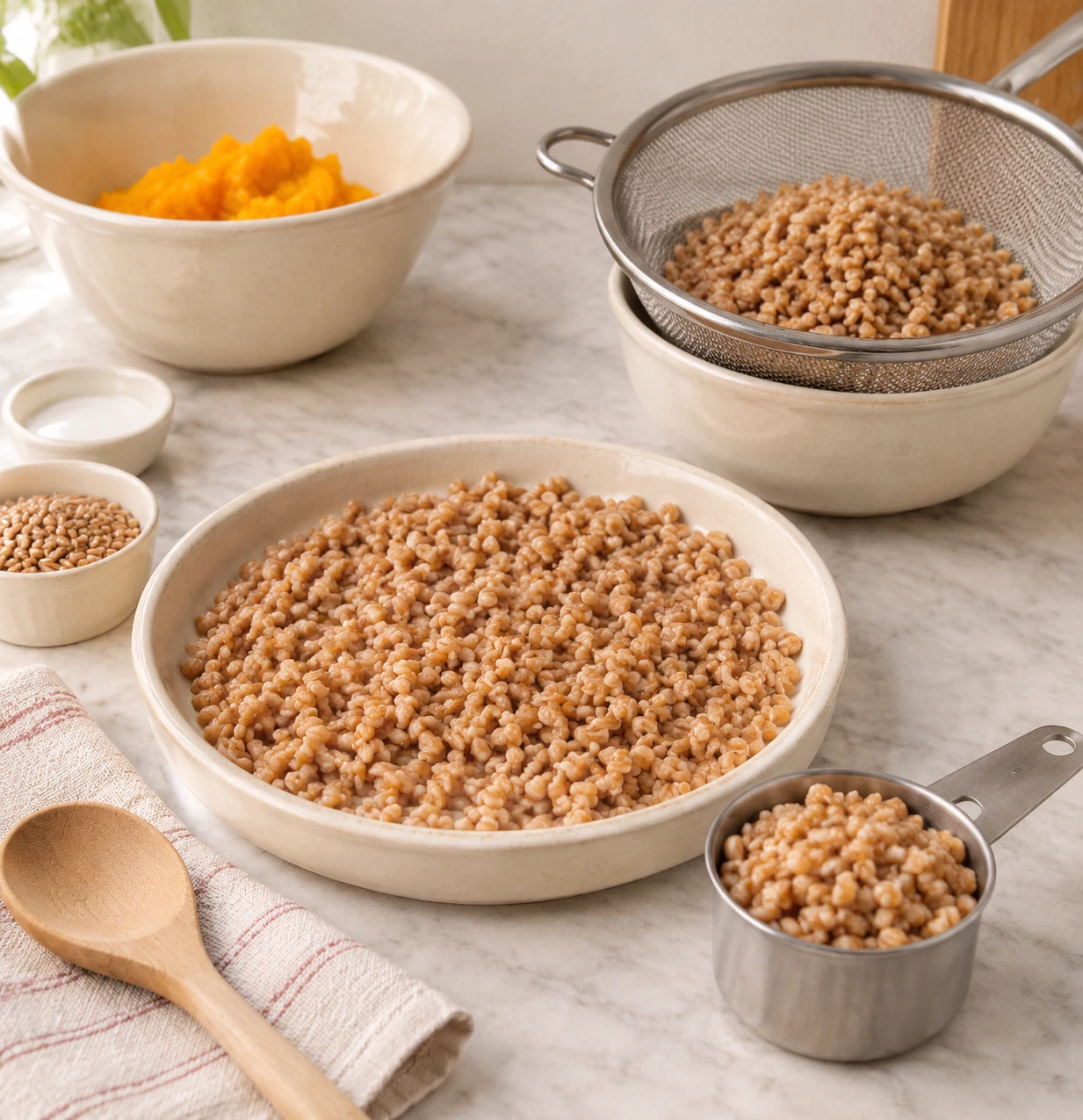
Prepare the Squash and Greens: Remove the skin, seeds and stringy centre from the winter squash, then cut the flesh into small pieces and steam or boil in plain water until completely tender. Drain, mash with a fork and leave to cool before measuring. Wash the leafy greens and carrot carefully, remove any tough stems, finely chop the greens and grate the carrot, keeping everything plain and avoiding raw, tough vegetable pieces that could make the finished timbales difficult to break apart.
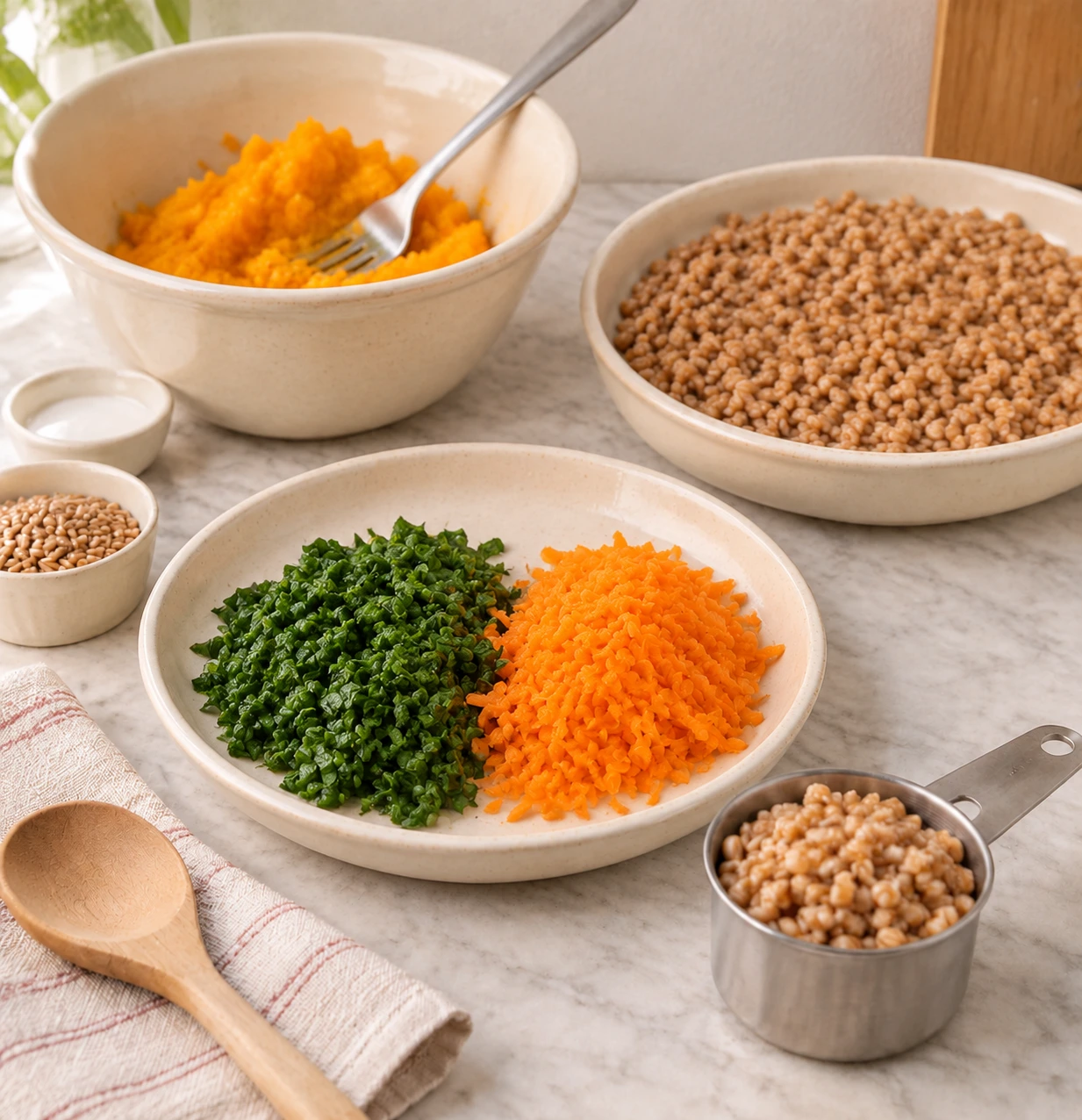
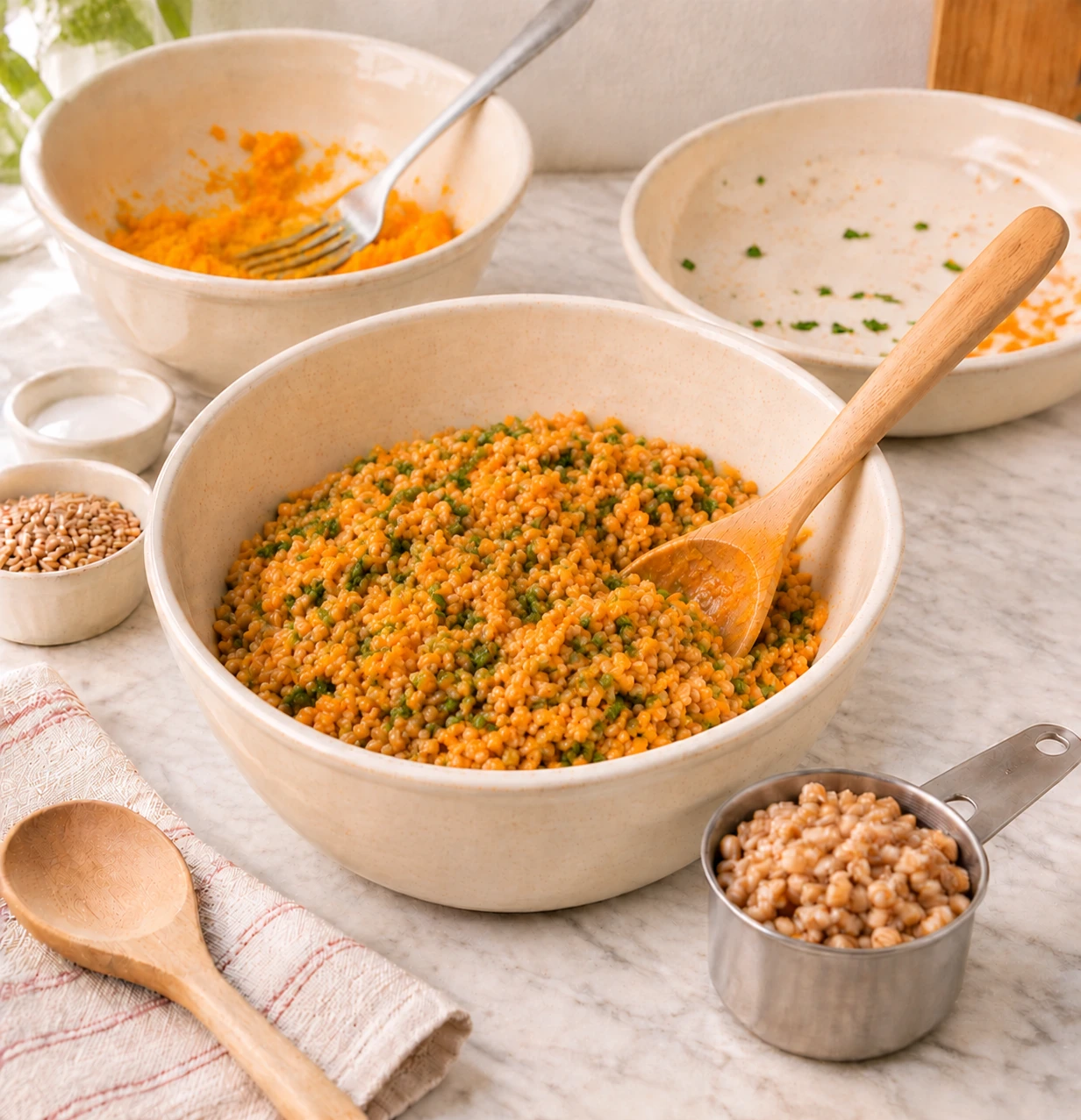
Mix the Timbale Mixture: Put the cooled cooked spelt into a clean mixing bowl and add the mashed squash, finely chopped greens and grated carrot. Fold everything together until evenly distributed, aiming for a moist mixture that holds together when pressed without becoming watery or runny; if it is too dry, add water a teaspoon at a time, or add a little more thoroughly cooked and drained spelt if it is too loose. Break up any large clusters and check that there are no hard grain kernels or oversized vegetable pieces left in the mixture.
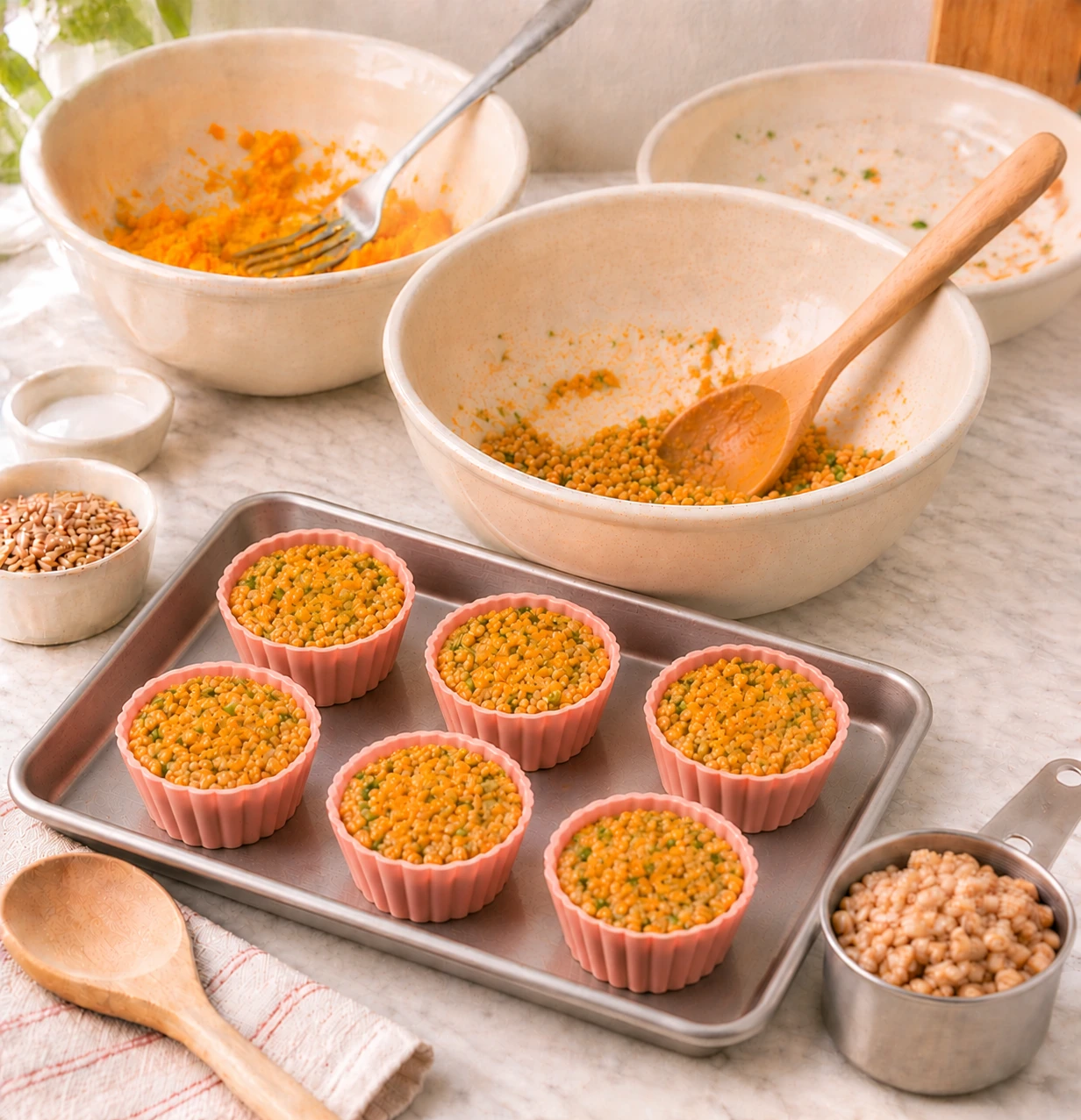
Fill the Individual Moulds: Preheat the oven to 160°C and spoon the mixture into clean, small silicone or oven-safe moulds, using approximately one tablespoon per portion. Gently press each portion with the back of a spoon to remove large air pockets and create an even surface, taking care not to pack the mixture so tightly that it becomes dense; keep the moulds similar in size for even cooking. Place the filled mould on a stable baking tray before transferring it to the oven, and use clean utensils while keeping uncooked or unwashed produce away from the prepared mixture.
Bake, Cool and Check the Texture: Bake at 160°C for approximately 20 to 25 minutes, checking toward the end rather than relying on the cooking time alone. The portions should feel set and hold together when gently pressed, without developing a hard crust or becoming dry and brittle; remove the tray and let the timbales cool completely in their moulds before carefully lifting them out. Break one open to check the centre is moist but not wet, with tender grain and no uncooked ingredients, and never serve a warm portion or keep any portion that smells unusual or shows signs of spoilage.
Made this recipe?
Tap the paw so other pet parents know it’s worth making.
Be the first to make it
Tips & serving
Allow each timbale to cool completely before offering it. Start with a small piece, approximately pea-sized for a small parrot, and adjust the offering to the bird's species, body size and established diet. Larger parrots may manage a somewhat bigger piece, but these remain occasional treats rather than meal replacements. Observe how the bird handles the texture and remove uneaten food promptly. Introduce unfamiliar ingredients gradually. Always discuss major diet changes, frequent new foods or individual feeding concerns with an avian veterinarian.
- Provides a different way to present cooked whole grains alongside familiar vegetables, adding variety to occasional snack time.
- Individual moulded portions make it easier to offer small quantities without serving an oversized piece.
- The soft but structured texture can encourage gentle exploration, picking and breaking during supervised enrichment.
- Using plain ingredients without added salt, sugar or seasoning keeps the preparation simple and transparent.
- Cook the spelt until every kernel is tender, then drain it thoroughly to prevent excess moisture weakening the timbales.
- Mash the squash smoothly but retain some grain texture so the finished portions are cohesive rather than pasty.
Storage
Refrigerate fully cooled timbales in a clean, airtight food container at 4°C or colder. Keep the container separate from raw food and remove only the quantity needed for each serving. For longer storage, freeze individual cooled portions in a sealed freezer-safe container, separated with food-safe baking paper. Use within one month for best quality. Defrost in the refrigerator, use promptly and never refreeze a thawed portion.
Substitutions
Butternut squash can be replaced with plain cooked pumpkin or another suitable winter squash, provided the flesh is fully cooked, seed-free and mashed. Keep the replacement quantity similar so the mixture retains its shape. Kale can be replaced with a small amount of another confirmed bird-safe leafy green, such as pak choi. Wash it thoroughly, remove tough stems and chop it finely. Check suitability for the particular bird species before substituting. If whole spelt is unavailable, another plain, fully cooked whole grain may be considered only after checking that it is suitable for the bird.
Birds recipe FAQ
Can I serve this snack every day?
Treat it as an occasional extra, not a meal plan. Allow each timbale to cool completely before offering it. Start with a small piece, approximately pea-sized for a small parrot, and adjust the offering to the bird's species, body size and established diet.
Is plain cooked whole spelt okay for birds?
This recipe uses plain cooked whole spelt in a small, bird-appropriate amount. Skip it if your bird has a known sensitivity, and read the foods-to-avoid note on this page before serving.
How should I store leftovers?
Refrigerate fully cooled timbales in a clean, airtight food container at 4°C or colder. Use within 48 hours because the moist cooked grain and vegetable mixture is perishable.
How should I introduce this snack?
Start with a taste-size portion next to your bird's usual food, and hold off on serving more until you have seen that it agrees with them.
Can all companion parrots eat spelt?
Not automatically. Spelt is a wheat-related grain and contains gluten. Individual dietary needs, species and existing restrictions matter. Check with an avian veterinarian before introducing it, particularly if your bird has a prescribed diet or a history of food intolerance.
How do I know when the timbales are cooked properly?
They should hold their individual shape and feel set when gently pressed, without developing a hard or crunchy exterior. Once completely cooled, break one open. The centre should be moist but not wet, and the spelt should remain tender rather than chalky or hard.
Sources