Fresh foods can become more interesting when a bird has to explore their arrangement rather than simply finding everything in a dish. This pear and kale foraging garland turns a few familiar ingredients into a hanging snack that encourages natural reaching, nibbling and food exploration. It is a simple preparation that does not need cooking, special coatings or complicated equipment. Kale provides the leafy base, while ripe but firm pear adds small pieces of fruit between the leaves. The arrangement should always be made with clean, untreated, bird-safe supports and placed where your bird can approach it comfortably. Keep the garland small, supervise its use and remember that fresh snacks complement rather than replace a nutritionally balanced bird diet.
Safety first: Offer a small taste the first time and watch your bird for any tummy upset before serving more.
Foods to avoid
Never use avocado, chocolate, caffeine, alcohol, onion, garlic, honey, syrup, artificial sweeteners or added salt in this preparation. Pear seeds and core must be removed. Do not use painted, varnished, chemically treated or unidentified branches, metal wire, plastic ties, elastic bands or loose strings that a bird could chew, swallow or become entangled in. Avoid wilted, spoiled or mouldy produce. Do not leave fresh fruit hanging in the enclosure for extended periods, as it can spoil. Always supervise the bird while the garland is being used.
Ingredients
Instructions
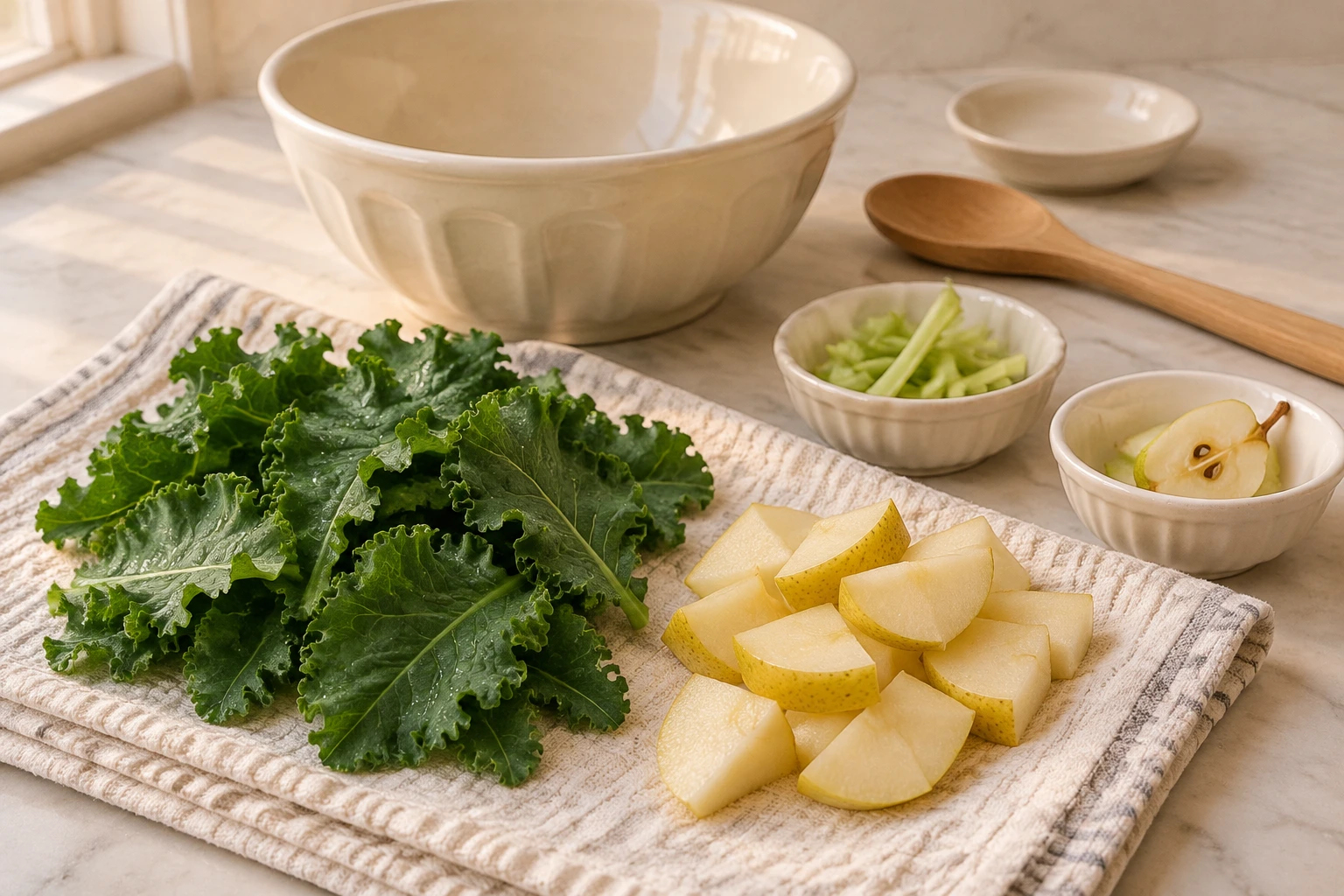
Wash and Prepare the Produce: Rinse the kale leaves and pear thoroughly under cool running drinking water, gently rubbing the leaf surfaces to remove dirt and visible residue. Drain and pat everything dry with a clean towel. Remove the kale's tough central ribs and discard the pear core, seeds and stem, keeping only the clean flesh. Removing excess surface moisture helps the finished garland stay fresher for longer.
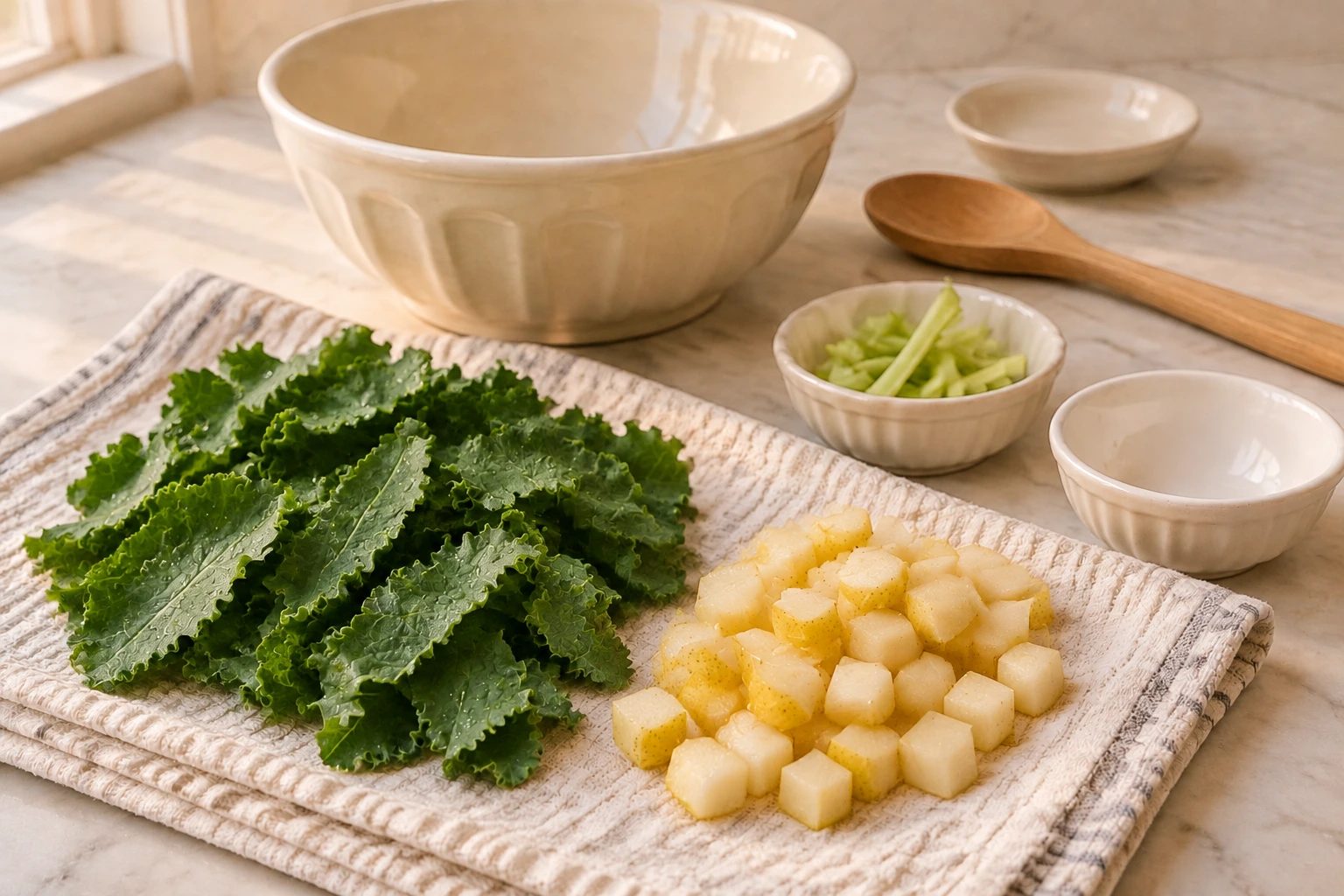
Cut the Pear and Kale: Cut the pear flesh into small, manageable pieces appropriate for the size of the bird, generally around 5 to 8 mm for a small companion bird. Tear or cut the kale into broad strips that are large enough to fold around the natural support without breaking apart. Keep the pieces relatively consistent so the garland is balanced and the fruit does not become too heavy in one section.
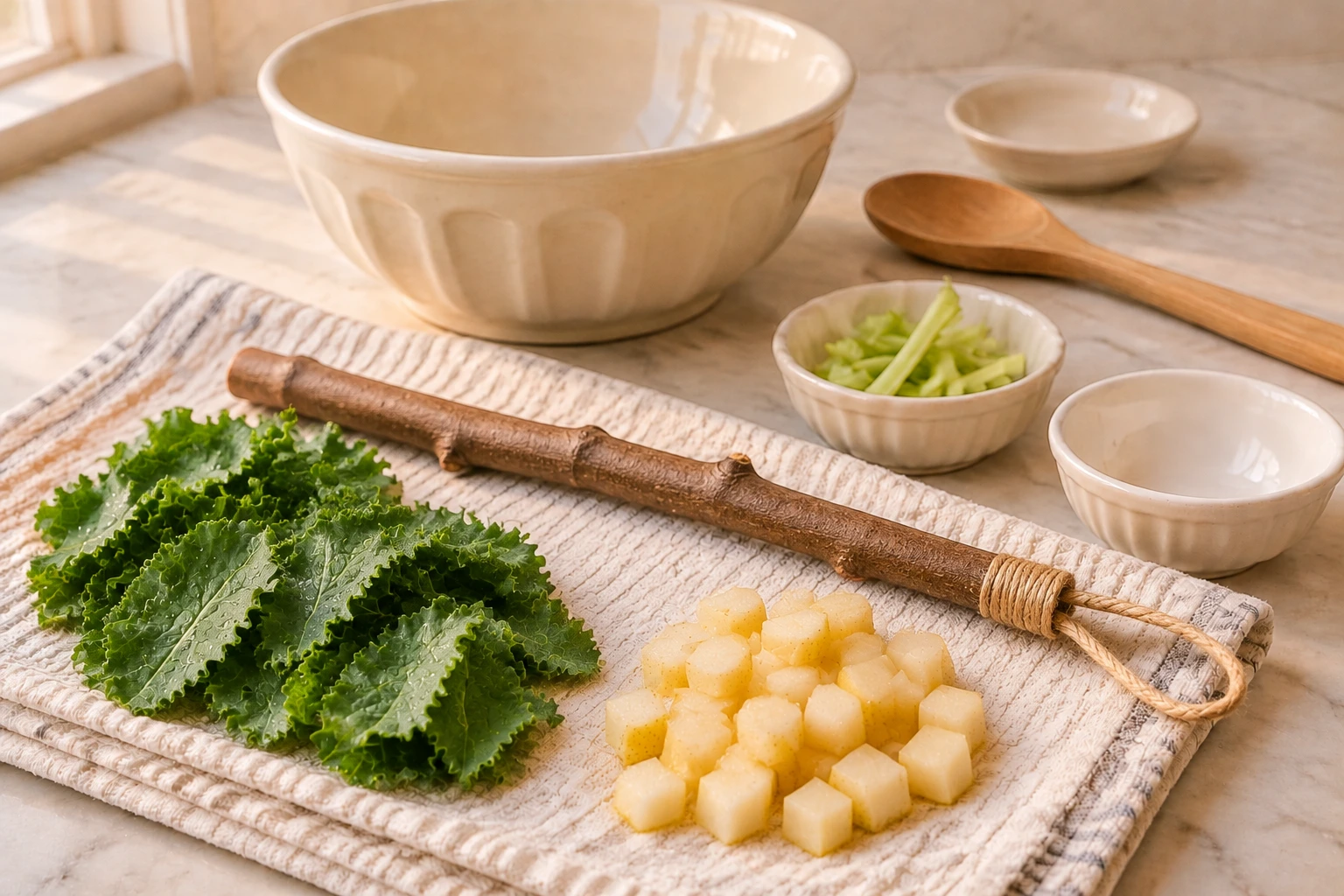
Prepare the Natural Support: Inspect the untreated bird-safe branch carefully and make sure it is clean, dry, free from sharp splinters and suitable for the bird's species and size. Do not use painted, varnished, chemically treated or unidentified garden branches. Position the branch horizontally over the preparation area and secure the natural cotton string around one end so the finished arrangement can be hung safely outside the bird's reach. Keep the string attachment short and inaccessible to chewing.
Build the Pear and Kale Garland: Fold the kale strips loosely around the branch, alternating their positions so the leaves form several accessible pockets along its length. Tuck a few small pear pieces between the leaves without packing them tightly or using fruit puree, honey, syrup or another sticky binder. Make sure every piece is held by the arrangement itself and cannot easily fall into a large cluster. Leave enough open space for the bird to reach the food without getting tangled.
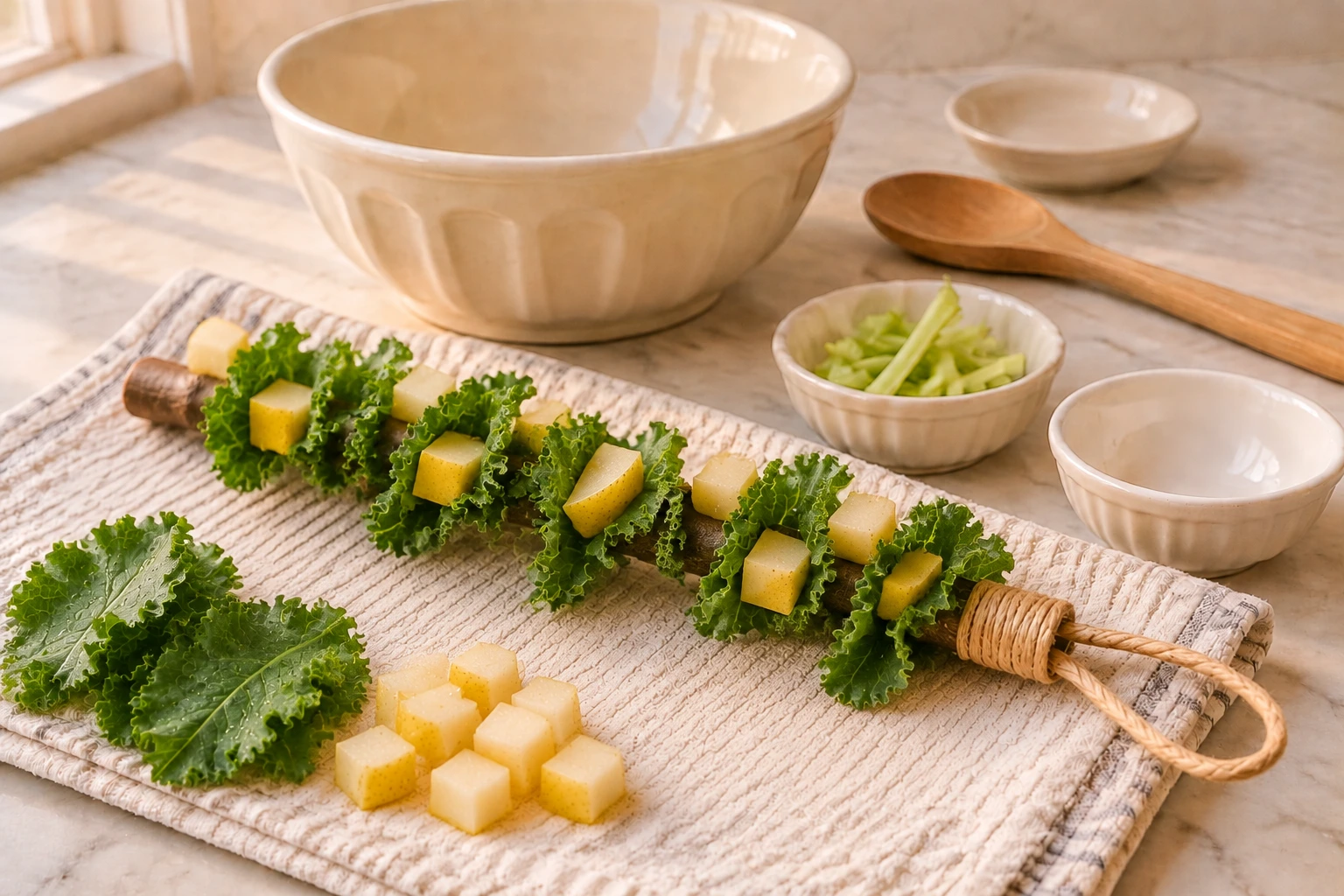
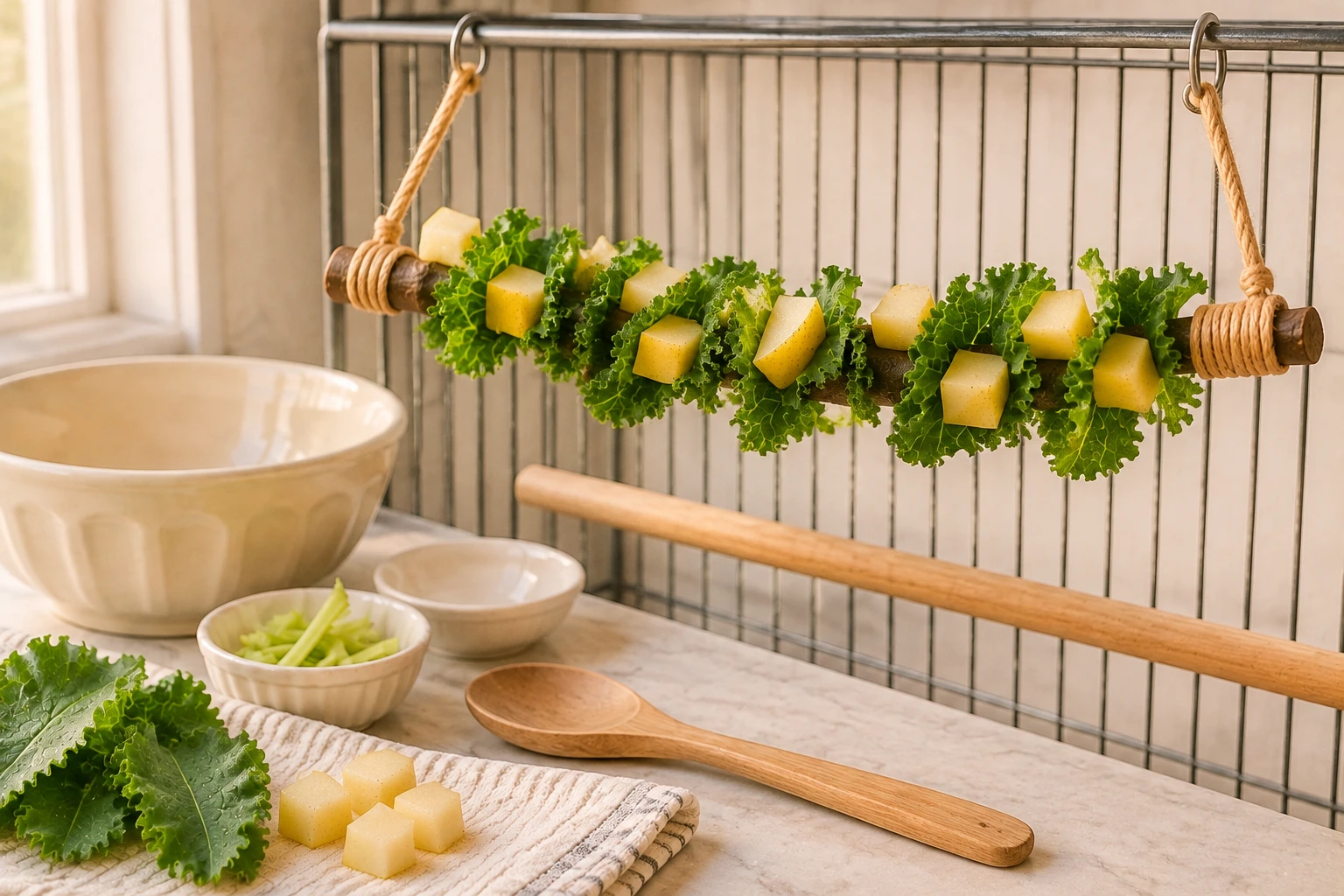
Inspect and Hang for Supervised Foraging: Check that the branch is stable, all food pieces are accessible and there are no loose string loops, sharp edges or small detachable parts that could create a hazard. Hang the garland securely from an appropriate bird-safe attachment point, keeping the string and attachment outside the bird's chewing reach. Position it where your bird can approach naturally without being forced to stretch or climb awkwardly. Offer it under supervision and remove the remaining fresh food promptly when the session ends.
Made this recipe?
Tap the paw so other pet parents know it’s worth making.
Be the first to make it
Tips & serving
Offer a small garland as an occasional supervised snack, not as a replacement for your bird's regular complete and balanced diet. Adjust the quantity and piece size to the bird's species, body size and usual feeding routine. Introduce unfamiliar produce gradually and observe whether your bird accepts it comfortably. Remove uneaten fruit and leaves promptly, particularly in warm conditions. Discuss major diet changes with an avian veterinarian before changing your bird's established feeding routine.
- Changing how fresh food is presented gives birds an opportunity to investigate and explore their meals.
- Alternating leafy greens and fruit creates different textures and accessible places for gentle nibbling.
- The simple arrangement encourages interaction with familiar ingredients without relying on processed treat coatings.
- Preparing a small garland makes it easier to offer measured snack portions alongside regular feeding.
- Choose kale leaves that are fresh, firm and free from yellow patches, slimy areas or visible mould.
- Use firm ripe pear rather than very soft fruit, which can collapse and make the leaves slippery.
Storage
For the best freshness, assemble the garland immediately before serving. If preparation needs to happen in advance, refrigerate the washed and thoroughly dried kale and separately cut pear in clean, covered food containers. Do not refrigerate or reuse a garland after it has been hung in the bird's enclosure. Contact with beaks, droppings, feathers and cage surfaces can contaminate fresh food.
Substitutions
If kale is unavailable, a small amount of thoroughly washed romaine lettuce or another bird-appropriate leafy green can replace it. Choose a familiar food your bird already tolerates and avoid assuming that every leafy plant is safe. Firm fresh apple flesh can replace pear in a similar small quantity. Remove the core and every seed before cutting, and never use sweetened dried fruit, canned fruit in syrup or fruit preserved with added sugar. A different natural support may be used only when it is confirmed bird-safe, untreated, appropriately sized and free from sharp projections.
Birds recipe FAQ
Can I serve this snack every day?
Treat it as an occasional extra, not a meal plan. Offer a small garland as an occasional supervised snack, not as a replacement for your bird's regular complete and balanced diet.
Can birds have fresh kale leaves?
This recipe uses fresh kale leaves in a small, bird-appropriate amount. Skip it if your bird has a known sensitivity, and read the foods-to-avoid note on this page before serving.
How should I store leftovers?
For the best freshness, assemble the garland immediately before serving. If preparation needs to happen in advance, refrigerate the washed and thoroughly dried kale and separately cut pear in clean, covered food containers.
What's the safest way to try this with my bird?
Offer a small amount beside regular food, introduce one new recipe at a time, and watch appetite, stool, skin, and behavior for a day or two.
Can birds eat fresh kale?
Many companion birds can enjoy appropriately prepared kale as part of a varied diet. Wash the leaves thoroughly, remove tough central stems where appropriate and serve manageable pieces. Kale should contribute to dietary variety rather than become the only vegetable offered.
Can I leave a pear and kale garland in my bird's cage all day?
No. Fresh pear contains moisture and can deteriorate when left hanging in an enclosure. Offer the garland during a supervised feeding session, then remove any uneaten food promptly. Discard leftovers rather than refrigerating and serving a previously used garland again.
Sources