
A little extra care with cleanliness makes all the difference when preparing sprouts for your bird. Warm, damp conditions can encourage unwanted bacterial growth, so thorough rinsing, proper drainage and regular checks are essential. Take your time with each stage and use clean equipment throughout, from soaking the lentils to serving the finished mixture. This recipe combines properly sprouted lentils with fresh vegetables for a simple, textured snack. Offer it occasionally in small amounts alongside your bird's appropriate, balanced diet, rather than using it as a replacement for their regular food.
Safety first: Start with a small portion beside your bird's usual food and confirm bigger diet changes with your veterinarian.
Foods to avoid
Never use mouldy, fermented, slimy or foul-smelling sprouts. Do not use treated garden lentils, seed intended for planting, wild bird seed or lentils from an uncertain source. Avoid seasoning, salt, sugar, oil, butter, sauces, onion, garlic and avocado. Keep the preparation area, utensils, sprouting jar and feeding dish scrupulously clean. Damp sprouts are particularly vulnerable to bacterial contamination, and rinsing cannot reliably make a contaminated batch safe. Do not leave fresh food in the cage for extended periods or overnight.
Ingredients
Instructions
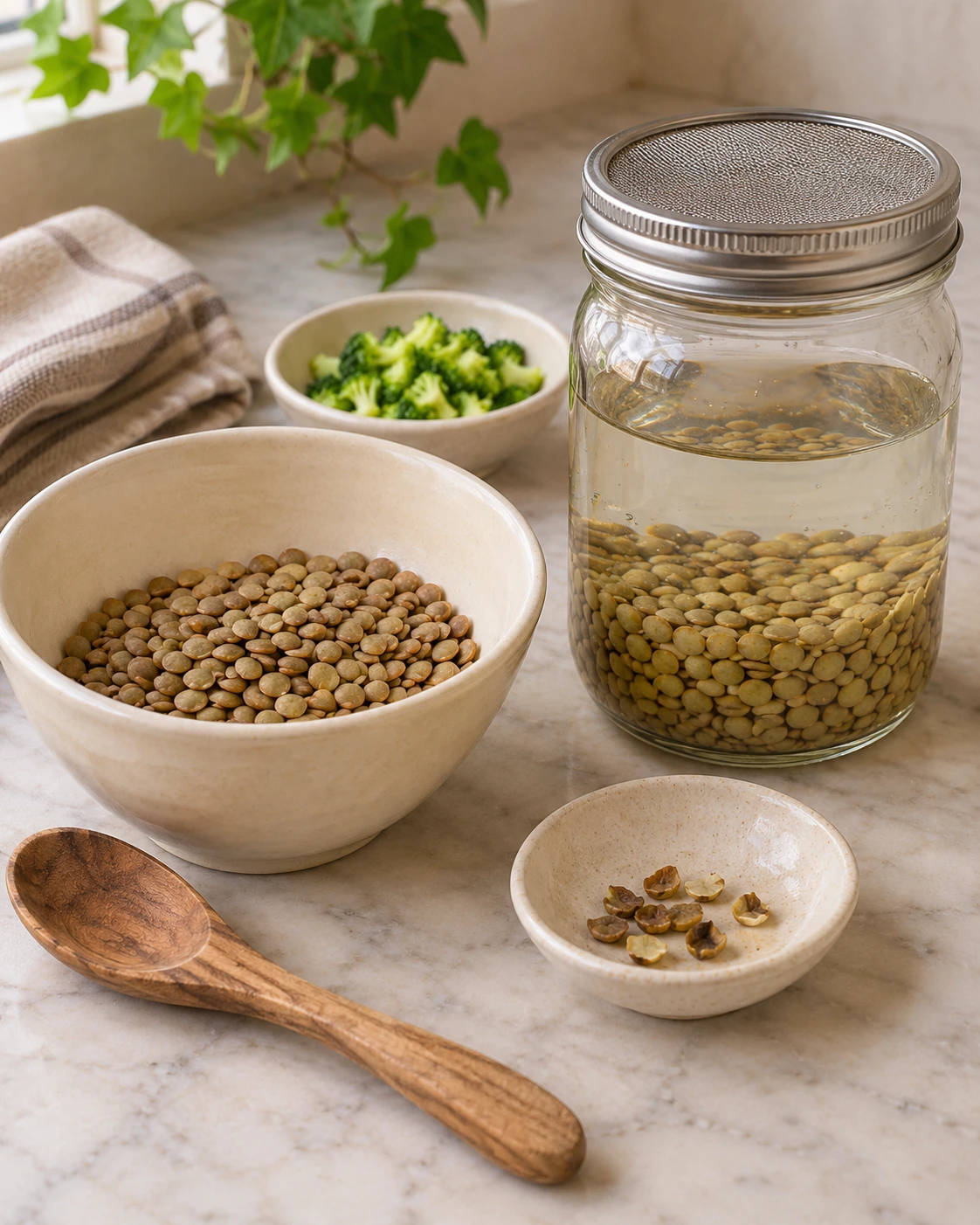
Sort and soak the lentils: Start with whole, food-grade lentils intended for human consumption and suitable for sprouting. Avoid garden seeds, treated planting seeds and lentils from uncertain sources, and pick out any damaged, discoloured or broken pieces. Rinse thoroughly under clean running water, gently moving the lentils with your fingers, then transfer them to a clean glass jar and cover generously with fresh drinking water, leaving room for expansion; fit a breathable mesh lid and soak for approximately 8 to 12 hours at normal room temperature, away from direct sunlight, before draining completely.
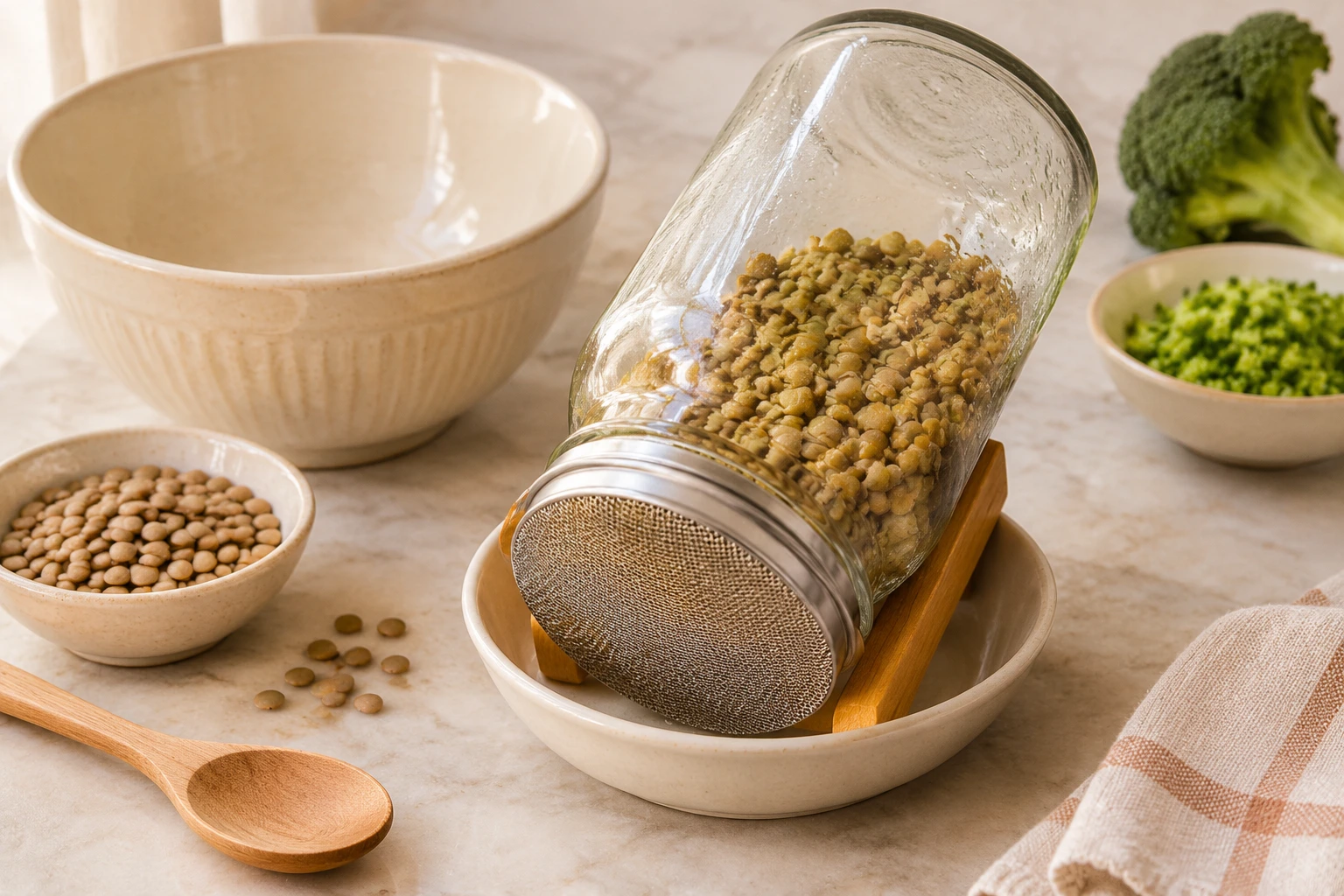
Rinse and begin sprouting: Once the soaking time is up, pour away all the water and rinse the lentils thoroughly with fresh drinking water, then drain completely through the mesh lid or a fine sieve. Return them to the jar and position it at an angle with the opening facing downward, allowing excess water to escape while air circulates; keep it out of direct sunlight in a clean, comfortably cool indoor location. Repeat the rinse-and-drain routine at least twice daily, never allowing water to collect at the bottom, and check for unusual odours, sliminess, discolouration or visible mould each time; if you suspect spoilage, discard the entire batch.
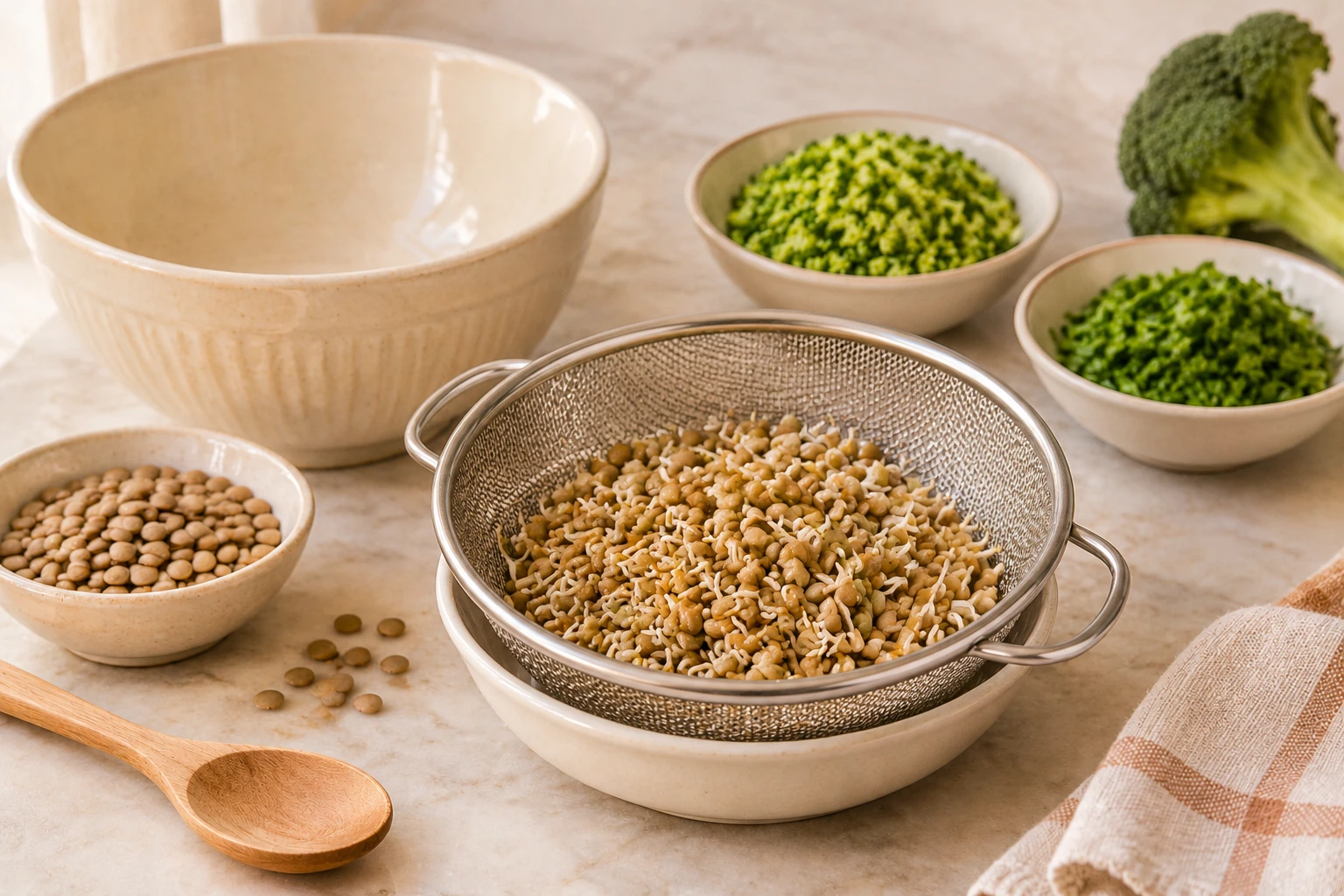
Check the sprouts and prepare the vegetables: Keep rinsing and draining the lentils twice daily until small, fresh-looking sprouts appear, usually within approximately 24 to 48 hours after soaking, although conditions and lentil varieties can affect the timing. Check their smell rather than relying on the clock alone: they should smell clean and fresh, with no sourness, fermentation or mustiness, and any questionable batch should be discarded rather than washed in an attempt to remove suspected spoilage. Once short sprouts have developed, give them one final thorough rinse and drain them very well; wash the broccoli and leafy greens separately under running water, pat dry with clean paper
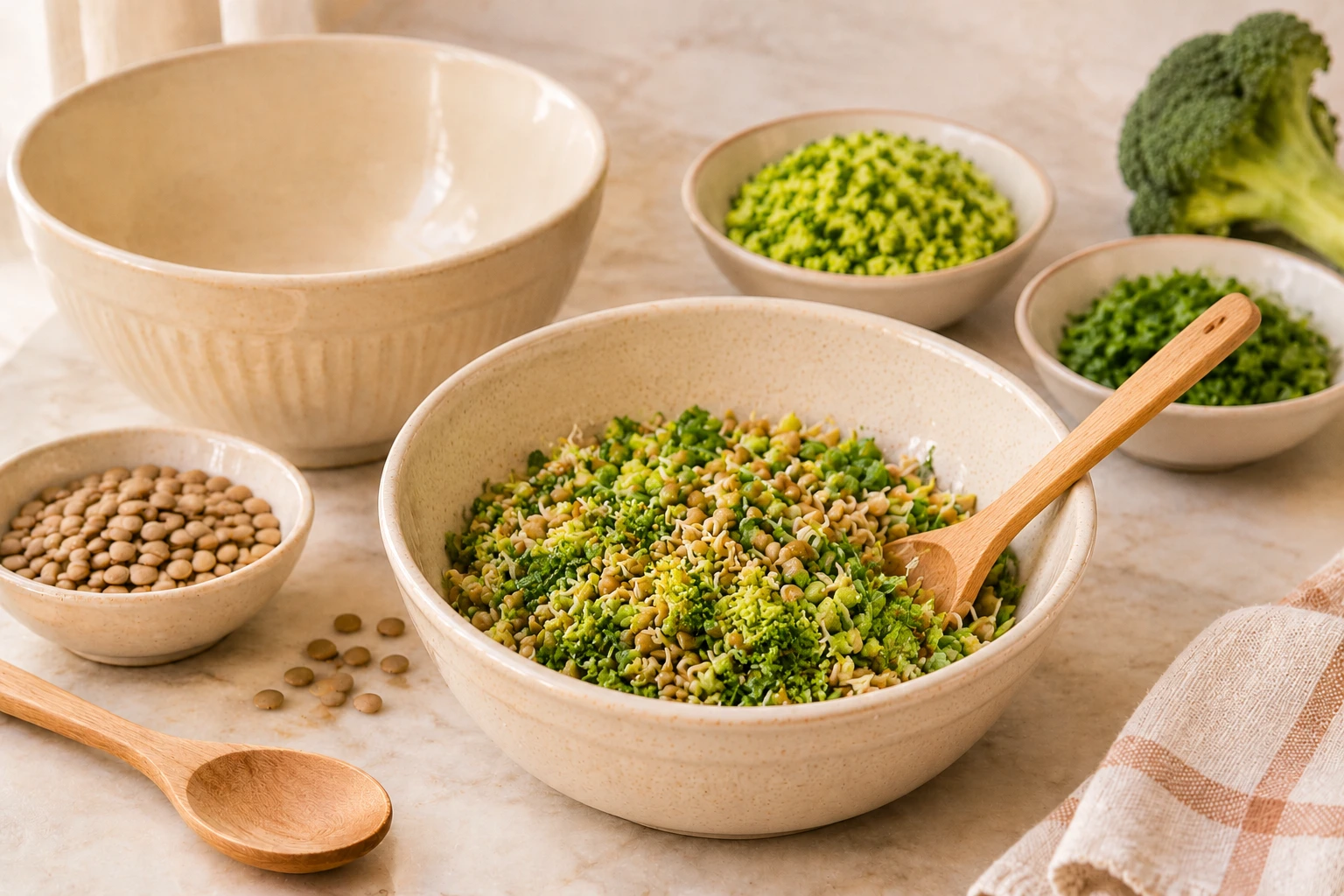
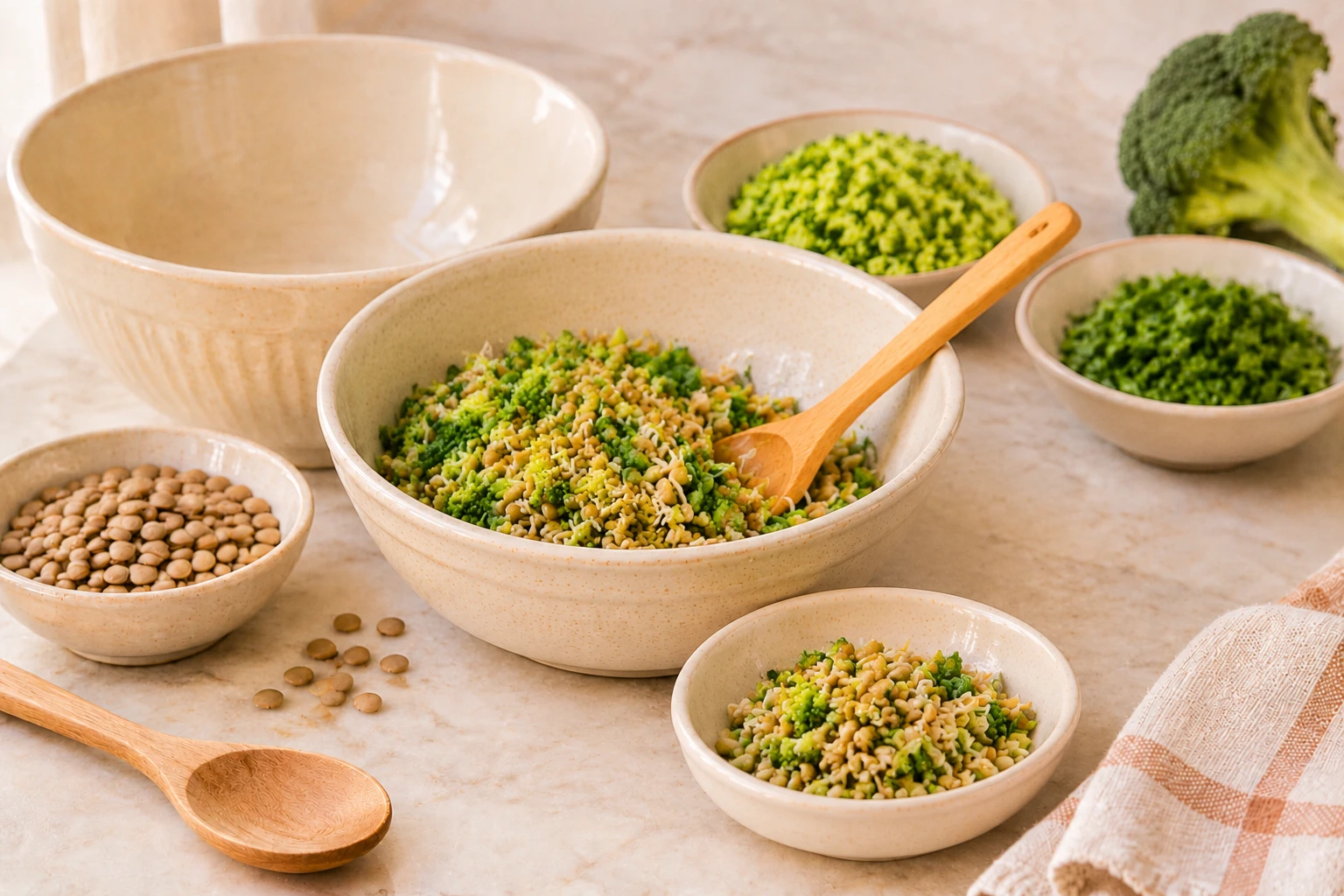
Combine the fresh ingredients: Add a small amount of thoroughly drained lentil sprouts to your clean glass mixing bowl, followed by the finely chopped broccoli and leafy greens. Gently distribute everything with a clean spoon so the vegetables are mixed throughout, keeping the mixture loose and slightly textured rather than mashing the sprouts or turning the vegetables into a wet paste; if the sprouts still hold excess moisture, drain them again before mixing. Leave out salt, oil, butter, dressing, seasoning and sauces, and check that the finished mixture looks fresh, is dry enough to handle easily and has no standing liquid.
Portion and serve the foraging bowl: Spoon only a small tasting portion into a clean, shallow bird feeding dish, adjusting the piece size to suit your individual bird, especially if you have a smaller species that needs finer chopping. Spread the ingredients loosely so your bird can explore and pick through the different textures, then place the dish in its usual secure feeding position, separate from regular food and fresh drinking water; supervise the first offering and watch what is actually eaten. Remove the fresh mixture promptly, ideally within one hour, never leave it in the cage overnight, and wash the dish thoroughly with hot, soapy water, rinse well and dry before using it again.
Made this recipe?
Tap the paw so other pet parents know it’s worth making.
Be the first to make it
Tips & serving
Treat this mixture as an occasional snack or enrichment food, not a complete meal or a substitute for a nutritionally balanced species-appropriate diet. Start with approximately one teaspoon for a small bird or one tablespoon for a medium or larger bird, adjusting the amount to the individual animal and its established feeding plan. These are cautious starting portions, not universal nutritional recommendations. Offer the mixture separately from regular food and fresh water, supervise the first serving and monitor how much is actually eaten. Remove leftovers promptly, ideally within one hour. Discuss major diet changes with an avian veterinarian, who can advise on suitable portions and
- Provides an opportunity to introduce properly prepared sprouted seeds alongside familiar fresh vegetables.
- Offers different sizes and textures that birds can investigate, pick up and explore during supervised feeding.
- Makes indoor food preparation possible without needing a garden or outdoor growing space.
- Allows owners to prepare modest portions and observe which suitable fresh ingredients their birds prefer.
- Choose whole food-grade lentils from a reliable supplier and inspect every batch before soaking to remove damaged pieces.
- Rinse the lentils thoroughly at least twice daily, draining completely each time to prevent stagnant water from collecting.
Storage
Store properly sprouted lentils separately from the chopped vegetables in clean, airtight containers in the refrigerator. Refrigeration slows spoilage but does not make contaminated sprouts safe. Prepare the broccoli and leafy greens fresh when possible. If you need to prepare them ahead, wash, dry and chop them with clean equipment, then refrigerate in a separate covered container. Keep moisture from collecting inside the container. The assembled bowl is best served immediately.
Substitutions
If your bird already eats and tolerates another suitable leafy green, finely chopped romaine lettuce, kale or bok choy can replace the original greens. Introduce unfamiliar vegetables gradually and check their suitability for your bird's species. Broccoli can be replaced with a small amount of finely chopped cauliflower or another veterinarian-appropriate fresh vegetable. Keep the pieces small and the overall portion modest rather than increasing the total amount of food.
Birds recipe FAQ
Can I serve this snack every day?
Treat it as an occasional extra, not a meal plan. Treat this mixture as an occasional snack or enrichment food, not a complete meal or a substitute for a nutritionally balanced species-appropriate diet.
Can birds have properly sprouted lentils?
This recipe uses properly sprouted lentils in a small, bird-appropriate amount. Skip it if your bird has a known sensitivity, and read the foods-to-avoid note on this page before serving.
How long does Birds Sprouted Lentil Foraging Bowl keep?
Store properly sprouted lentils separately from the chopped vegetables in clean, airtight containers in the refrigerator. Keep them cold and use them as soon as practical, preferably within 24 hours after sprouting.
What's the safest way to try this with my bird?
Offer a small amount beside regular food, introduce one new recipe at a time, and watch appetite, stool, skin, and behavior for a day or two.
How long does it take to sprout lentils for birds?
Allow approximately 8 to 12 hours for soaking, followed by another 24 to 48 hours of rinsing and draining. Timing varies with the lentil variety and room conditions. Look for short, fresh-looking sprouts and check carefully for any unusual smell, slime or mould before feeding.
Can I feed sprouted lentils to budgies and larger parrots?
Sprouted seeds and lentils are listed among suitable food options for several companion bird diets, but appropriate amounts depend on species and individual needs. Budgies, cockatiels and larger parrots do not all have identical dietary requirements. Offer only a small portion and ask an avian veterinarian about suitability and frequency.
Sources