
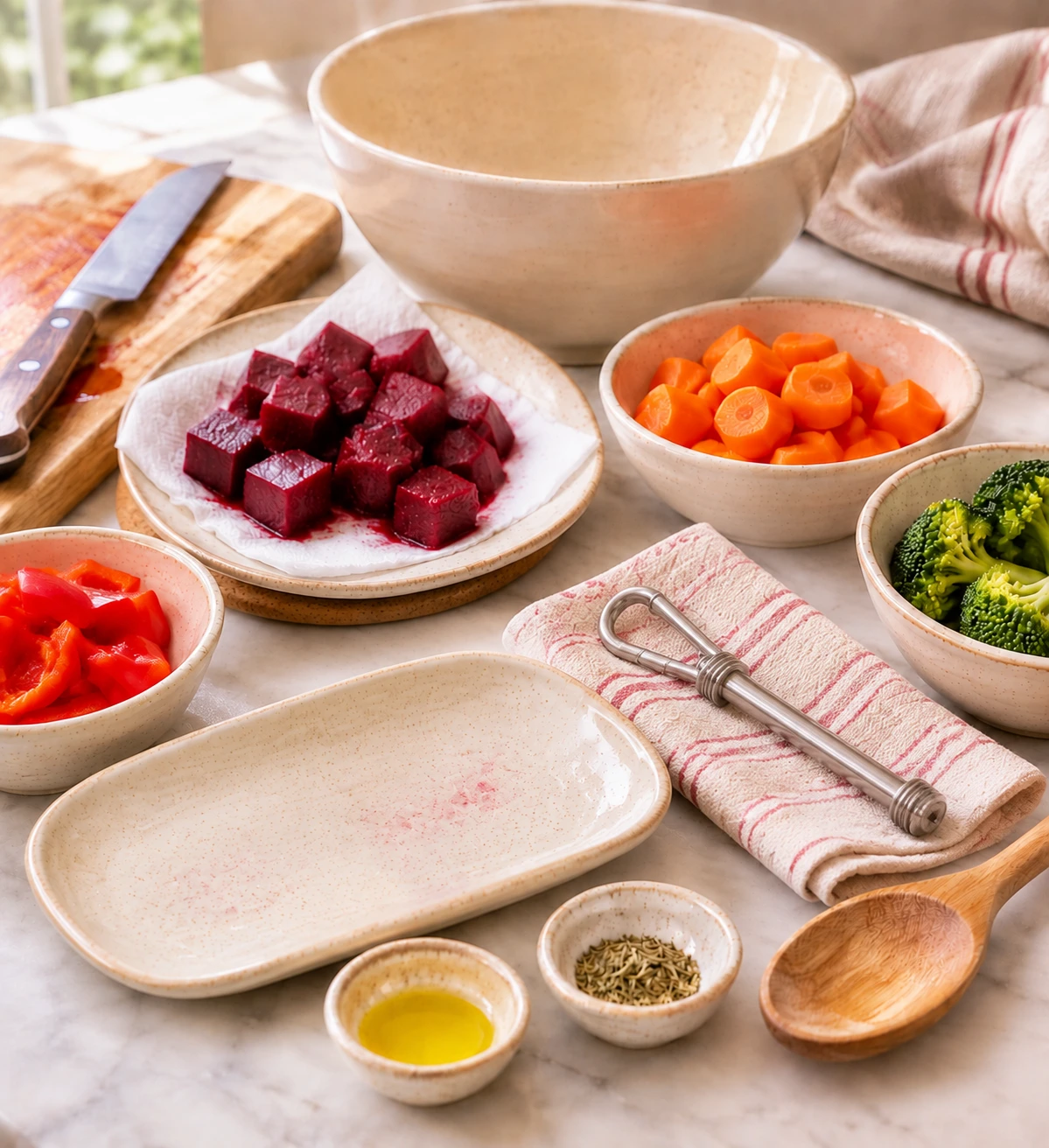
Beetroot makes an interesting seasonal addition to a bird's occasional snack selection. Once cooked until tender and completely cooled, it can be cut into small, manageable pieces and paired with familiar vegetables such as carrot, bell pepper and broccoli. The different colours and textures give your bird something to investigate without turning the recipe into another bowl of mashed ingredients. The skewer matters just as much as the food. Use a purpose-made, appropriately sized bird-safe stainless-steel foraging skewer with a secure attachment and no exposed sharp point. Introduce it while supervising closely, and remove it if your bird chews the metal, becomes caught or shows signs of distress. These vegetables are supplementary treats, not a complete diet.
Safety first: Start with a small portion beside your bird's usual food and confirm bigger diet changes with your veterinarian.
Foods to avoid
Never use cocktail sticks, wooden skewers, barbecue skewers, improvised wire, galvanized metal, painted metal or jewellery wire. Avoid fittings with exposed sharp tips, loose clips, rust, damaged welds or parts that can be swallowed. Use only a purpose-made bird-safe stainless-steel fitting, preferably one specified by its manufacturer for bird enclosures, and check that its size and attachment suit your bird. Never leave a bird unattended with a suspended skewer. Do not add salt, sugar, oil, butter, garlic, onion or seasoning. Avoid avocado, chocolate, caffeine and alcohol, which are unsafe for birds.
Ingredients
Instructions
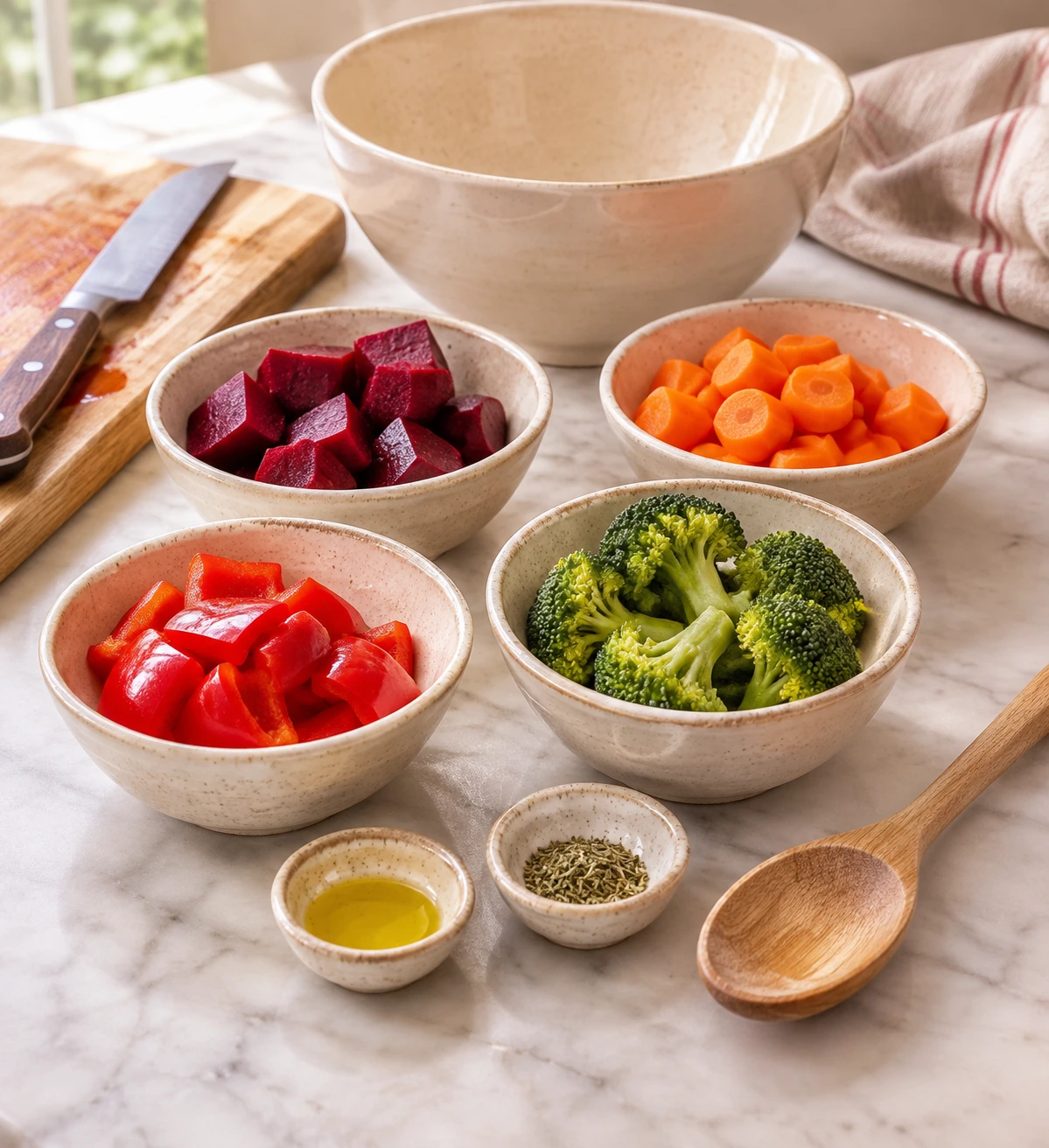
Prepare the Vegetables: Wash the beetroot, carrot, bell pepper and broccoli thoroughly under running water. Peel the beetroot and carrot, remove the bell pepper seeds and white inner membrane, and divide everything into small sections appropriate for your bird. Keep the pieces large enough to stay securely on the skewer but small enough for your bird to handle comfortably. Use a clean chopping board and knife, and keep the vegetables separate until assembly.
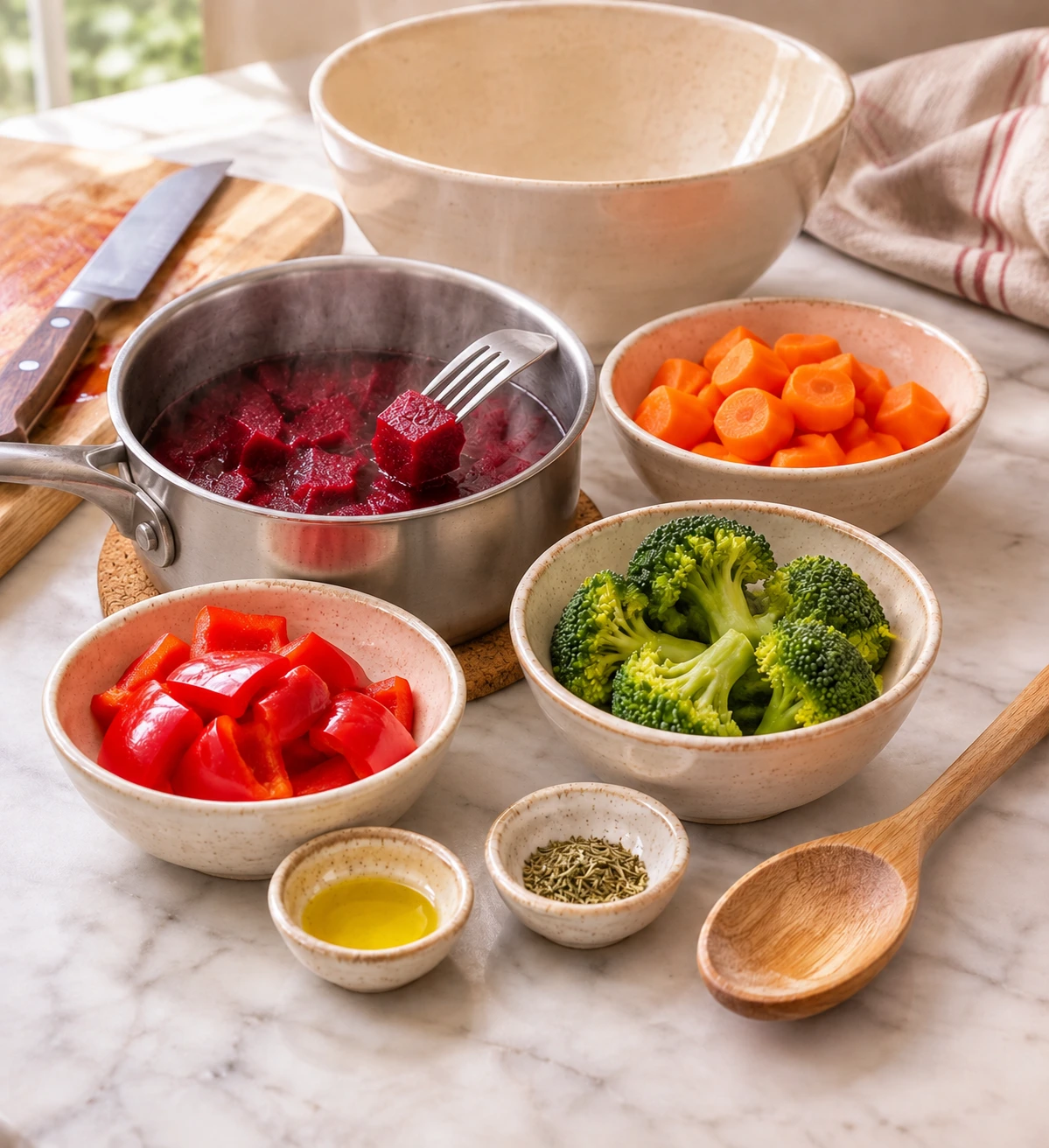
Cook the Beetroot Until Tender: Place the beetroot pieces in a small saucepan or steamer basket with a little fresh water. Cook gently until a fork passes through the centre without resistance, usually around 20 to 25 minutes depending on the size of the pieces. Do not add salt, sugar, oil, butter, stock, spices or seasoning. The beetroot should be soft enough to bite but still hold its shape, rather than becoming watery or falling apart. Leave the carrot, pepper and broccoli raw and fresh for the finished skewer.
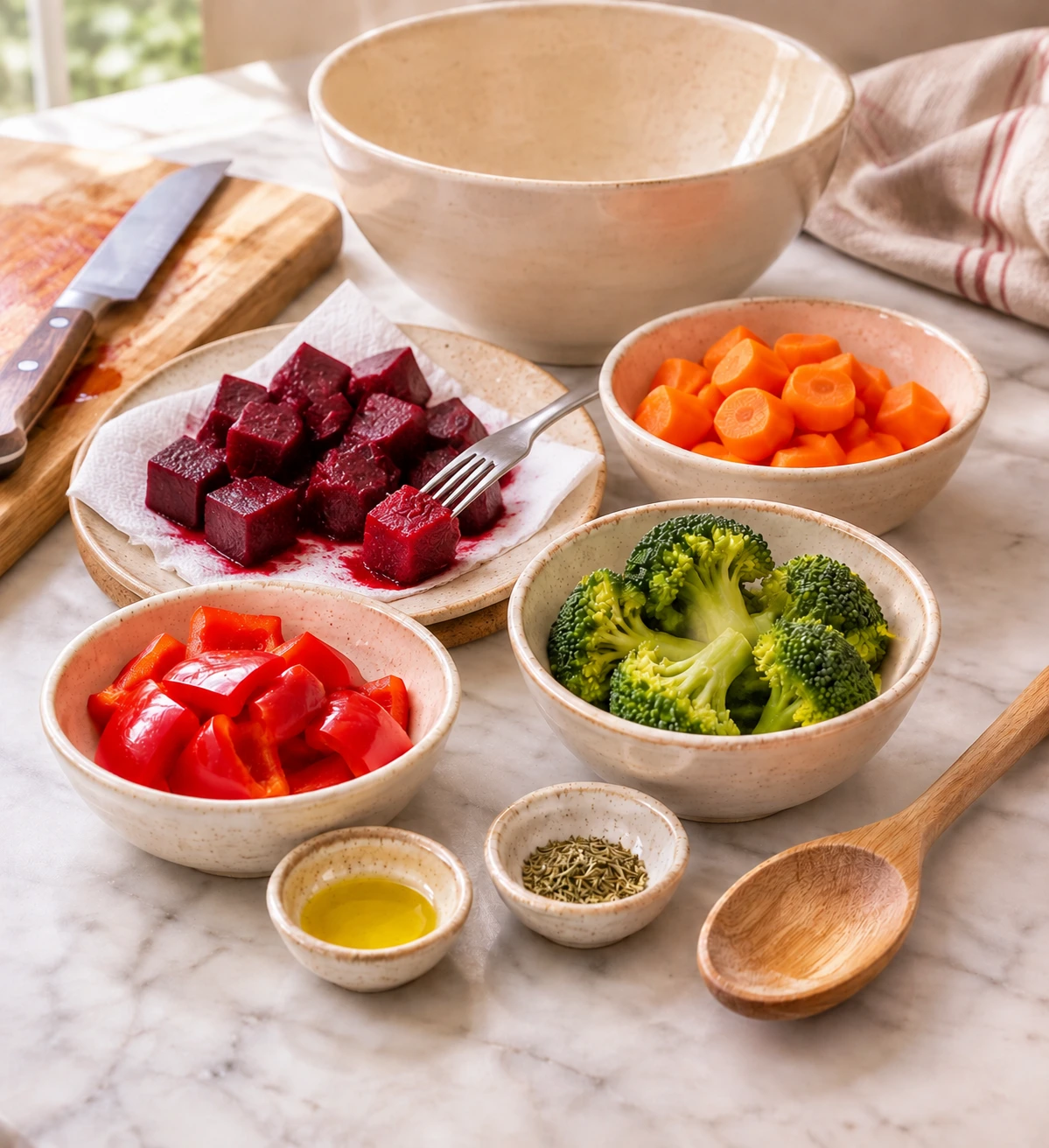
Cool and Check the Texture: Transfer the cooked beetroot to a clean plate and allow it to cool completely to room temperature. Check the centre of a piece with a clean fork to make sure it is tender without being mushy. Blot away excess surface moisture with clean kitchen paper if necessary, since slippery pieces can be harder to handle and may slide around on the skewer. Never assemble or serve the vegetables while the beetroot is warm.
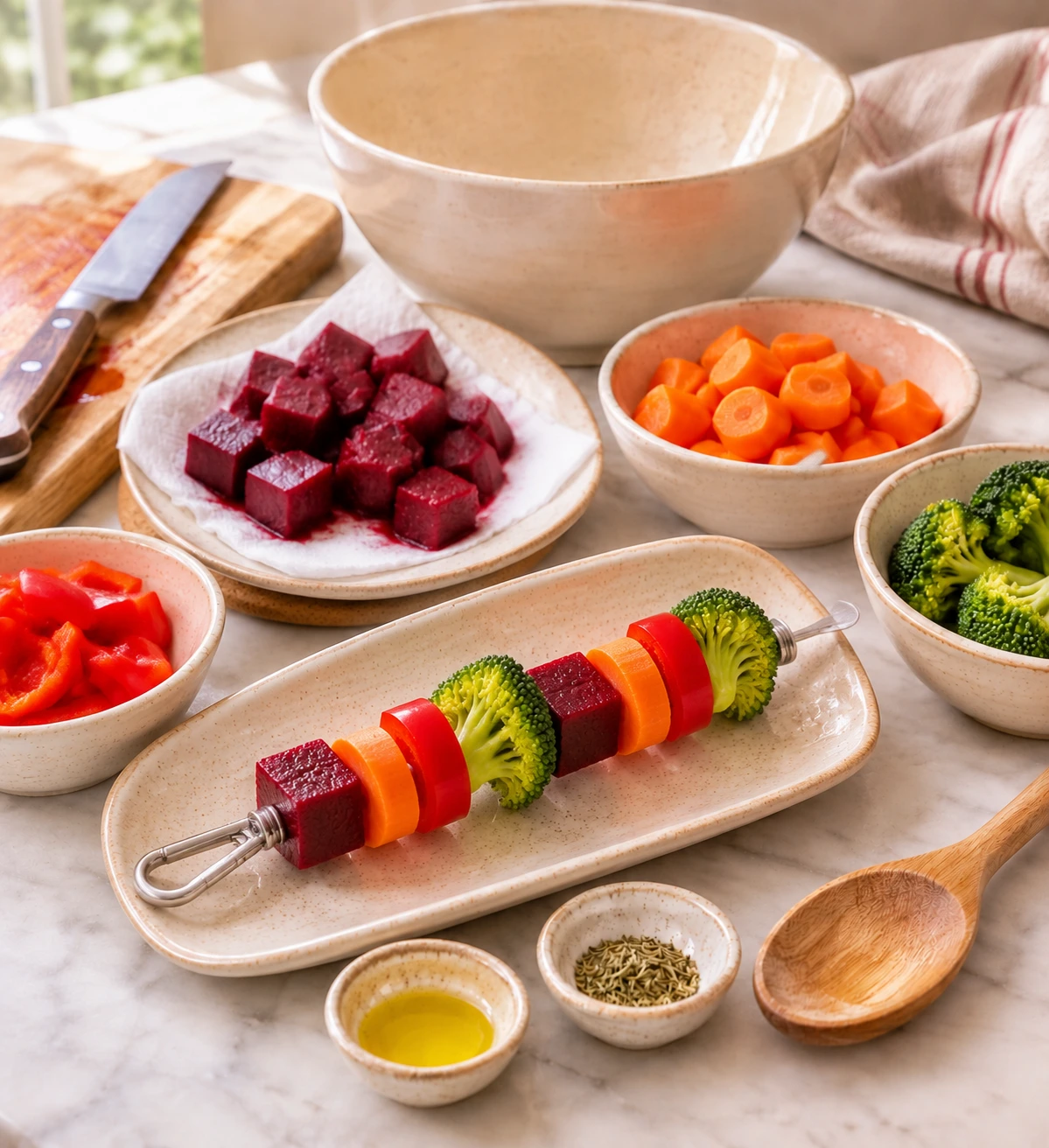
Arrange the Foraging Skewer: Use only a purpose-made bird-safe stainless-steel foraging skewer with a blunt or safely enclosed end and a secure attachment designed for your bird's enclosure. Check that there are no loose components, sharp edges, damaged fittings or exposed points. Thread a few beetroot pieces between the carrot, bell pepper and broccoli sections, leaving enough space for your bird to grip and investigate individual pieces. Do not force oversized pieces onto the skewer or overload it. Keep the finished arrangement compact and firmly secured.
Present Under Supervision: Attach the finished skewer securely inside the bird's enclosure in a position where your bird can approach it comfortably without becoming trapped or having to stretch awkwardly. Stay nearby throughout the introduction and watch how your bird interacts with the food and metal fitting. Offer only a small amount, then remove the skewer after the supervised snack session. Discard any uneaten pieces that have become soiled, damaged or left exposed for an extended period. Clean and dry the skewer thoroughly before storing it.
Made this recipe?
Tap the paw so other pet parents know it’s worth making.
Be the first to make it
Tips & serving
Offer only a small selection of pieces appropriate to your bird's species and size, rather than filling the skewer with a full meal's worth of vegetables. Introduce unfamiliar foods gradually and watch for comfortable handling and normal eating behaviour. Always supervise access to the metal fitting, and remove the entire skewer after the snack session. Keep a balanced, species-appropriate formulated diet as the nutritional foundation. Discuss major diet changes or concerns about suitable foods and portions with an avian veterinarian.
- The combination of vegetable colours and textures gives birds different pieces to inspect, grip and investigate during a supervised snack session.
- A securely mounted foraging skewer offers an alternative presentation to a conventional food bowl, introducing variety into occasional enrichment activities.
- Using small, separate vegetable sections makes it easier to control the amount offered and remove individual leftovers promptly.
- Preparing the vegetables without added salt, oils or seasonings keeps the snack simple and avoids unnecessary ingredients.
- Cut the vegetables into consistent, bird-appropriate pieces so your bird can grip them without struggling with oversized sections.
- Cook beetroot separately from the other vegetables to preserve their fresh texture and avoid turning the entire mixture soft.
Storage
Store unused cooked beetroot and prepared vegetables separately in clean, airtight containers in the refrigerator. Discard anything with an unusual smell, slimy texture or visible spoilage. Do not refrigerate or reuse vegetables that have already been mounted on the skewer and exposed to your bird's enclosure. Discard leftovers after the supervised session, particularly pieces that have been chewed, soiled or left at room temperature for an extended period.
Substitutions
If broccoli is not suitable for your particular bird or is not readily accepted, use a small section of thoroughly washed courgette instead. Keep it raw, cut it into manageable pieces and confirm its suitability for your bird's species. Yellow or orange bell pepper can replace red bell pepper. Remove the seeds and inner membrane, wash thoroughly and use similarly sized sections without adding seasoning. Carrot can be replaced with a small amount of washed, raw cauliflower cut into compact florets. Introduce substitutions individually so you can observe your bird's response.
Birds recipe FAQ
Can I serve this snack every day?
Treat it as an occasional extra, not a meal plan. Offer only a small selection of pieces appropriate to your bird's species and size, rather than filling the skewer with a full meal's worth of vegetables.
Can birds have plain cooked beetroot?
This recipe uses plain cooked beetroot in a small, bird-appropriate amount. Skip it if your bird has a known sensitivity, and read the foods-to-avoid note on this page before serving.
How do I store this snack?
Store unused cooked beetroot and prepared vegetables separately in clean, airtight containers in the refrigerator. Use the cooked beetroot within two to three days, provided it was cooled promptly and kept refrigerated at or below 4°C.
What's the safest way to try this with my bird?
Offer a small amount beside regular food, introduce one new recipe at a time, and watch appetite, stool, skin, and behavior for a day or two.
Can birds eat cooked beetroot?
Plain beetroot can be offered in small amounts as part of a varied selection of suitable vegetables for many commonly kept companion birds. Cook it thoroughly without salt, oil or seasoning, cool it completely and serve only a modest portion. Check suitability for your bird's particular species.
Is a stainless-steel skewer safe for a pet bird?
Only use a purpose-made bird-safe stainless-steel foraging fitting with secure mounting and no exposed sharp points. The material, construction, size and attachment all matter. Ordinary kitchen skewers and improvised wire are not appropriate. Supervise every session and remove the fitting if your bird damages or persistently chews it.
Sources