
Cooked mung beans can make a lovely change from the usual baked bird treats. In this forage scatter, soft pulses are paired with tender seasonal squash, red bell pepper and broccoli. Each ingredient stays recognizable, giving your bird different textures and flavours to investigate rather than blending everything into one uniform mixture. The secret is in the preparation: the mung beans must be thoroughly cooked, and the squash should be tender but not watery. This is a supplementary snack, never a substitute for a balanced, species-appropriate diet. Before serving, always make sure every ingredient and portion is suitable for your particular bird.
Safety first: Every bird is different: age, allergies, and health conditions all matter, so check with your vet when in doubt.
Foods to avoid
Never serve raw or undercooked mung beans, mouldy ingredients, spoiled cooked vegetables or food containing added salt, sugar, garlic, onion, butter, oil, stock or seasoning. Avoid canned mung beans unless their ingredients and preparation are confirmed suitable, since many contain added salt or other ingredients. Do not assume that every vegetable or pulse suitable for one parrot species is suitable for every bird. Remove uneaten fresh food promptly and clean feeding equipment thoroughly. This snack must not replace a nutritionally balanced, species-appropriate diet.
Ingredients
Instructions
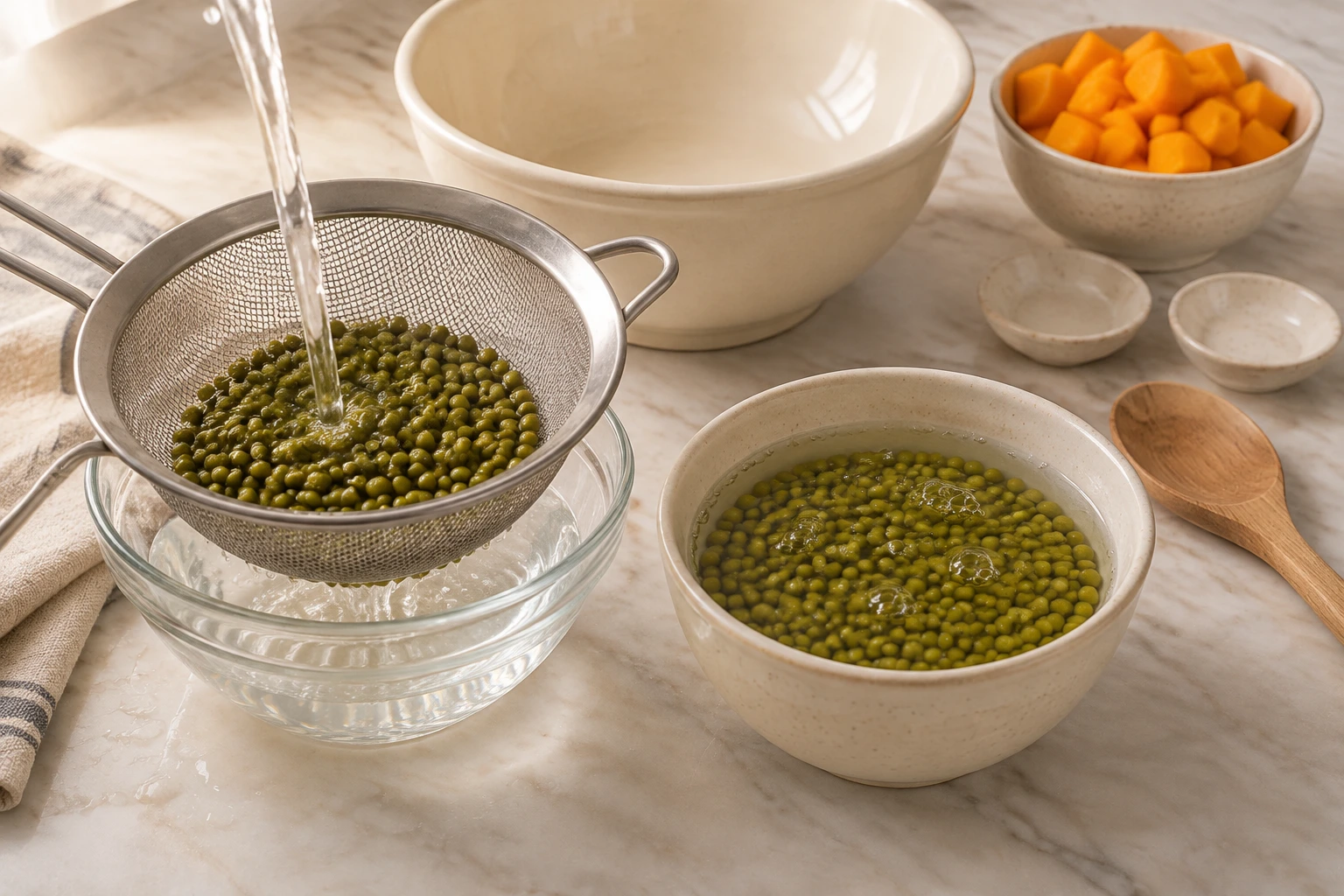
Rinse and Prepare the Beans: Put the dried mung beans in a fine-mesh sieve and rinse well under cool running water, removing any discoloured, damaged or foreign pieces. Place them in a small bowl, cover generously with clean water and soak for approximately 4 hours, or follow the cooking guidance on your particular beans. Drain, rinse again and discard the soaking water rather than using it for cooking; keep your preparation area clean and avoid adding salt, seasoning or oil.
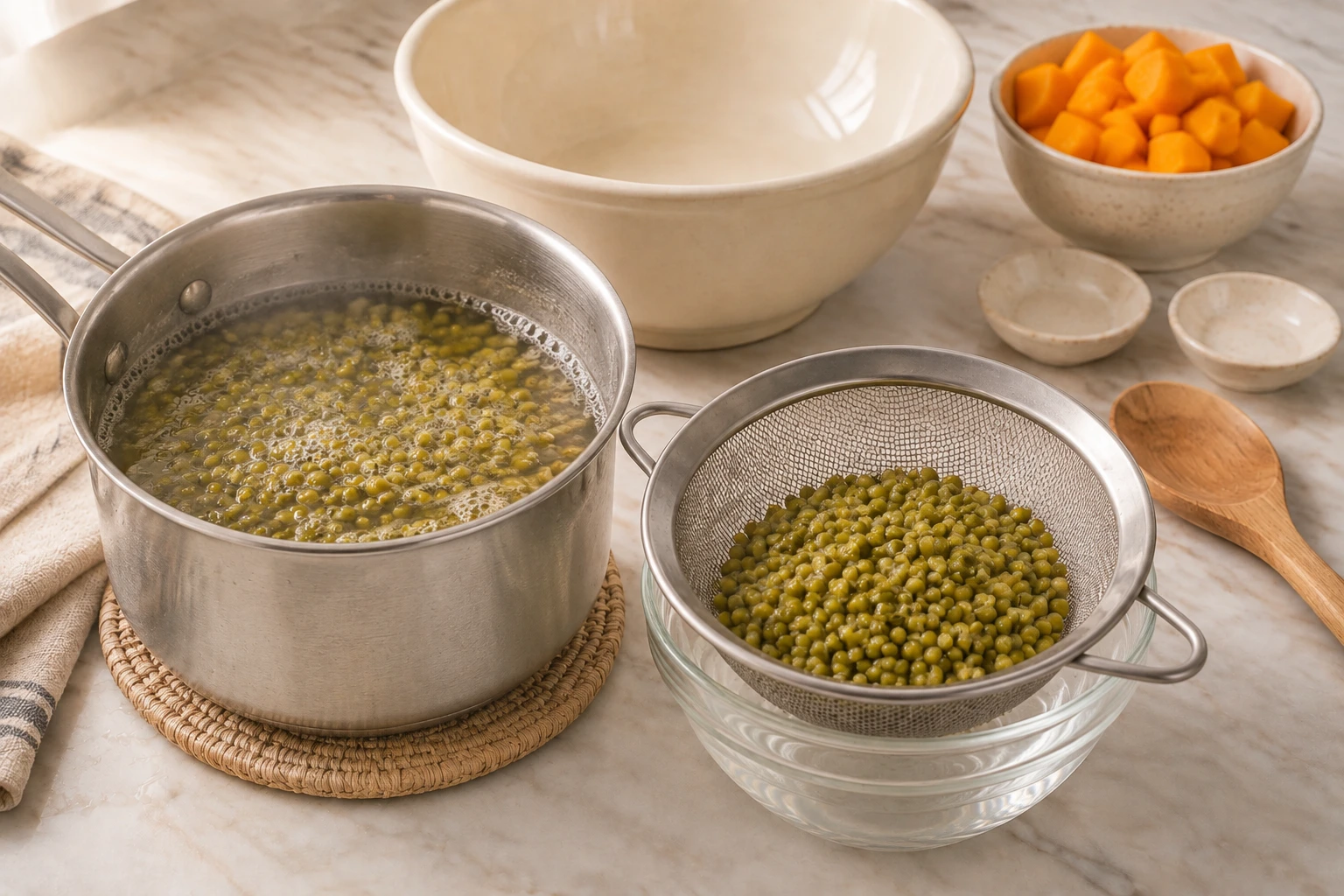
Cook the Mung Beans Thoroughly: Place the drained beans in a small saucepan and cover with fresh water, then bring to a boil before reducing the heat to a gentle simmer. Cook until every bean is completely soft, which may take approximately 20 to 25 minutes or longer depending on soaking time and bean age. Test several beans from different parts of the pan, making sure they crush easily between your fingers once cool enough to handle and have no firm or crunchy centre, then drain thoroughly and discard the cooking water; never serve mung beans raw, dry or partially cooked.
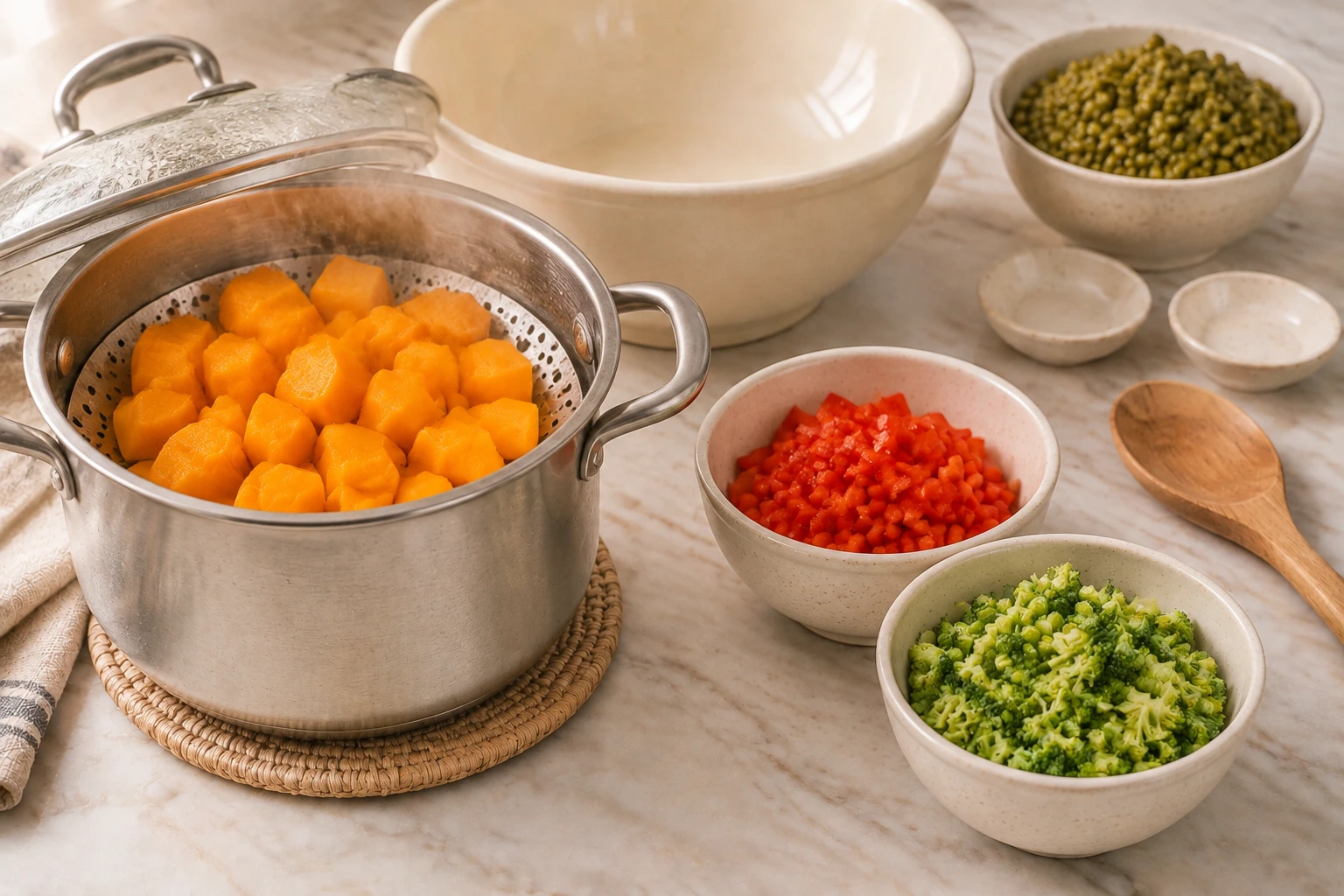
Steam the Squash and Prepare the Vegetables: While the beans are cooking, arrange the peeled butternut squash cubes in a steamer basket over simmering water and cover until a fork passes easily through each piece. The squash should be tender but still hold its shape, rather than falling apart into puree, so remove it and let any excess moisture drain. Wash, deseed and finely dice the red bell pepper, then chop the broccoli into small, manageable pieces suited to your bird, without adding butter, salt, seasoning or cooking oil.
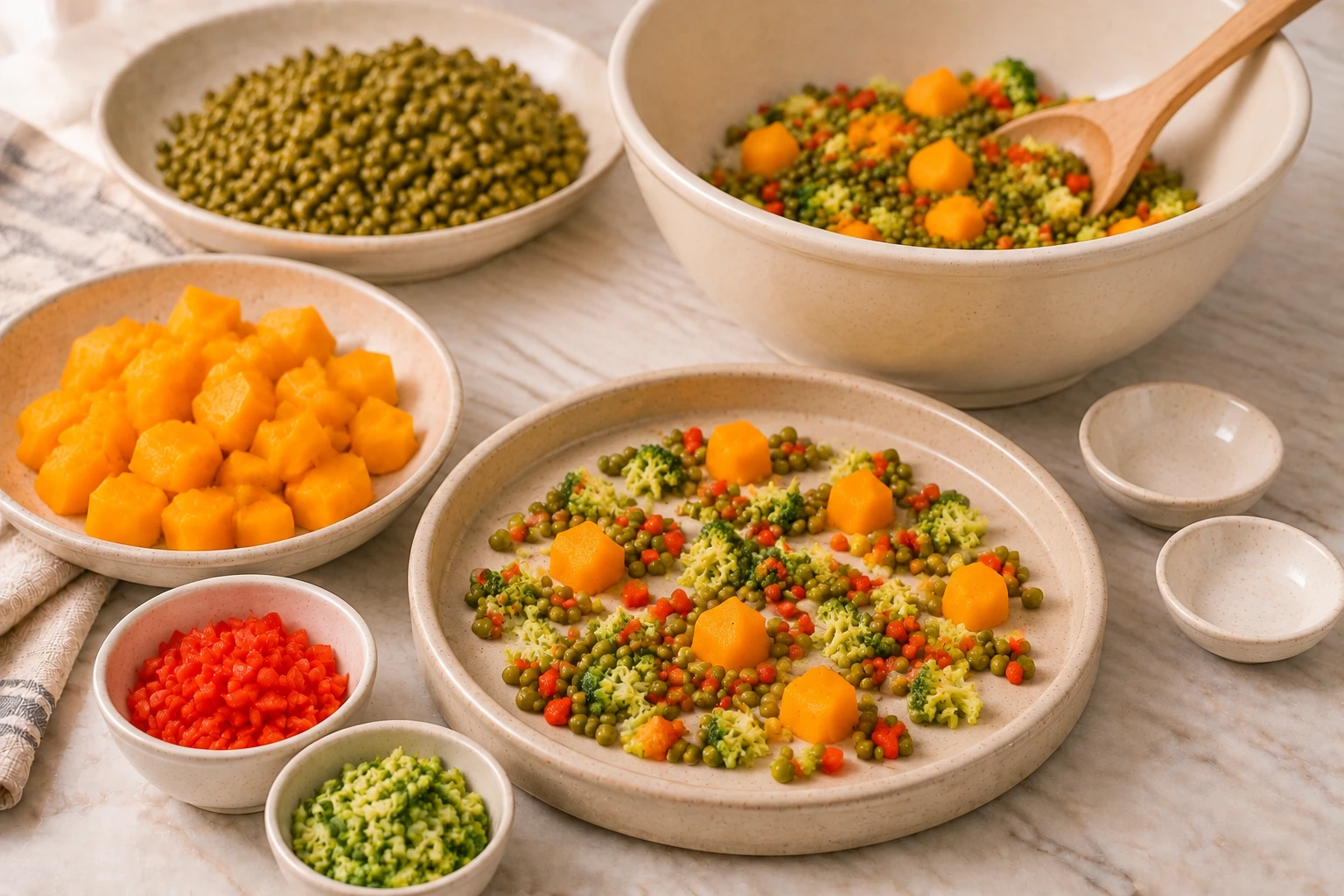
Cool and Combine the Ingredients: Spread the drained mung beans and steamed squash in separate shallow dishes to help them cool quickly, and leave both until they reach room temperature. Once completely cool, combine them in a clean mixing bowl with the diced red bell pepper and chopped broccoli, folding gently with a clean spoon so the ingredients remain partly distinct rather than crushed together. Check for excess moisture and remove particularly wet pieces; never place warm food in your bird's feeding dish or leave cooked ingredients at room temperature for extended periods.
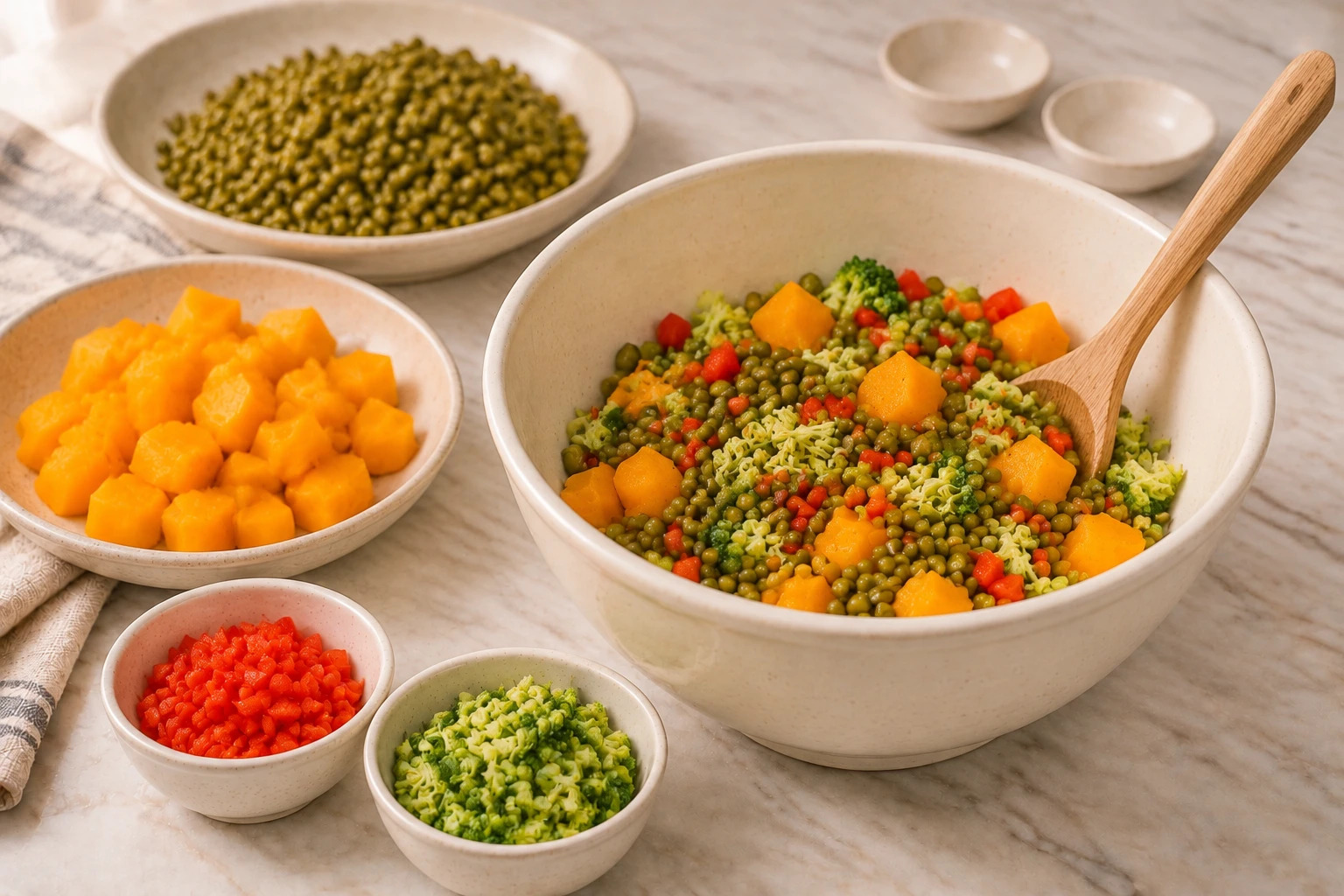
Arrange the Forage Scatter: Spoon a small, species-appropriate quantity into a clean, shallow, bird-safe foraging tray, scattering the ingredients loosely instead of pressing them into a compact mound. Keep several beans and squash pieces individually visible, with the finely chopped vegetables distributed between them, and check that every piece is safe to handle without being so large that it creates a swallowing difficulty. Offer the tray under supervision in a familiar feeding area, remove uneaten fresh food promptly (especially in a warm room) and clean the feeding dish after the snack.
Made this recipe?
Tap the paw so other pet parents know it’s worth making.
Be the first to make it
Tips & serving
Start with a very small quantity appropriate to your bird's species, body size and established diet. A few cooked beans, one or two small squash pieces and a little chopped vegetable may be enough for an initial offering. Introduce unfamiliar ingredients gradually and observe whether your bird accepts them. Offer this recipe only as a supplementary snack alongside a balanced regular diet. Remove leftovers promptly. Major diet changes or questions about species-specific ingredients and portions should always be discussed with an avian veterinarian.
- Provides a different way to present fully cooked pulses alongside familiar vegetables during supervised feeding time.
- Encourages food exploration by keeping beans, squash and chopped vegetables visible as separate textures.
- Uses a simple steaming and simmering method without added salt, oil, sauces or seasoning.
- Can be prepared in small batches, making it easier to offer fresh supplementary portions without preparing a large quantity.
- Soak and rinse the mung beans before cooking, then simmer until completely soft throughout rather than relying on cooking time alone.
- Steam squash separately from the beans so you can control its texture and avoid turning the entire mixture into a wet mash.
Storage
Refrigerate unused cooked mixture promptly in a clean, airtight food container at 4°C or below. Keep the mixture separate from food that has already been placed in the bird's feeding dish. Do not store leftovers that have been exposed to the bird's beak, cage environment or feeding surface. Discard food that has been sitting out for an extended period, especially in a warm room. Freezing is possible for the plain cooked beans and squash in small, individually portioned containers, although the texture may become softer after thawing.
Substitutions
You can replace butternut squash with a similarly prepared quantity of plain pumpkin or another bird-appropriate edible squash. Steam until tender and drain thoroughly before combining. Red bell pepper can be replaced with a small quantity of finely chopped carrot, provided it is washed and prepared appropriately. Keep the substitution simple rather than introducing several unfamiliar ingredients together. Broccoli can be omitted or replaced with another suitable vegetable already familiar to your bird. Check species-specific feeding guidance before introducing anything new.
Birds recipe FAQ
Can I serve this snack every day?
Treat it as an occasional extra, not a meal plan. Start with a very small quantity appropriate to your bird's species, body size and established diet. A few cooked beans, one or two small squash pieces and a little chopped vegetable may be enough for an initial.
Can birds have fully cooked mung beans?
This recipe uses fully cooked mung beans in a small, bird-appropriate amount. Skip it if your bird has a known sensitivity, and read the foods-to-avoid note on this page before serving.
How should I store leftovers?
Refrigerate unused cooked mixture promptly in a clean, airtight food container at 4°C or below. Use within 24 hours for this fresh vegetable preparation. Keep the mixture separate from food that has already been placed in the bird's feeding dish.
What's the safest way to try this with my bird?
Offer a small amount beside regular food, introduce one new recipe at a time, and watch appetite, stool, skin, and behavior for a day or two.
Can birds eat cooked mung beans?
Some parrot feeding guidance includes properly cooked pulses as part of a varied diet. Mung beans must be thoroughly cooked until completely soft, never served raw or partially cooked. Suitability and appropriate quantities depend on the bird species, so check reliable species-specific feeding guidance.
Can I prepare this mung bean and squash recipe ahead of time?
Yes. You can cook the beans and squash ahead, cool them completely and refrigerate the unused mixture in an airtight container. For this fresh preparation, use refrigerated portions within 24 hours. Only remove the quantity needed for one feeding, and discard exposed leftovers.
Sources