
When the garden is frozen or outdoor grazing is harder to manage, a small tray of homegrown wheatgrass can add some welcome greenery to your rabbit's routine. Instead of mixing together another batch of vegetables, you can grow fresh grass indoors, snip a few clean shoots and serve them as an occasional extra alongside your rabbit's usual food. This little project takes several days from seed to harvest, so it's worth getting started ahead of time. Use untreated wheatgrass seeds, keep the growing tray clean and check the grass carefully before serving. Remember, wheatgrass is just an extra. Your rabbit still needs unlimited good-quality hay, fresh water and its familiar leafy greens every day.
Safety first: Offer a small taste the first time and watch your rabbit for any tummy upset before serving more.
Foods to avoid
Never use chemically treated seeds, lawn seed of unknown origin, pesticide-exposed grass, moldy shoots, slimy growing medium or grass with an unpleasant smell. Avoid overwatering, standing water and poor ventilation because these conditions encourage mold and spoilage. Do not harvest shoots contaminated with compost or other debris without properly cleaning them. Never serve frozen or frosty grass, or grass collected from roadsides and areas treated with chemicals. Wheatgrass must not replace unlimited good-quality hay, fresh water or the rabbit's normal leafy greens. Avoid sudden large portions of unfamiliar plants.
Ingredients
Instructions
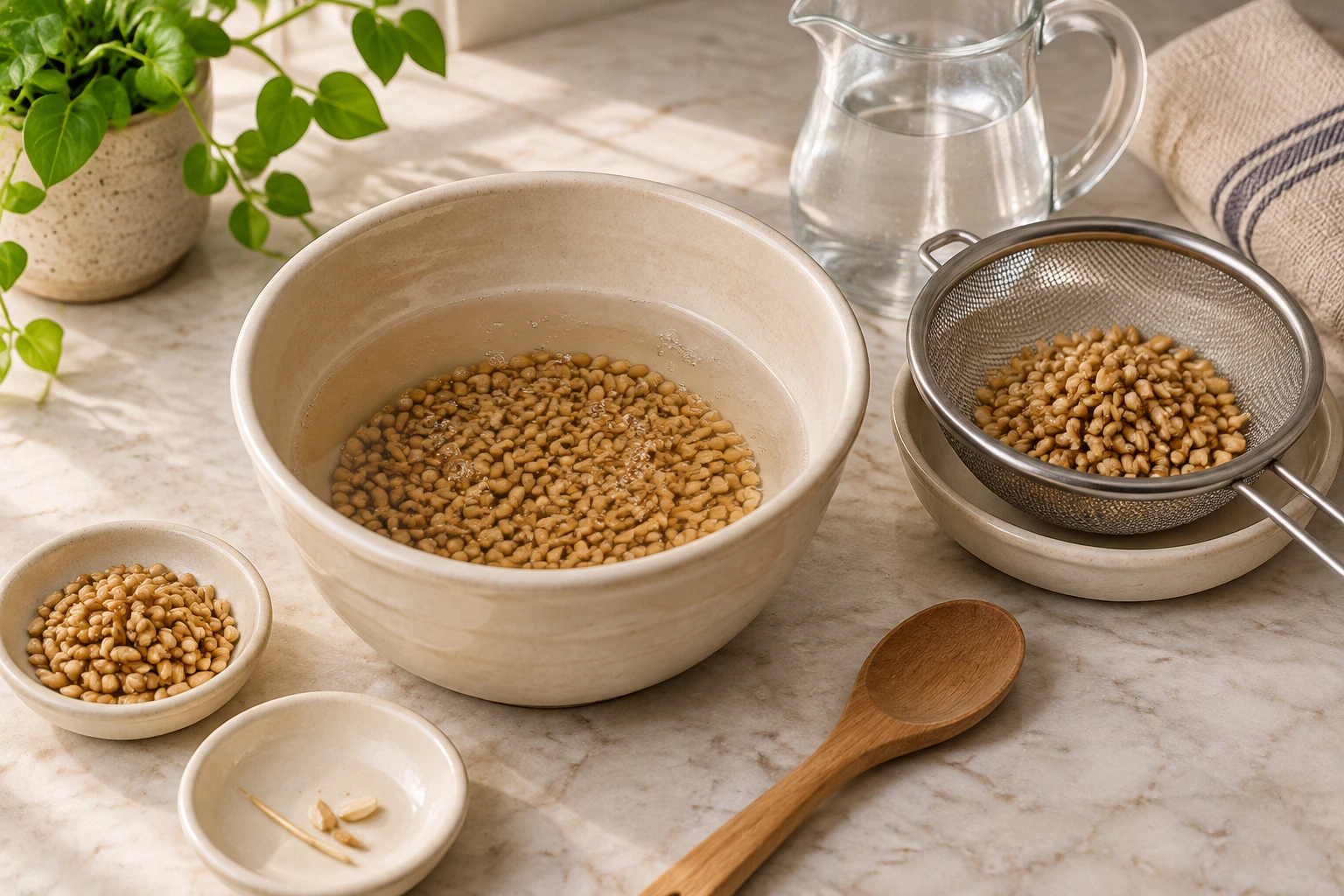
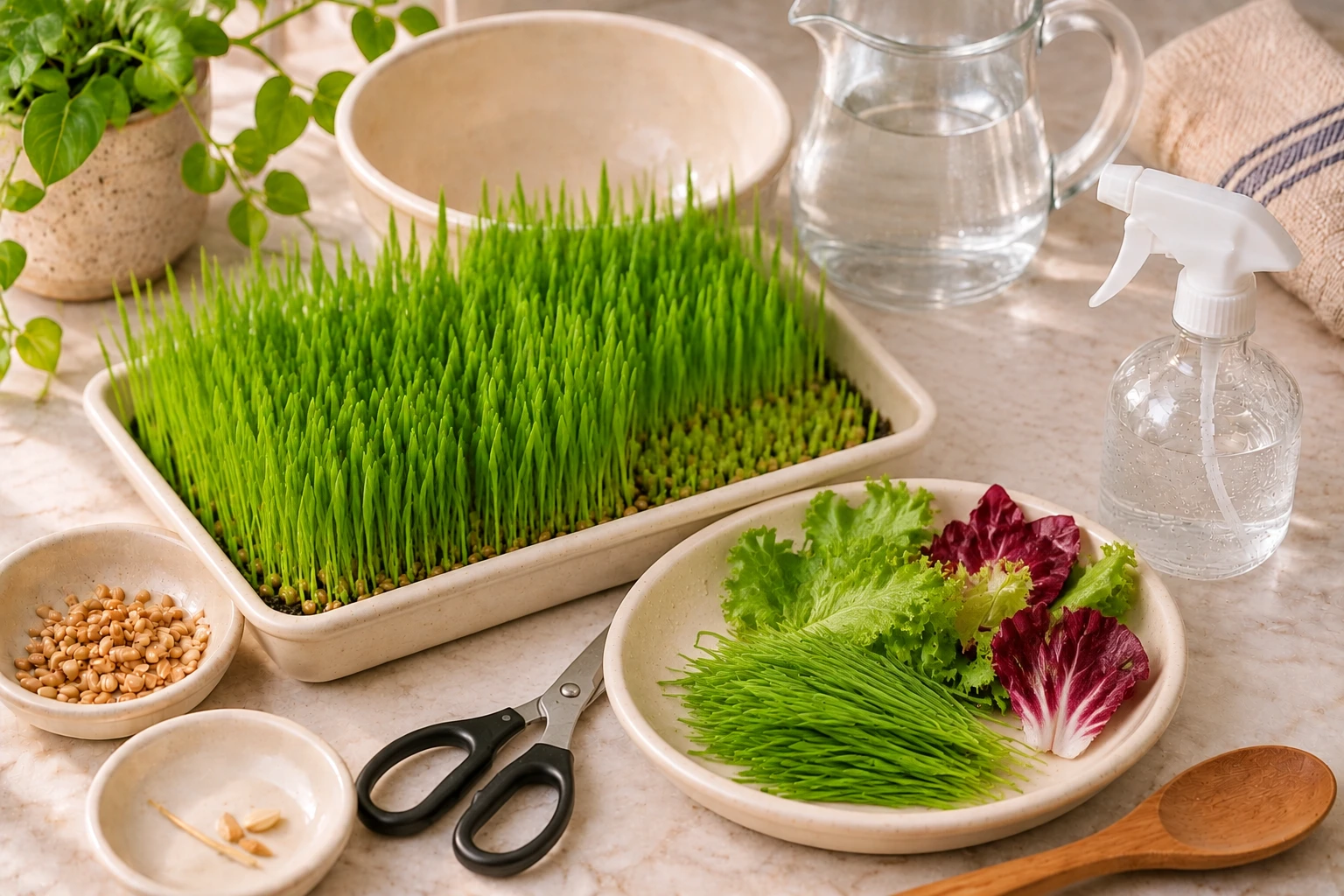
Prepare the Wheatgrass Seeds: Measure 2 tablespoons of untreated wheatgrass seeds into a clean bowl and cover them with fresh water. Soak for approximately 8 to 12 hours, following the seed supplier's growing instructions, then drain through a fine-mesh sieve and rinse thoroughly with clean water. Remove any damaged seeds or foreign material before planting. Starting with clean, untreated seeds helps reduce the risk of unwanted residues in the grass your rabbit will eventually eat.
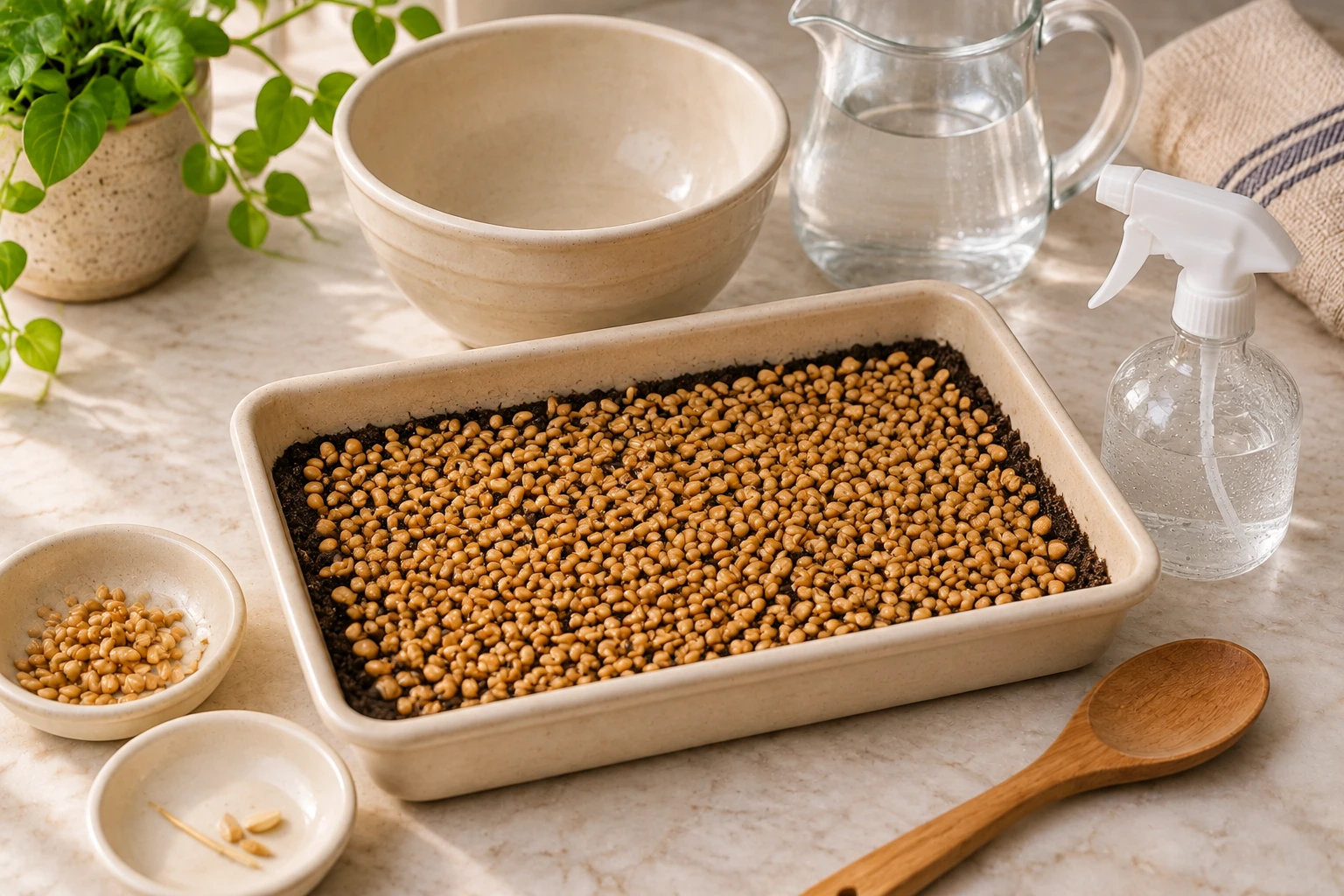
Fill the Growing Tray: Spread a shallow, even layer of fresh, pesticide-free growing medium across a clean tray, approximately 2 to 3 cm deep. Distribute the drained seeds evenly over the surface, keeping them close together without piling them into thick clumps. Gently press them against the moist medium for good contact, but don't bury them deeply. Lightly mist the surface with clean water until the medium feels damp, not saturated.
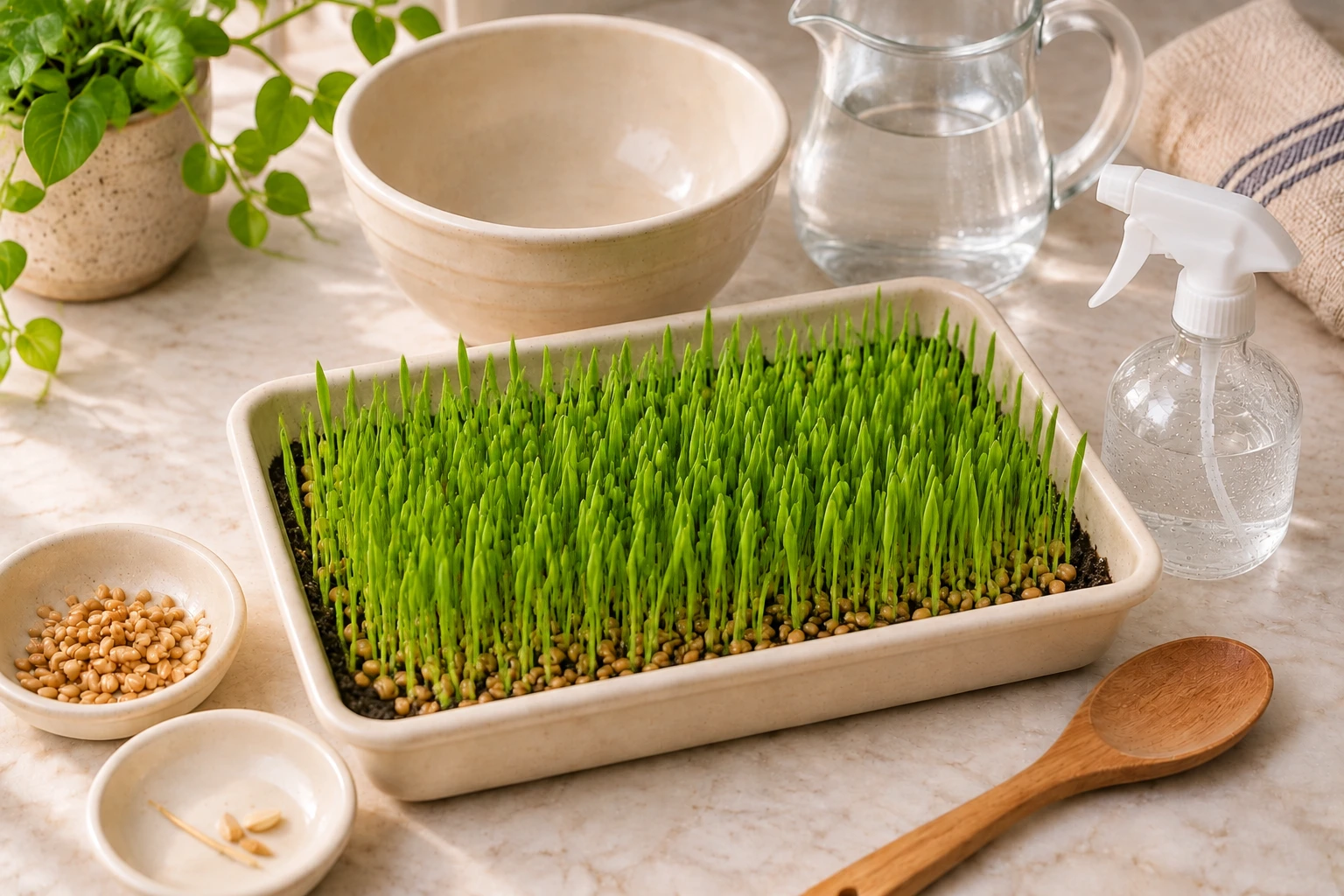
Grow the Green Shoots: Set the tray in a bright indoor spot, away from harsh direct sunlight, heating vents and cold drafts. Keep the growing medium consistently moist with light watering or misting as needed, and let excess water drain away. Check the tray daily for mold, unpleasant smells or slimy seeds, and never let standing water collect underneath. Depending on the seeds and indoor conditions, green shoots should appear over approximately 7 to 10 days.
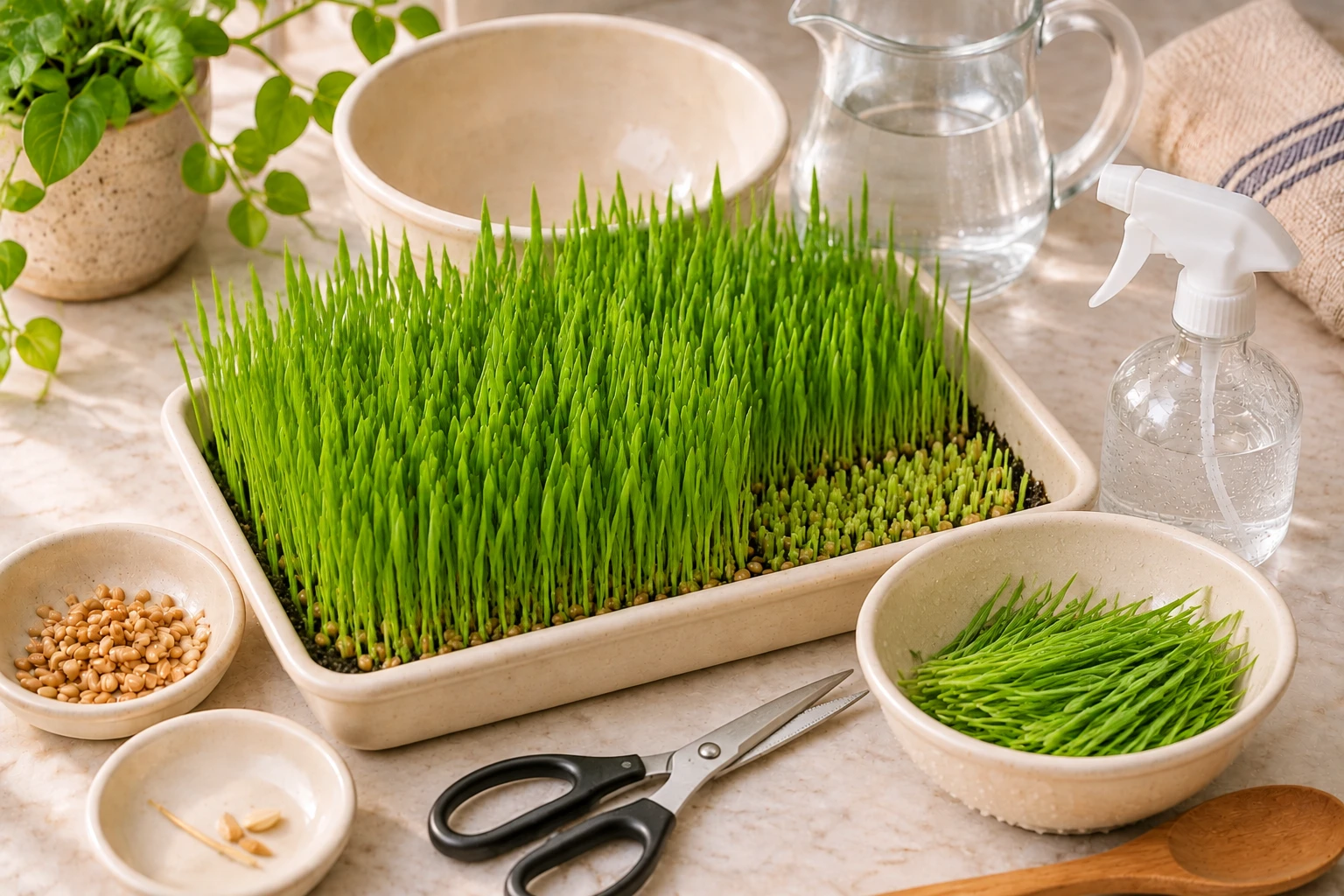
Harvest and Wash the Grass: Once the wheatgrass reaches approximately 8 to 12 cm tall, inspect the whole tray carefully before cutting. Look for fresh, green shoots without mold, discoloration, slime or unpleasant smells. Using clean kitchen scissors, snip a small amount of grass above the growing medium, taking care to avoid the roots and compost. Rinse the harvested shoots thoroughly under cool running water and shake off excess moisture. If anything looks or smells questionable, discard it rather than trying to wash away the signs of spoilage.
Arrange a Small Grazing Portion: Place the washed, drained wheatgrass in a clean, shallow serving dish. Offer a small pinch alongside your rabbit's familiar leafy greens, keeping the portion modest, especially if wheatgrass is new to its diet. Make sure the grass is fresh, clean and free of excess water, then place the dish somewhere your rabbit can reach comfortably and supervise the first offering. Remove any uneaten grass promptly so damp shoots aren't left sitting in the enclosure.
Made this recipe?
Tap the paw so other pet parents know it’s worth making.
Be the first to make it
Tips & serving
Start with just a small pinch of washed wheatgrass, especially if your rabbit has never eaten it before. Offer it alongside unlimited good-quality hay and the rabbit's usual familiar leafy greens, never instead of these dietary essentials. Introduce new foods gradually and observe whether your rabbit continues eating normally and producing normal droppings. Remove uneaten grass promptly. Individual dietary needs vary, so discuss major diet changes or concerns about introducing new foods with a veterinarian experienced in rabbit care.
- Provides a simple way to introduce fresh green plant material during colder months when outdoor grazing opportunities may be limited.
- Growing the grass at home lets owners control the seed source, growing medium and cleanliness of the preparation process.
- Harvesting directly from a living tray creates an opportunity for natural nibbling and supervised foraging rather than serving every fresh ingredient in a chopped mixture.
- Small harvests can be taken as needed, making it easier to offer fresh shoots without preparing a large batch of vegetables.
- Use seeds sold specifically for sprouting or edible wheatgrass production, and check that they have not been treated with fungicides or other planting chemicals.
- A shallow tray with drainage holes helps prevent excess moisture from collecting around the roots and creating conditions for mold.
Storage
The growing tray is best treated as a living crop rather than a batch of prepared food. Keep it in a clean, bright indoor position, water sparingly and allow excess moisture to drain. Inspect the growing medium and shoots every day. Remove and discard the entire affected section if mold, slime or an unpleasant smell develops. Do not offer questionable growth to your rabbit. Freshly harvested and washed wheatgrass should ideally be served immediately. If necessary, keep a small unused portion in a clean, covered container in the refrigerator, with excess surface moisture removed.
Substitutions
If wheatgrass seeds are unavailable, consider a separate small indoor tray of untreated barley grass seed, provided the seed is specifically suitable for growing edible shoots. Grow it in fresh, pesticide-free medium and introduce the resulting grass gradually. For a serving without homegrown grass, use a small amount of familiar, rabbit-safe leafy greens that your rabbit already tolerates. This is an alternative fresh offering, not a reason to change the rabbit's established feeding routine.
Rabbits recipe FAQ
Is this fresh mix a complete meal for my rabbit?
Treat it as an occasional extra, not a meal plan. Start with just a small pinch of washed wheatgrass, especially if your rabbit has never eaten it before. Offer it alongside unlimited good-quality hay and the rabbit's usual familiar leafy greens, never instead of these.
Can rabbits have fresh wheatgrass?
This recipe uses fresh wheatgrass in a small, rabbit-appropriate amount. Skip it if your rabbit has a known sensitivity, and read the foods-to-avoid note on this page before serving.
How should I store leftovers?
The growing tray is best treated as a living crop rather than a batch of prepared food. Keep it in a clean, bright indoor position, water sparingly and allow excess moisture to drain. Inspect the growing medium and shoots every day.
What's the safest way to try this with my rabbit?
Offer a small amount beside regular food, introduce one new recipe at a time, and watch appetite, stool, skin, and behavior for a day or two.
Can rabbits eat fresh wheatgrass every day?
Fresh wheatgrass can be offered as a small additional nibble if your rabbit tolerates it, but it should not become a substitute for the normal diet. Unlimited good-quality hay remains essential, alongside fresh water and appropriate leafy greens. Keep portions modest and introduce it gradually.
How long does wheatgrass take to grow indoors?
Most indoor wheatgrass projects take approximately 7 to 10 days to produce harvestable shoots, although seed quality, temperature, light and moisture affect growth. Harvest when the shoots are healthy and approximately 8 to 12 cm tall. Always check for mold and spoilage before cutting.
Sources