

Fennel brings something a little different to a rabbit's fresh food selection. Its crisp bulb, delicate green fronds and mild anise-like aroma pair nicely with the tender leaves of washed watercress. With just a little careful washing, trimming and slicing, you can turn these simple ingredients into a fresh forage mix with a pleasant contrast of leafy and crunchy textures. Serve this as a small fresh addition, never as a replacement for grass hay, a balanced rabbit diet or familiar suitable leafy greens. Introduce both ingredients gradually, especially if they are new to your rabbit. Choose fresh, unseasoned produce, remove leftovers before they wilt or spoil, and discuss major diet changes with a veterinarian.
Safety first: Every rabbit is different: age, allergies, and health conditions all matter, so check with your vet when in doubt.
Foods to avoid
Never add salt, pepper, oil, vinegar, dressing, garlic, onion, citrus juice or cooked seasoning mixtures. Avoid spoiled, wilted, slimy or mouldy vegetables and do not use tough fennel stalks or thick, oversized pieces. Do not introduce both fennel and watercress together for the first time if your rabbit has never eaten either ingredient. Rabbits need a consistent, hay-based diet, and fresh vegetables should complement rather than displace their usual food. If a rabbit stops eating or producing droppings, seek prompt veterinary advice.
Ingredients
Instructions
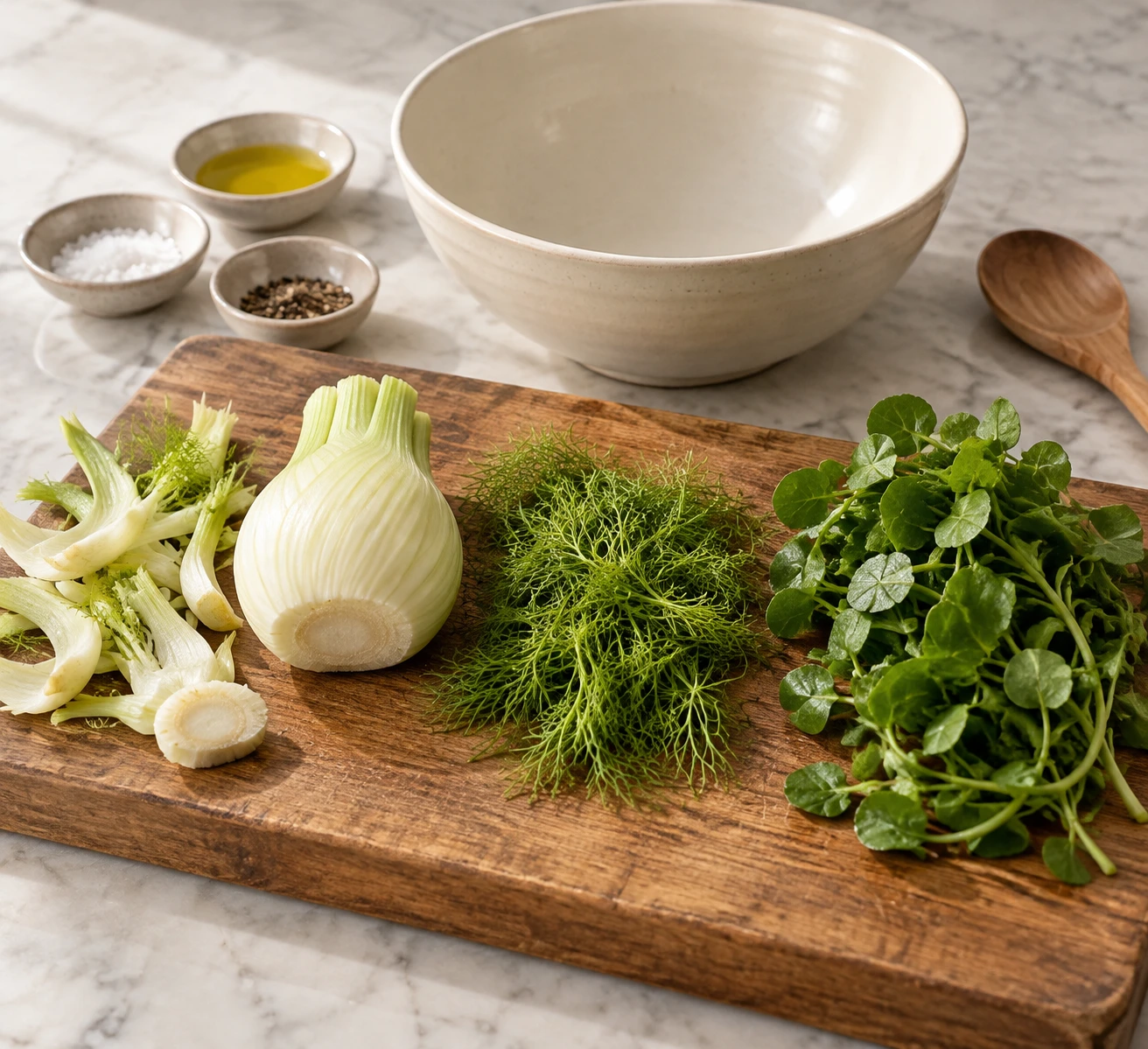
Prepare the Fresh Vegetables: Start by removing any damaged or dried outer layers from the fennel bulb, then trim away its tough base. Separate the tender green fronds from the thicker stalks, keeping the soft leaves for the mixture, and pick through the watercress to remove any yellow, bruised or damaged leaves. Keep the bulb, fronds and watercress in separate piles on your chopping board, and discard anything slimy, mouldy or unpleasantly scented.
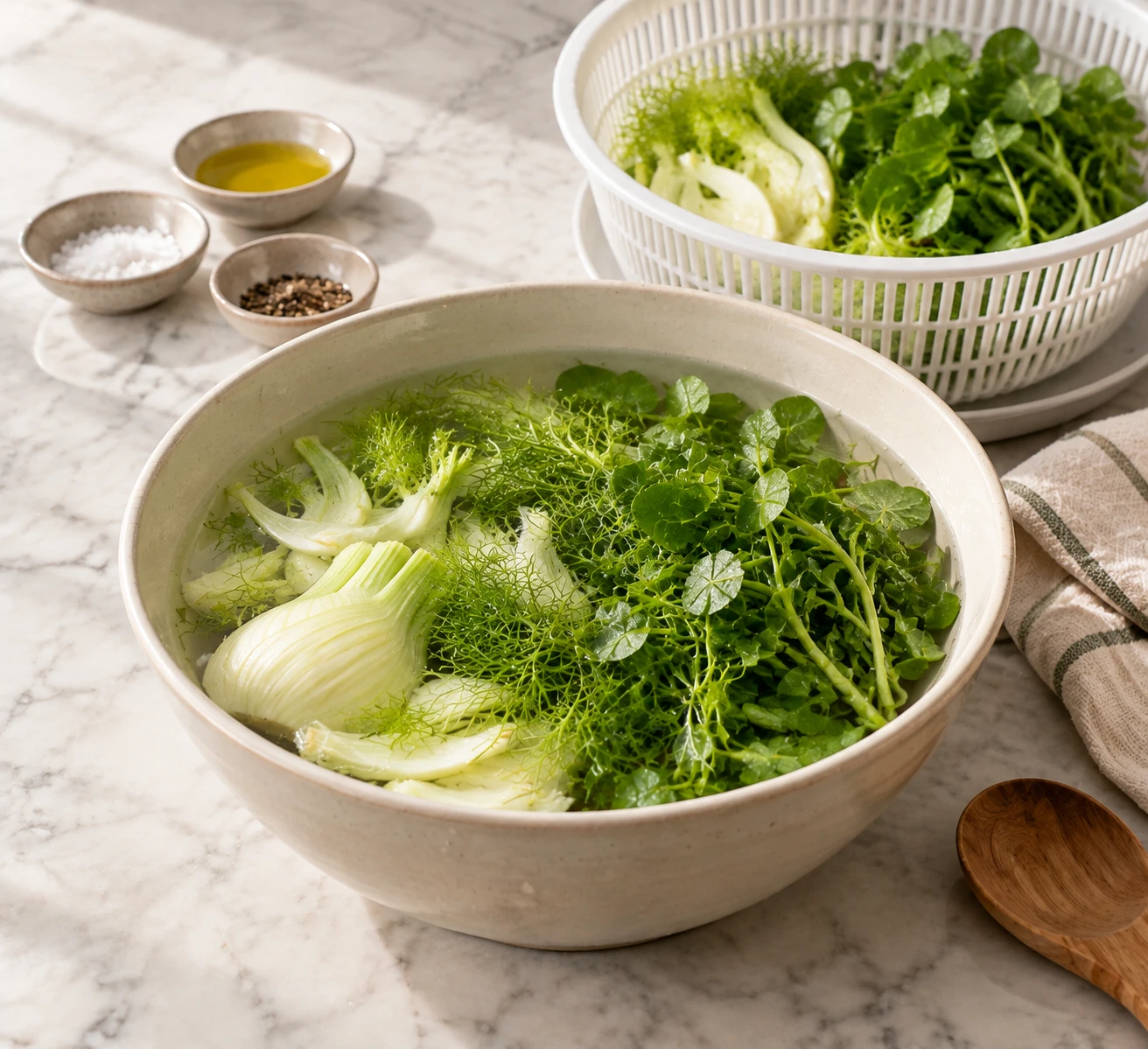
Wash and Dry Everything: Place the fennel bulb, fronds and watercress in a large bowl of clean, cold water. Gently swish the leaves to loosen any soil or grit, paying particular attention to the folds around the fennel base and the watercress stems. Rinse everything under fresh running water, drain thoroughly, then use a salad spinner or clean kitchen towel to remove excess moisture so the finished mixture doesn't become soggy during storage.
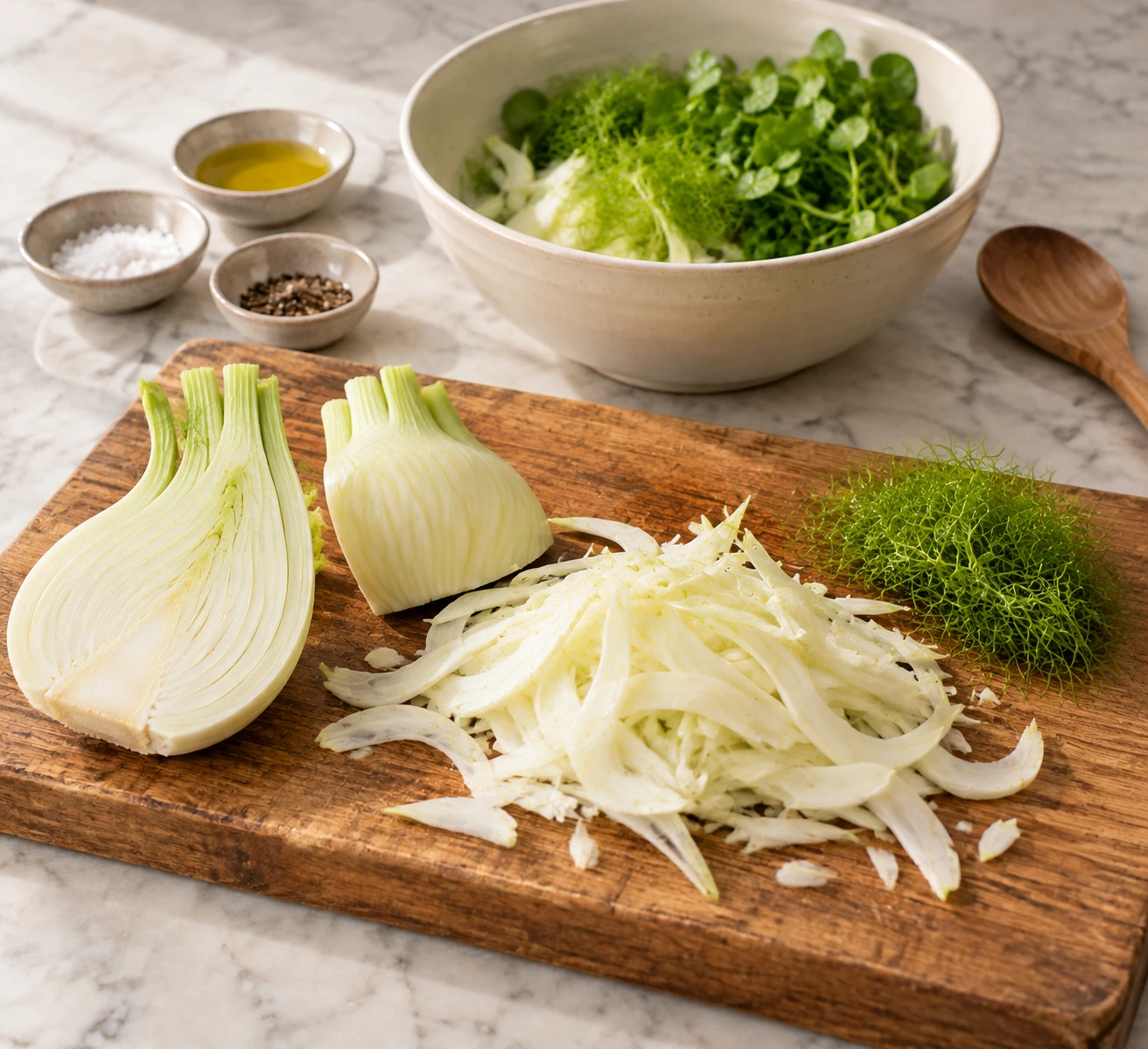
Shave the Fennel Bulb: Cut the cleaned fennel bulb in half lengthways, removing any particularly tough outer section. Place one half flat-side down on the chopping board so it stays steady, then use a sharp knife to slice it into very fine, narrow shavings, keeping your fingers safely tucked away from the blade. If you prefer, use a mandoline with its hand guard, aiming for thin pieces rather than thick wedges so the crunchy fennel mixes easily with the softer leaves.
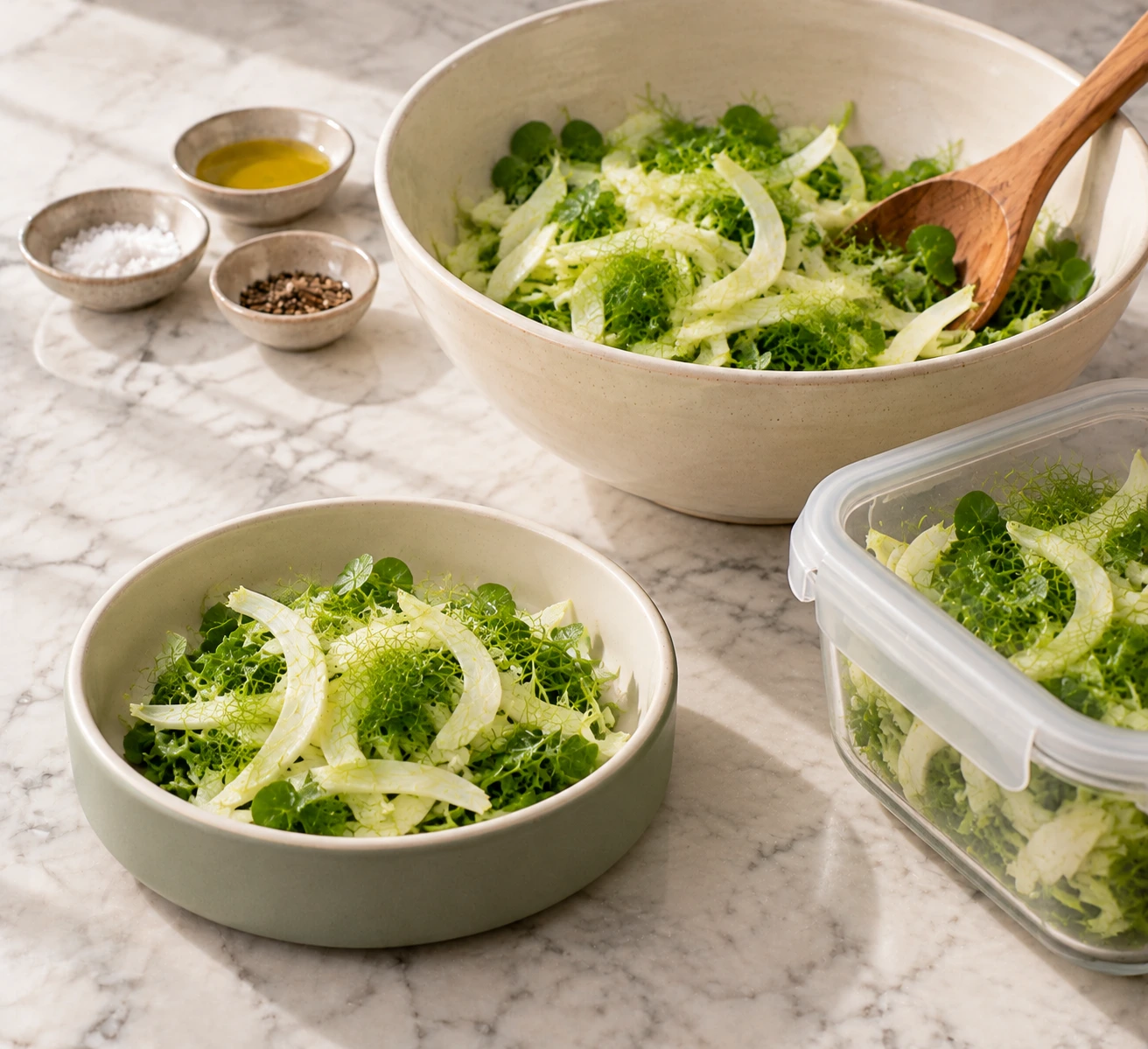
Separate and Combine the Greens: Finely chop the tender fennel fronds into short, manageable pieces, removing any thick or woody stalk sections as you go. Leave small watercress leaves whole and tear larger ones into smaller pieces by hand. Add the fennel shavings, chopped fronds and watercress to the same clean cream ceramic bowl, then gently lift and turn everything together with clean fingers or a small spoon without crushing the leaves.
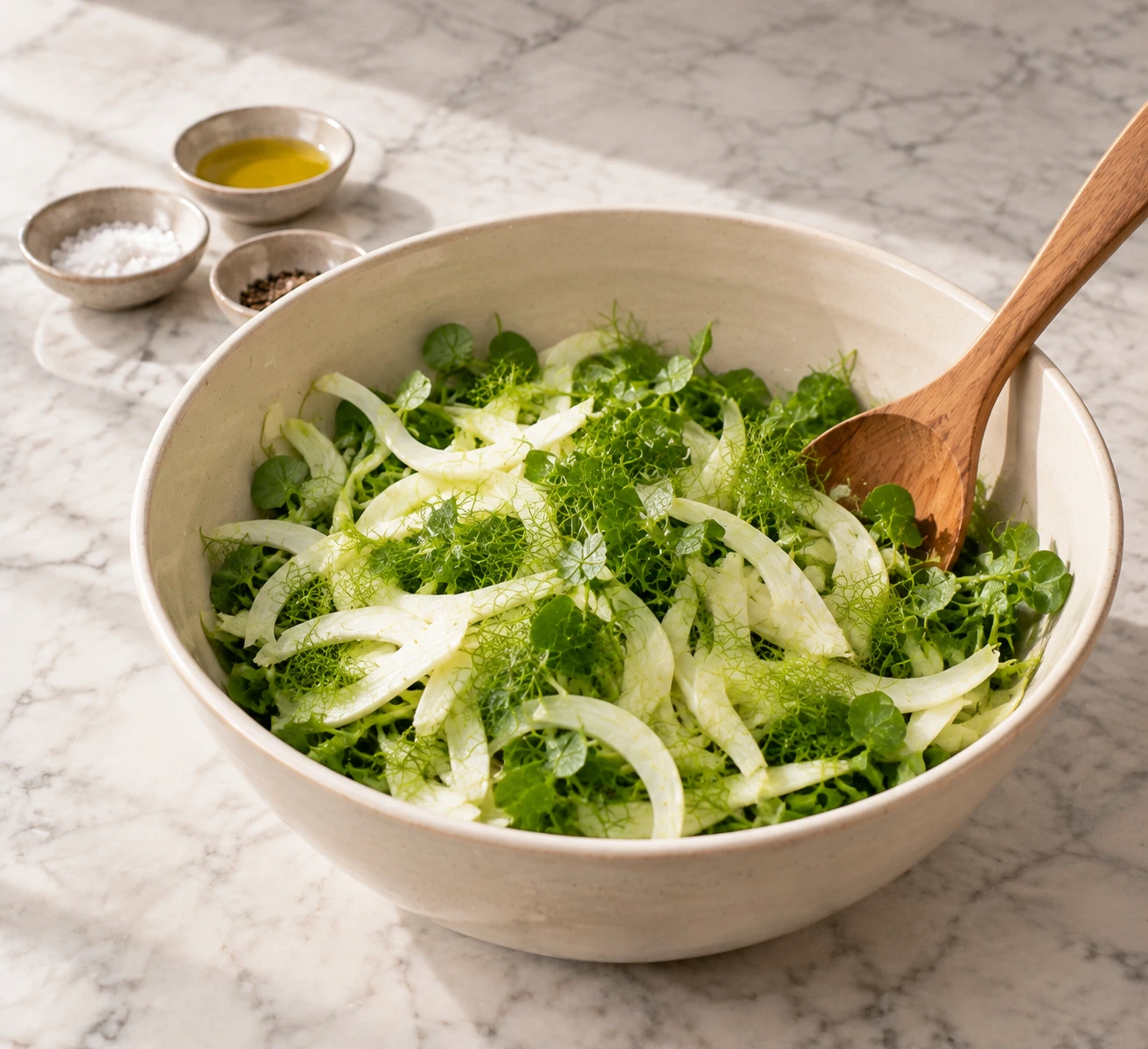
Portion and Serve Fresh: Give the mixture one last gentle turn and check for any thick fennel stalks or large pieces that might be difficult to manage. Transfer a small portion to a clean rabbit feeding dish and keep the remaining mixture covered in an airtight container in the refrigerator. Serve alongside unlimited grass hay and your rabbit's usual appropriate diet, starting with just a tiny amount if either vegetable is unfamiliar, and remove any uneaten fresh food promptly.
Made this recipe?
Tap the paw so other pet parents know it’s worth making.
Be the first to make it
Tips & serving
Serve a small amount as part of your rabbit's established fresh-food allowance, rather than treating this mixture as a complete meal. Grass hay must remain available without restriction, alongside suitable pellets and other familiar greens. Introduce fennel and watercress separately and gradually, starting with a tiny taste and observing how your rabbit responds. Adjust portions to the individual rabbit's size, age and existing diet. Discuss major diet changes or concerns about suitable vegetables with a veterinarian.
- Combines crisp fennel shavings with tender watercress for varied fresh-food textures.
- Uses the tender fennel fronds rather than discarding all the edible green parts.
- Offers a simple plant-based preparation without cooking, oils, dairy or added seasoning.
- Fine slicing creates manageable pieces that are easy to mix into an established fresh-food portion.
- Choose a firm fennel bulb with tightly layered flesh, fresh-looking fronds and no soft or discoloured patches.
- Place the fennel half flat-side down before slicing so it remains stable throughout the knife work.
Storage
Keep the prepared mixture in a clean airtight container in the refrigerator. Store the vegetables only after they have been thoroughly dried. Excess moisture trapped between the fennel shavings and watercress can make the leaves deteriorate more quickly. Do not leave the prepared mixture sitting in a rabbit's feeding area for extended periods. Remove leftovers promptly, particularly if the room is warm or the leaves have become damp.
Substitutions
If watercress is unavailable, a small amount of another familiar, suitable leafy green can be used instead. Introduce the replacement separately first so you can monitor your rabbit's response. If fennel is unfamiliar to your rabbit, do not replace it with a large quantity of another vegetable and serve the mixture immediately. Establish tolerance to each new ingredient individually before combining them. Tender fennel fronds can be reduced or omitted if the bulb is already familiar but the leafy parts are new.
Rabbits recipe FAQ
Is this fresh mix a complete meal for my rabbit?
Treat it as an occasional extra, not a meal plan. Serve a small amount as part of your rabbit's established fresh-food allowance, rather than treating this mixture as a complete meal.
Can rabbits have fresh fennel bulb?
This recipe uses fresh fennel bulb in a small, rabbit-appropriate amount. Skip it if your rabbit has a known sensitivity, and read the foods-to-avoid note on this page before serving.
How should I store leftovers?
Keep the prepared mixture in a clean airtight container in the refrigerator. Use it within 24 hours for the best freshness and texture, and check carefully for wilting, sliminess or unpleasant smells before serving.
What's the safest way to try this with my rabbit?
Offer a small amount beside regular food, introduce one new recipe at a time, and watch appetite, stool, skin, and behavior for a day or two.
Can rabbits eat fresh fennel bulb?
Fresh fennel bulb can be offered as a small part of a varied rabbit diet when introduced gradually. Wash it thoroughly, remove damaged sections and cut it into manageable pieces. Start with a tiny amount, especially if your rabbit has never eaten fennel before.
Is watercress suitable for a rabbit's fresh-food mix?
Watercress is a leafy vegetable that can be considered as part of a varied selection of rabbit greens. Wash it carefully and offer a modest amount rather than making it the main ingredient. Check established rabbit feeding guidance and introduce unfamiliar greens individually.
Sources