

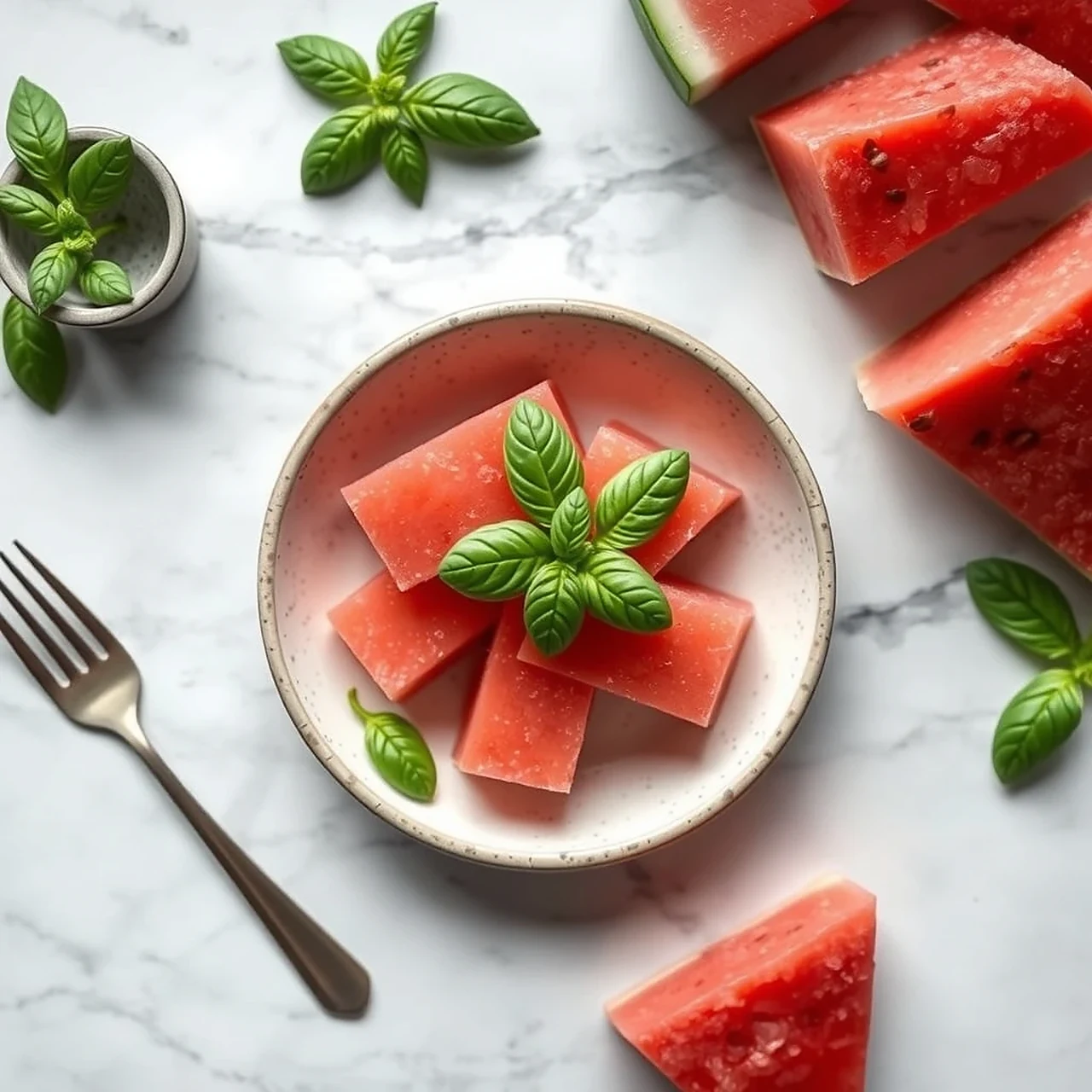
As the temperatures rise, many of us look for ways to help our furry friends stay cool and comfortable. While a splash in the water or a shaded spot is always welcome, a refreshing treat can be a wonderful way to offer hydration and a little joy. This recipe for Frozen Watermelon and Basil Puree Cubes is designed with exactly that in mind: a simple, wholesome, and surprisingly flavorful way to cool down your dog. Watermelon is a summer staple known for its high water content, making it excellent for hydration. When combined with a touch of fresh basil, which is generally considered safe for dogs in small quantities and adds a subtle, herbaceous note, you create a treat that's a step beyond the usual. We've carefully crafted this recipe to ensure it's easy for you to make and delightful for your dog to enjoy, focusing on natural ingredients and straightforward preparation. Before introducing any new food into your dog's diet, especially if they have sensitivities or health conditions, it's always wise to discuss it with your veterinarian. This ensures the treat is appropriate for your individual dog's needs and can help you determine suitable serving sizes.
Safety first: Introduce new foods gradually and speak with your veterinarian before making major changes to your dog's diet.
Foods to avoid
Always ensure all watermelon rind and seeds are completely removed, as these parts are not safe for dogs. The rind can cause digestive upset, and seeds can lead to choking or intestinal issues. Do not use artificial sweeteners, as some, like xylitol, are highly toxic to dogs.
Ingredients
Instructions
Prepare the Watermelon: Begin by carefully cutting your seedless watermelon into manageable chunks. It's crucial to remove all of the rind and any remaining seeds. While watermelon flesh is safe, the rind can be difficult for dogs to digest and may cause an upset stomach, and seeds can pose a choking hazard or intestinal blockage risk if ingested in large quantities. Aim for chunks that are easy to blend.
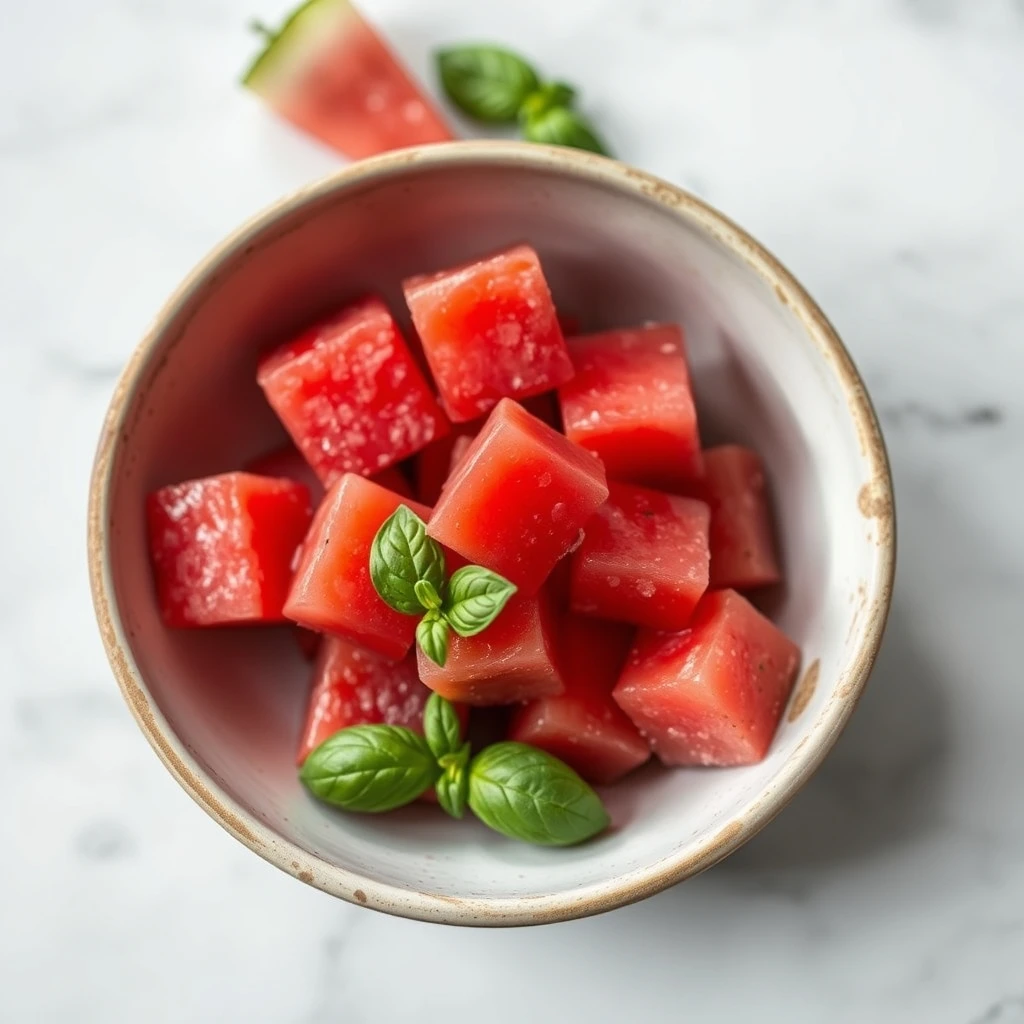
Wash the Basil Leaves: Take your 5-6 fresh basil leaves and gently rinse them under cool running water. Pat them dry with a clean paper towel or let them air dry briefly. This step ensures any dirt or residue is removed, preparing the basil for blending.
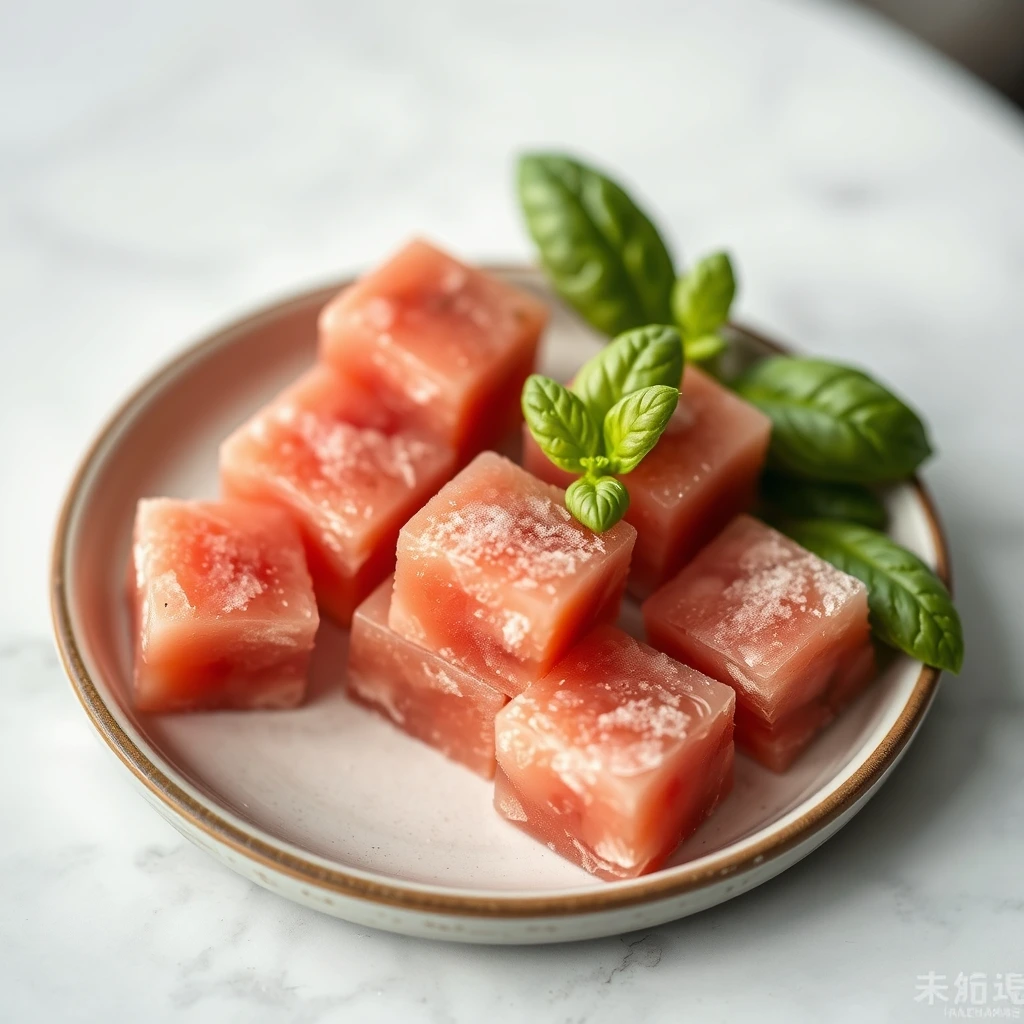
Combine Ingredients in Blender: Place the prepared watermelon chunks into your blender or food processor. Add the washed basil leaves on top of the watermelon. The watermelon provides enough liquid so no additional water should be needed for blending.
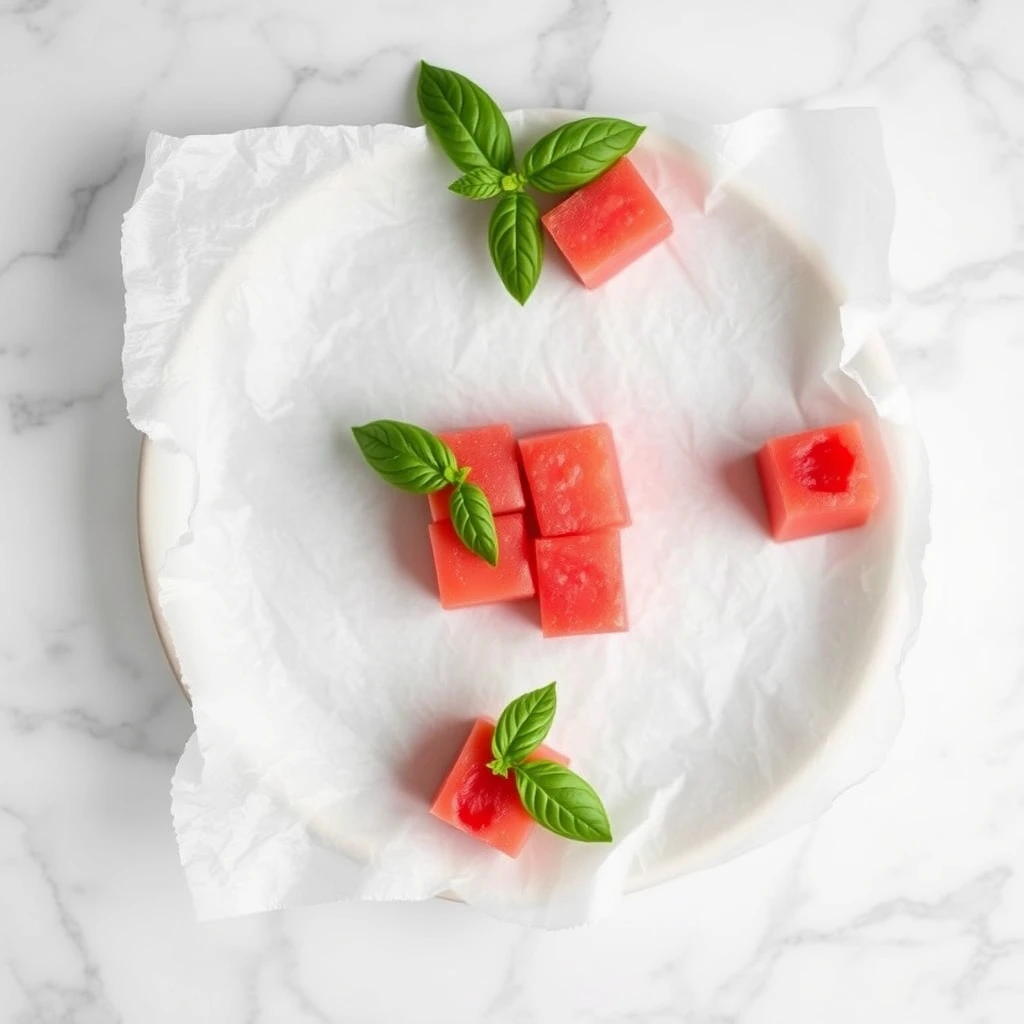
Puree Until Smooth: Secure the lid on your blender or food processor and blend the ingredients until you achieve a completely smooth, liquid puree. There should be no visible chunks of watermelon or basil. This smooth texture is important for easy pouring and ensures a consistent treat texture for your dog.
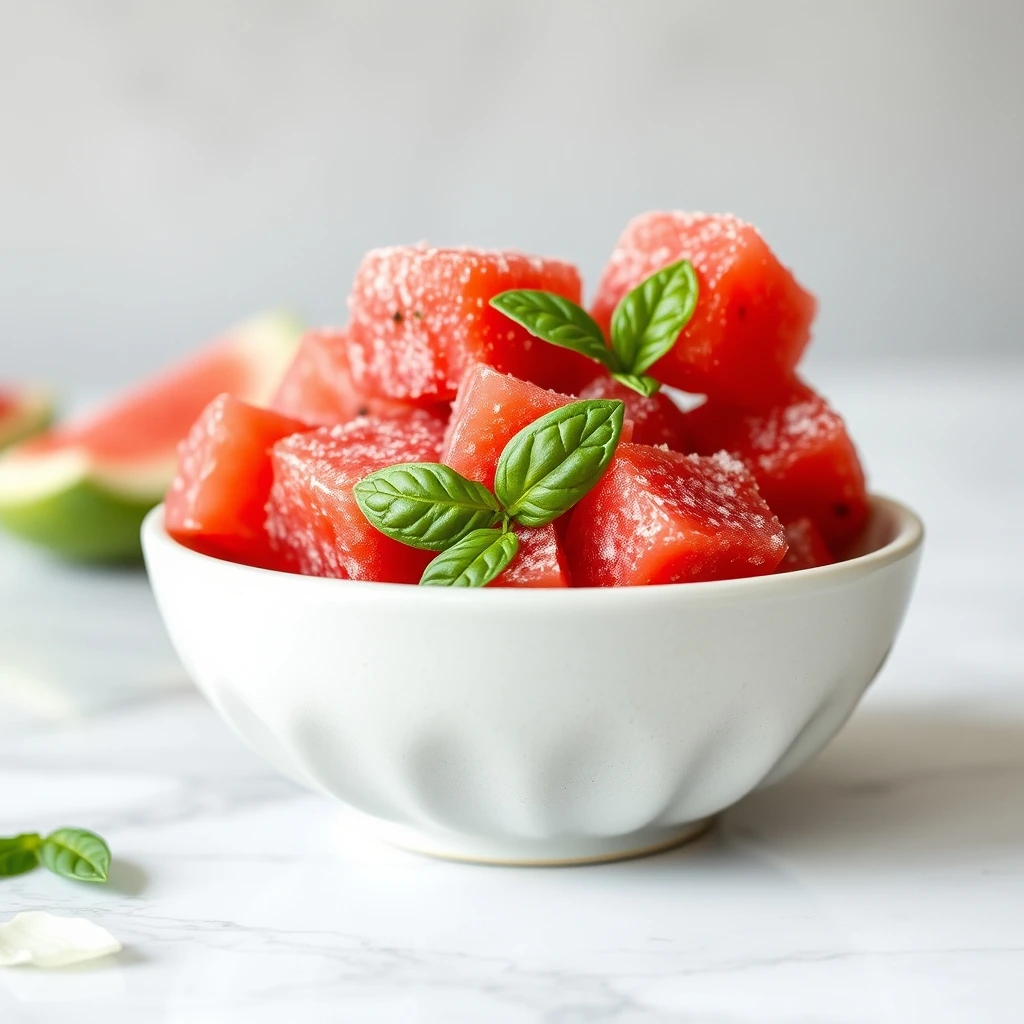
Pour into Ice Cube Trays: Carefully pour the watermelon and basil puree into clean ice cube trays. Fill each compartment almost to the top, leaving a small space for expansion during freezing. Using standard ice cube trays creates appropriately sized portions for most dogs, but you can also use smaller silicone molds for tiny treats or larger ones for bigger dogs.
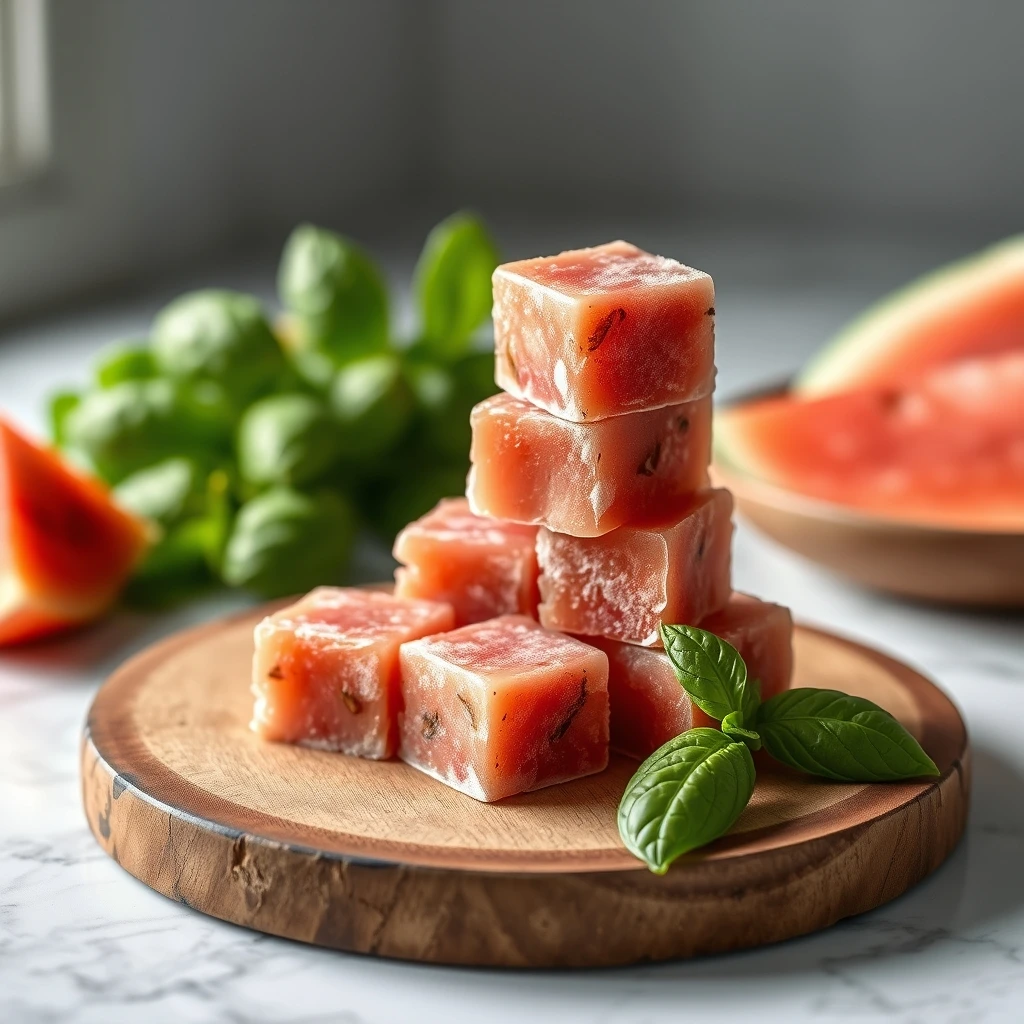
Freeze Thoroughly: Place the filled ice cube trays into the freezer and allow the puree to freeze completely. This typically takes at least 3-4 hours, but can vary depending on your freezer's temperature and the size of your cubes. Ensure they are solid before attempting to remove them.
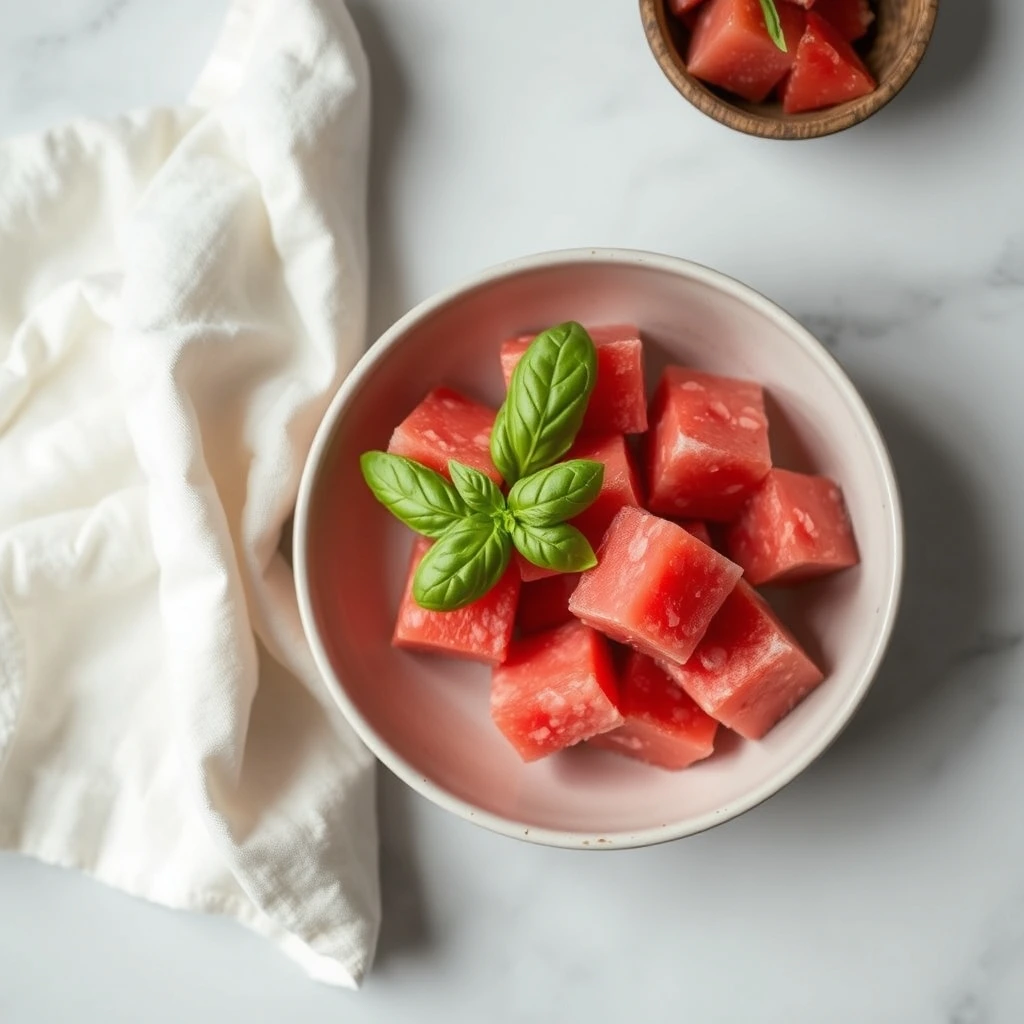
Store Frozen Cubes: Once the cubes are fully frozen, pop them out of the trays. Transfer the frozen watermelon and basil cubes into an airtight, freezer-safe container or a resealable freezer bag. This prevents freezer burn and keeps the treats fresh. Store them in the freezer until you are ready to serve.
Made this recipe?
Tap the paw so other pet parents know it’s worth making.
Be the first to make it
Tips & serving
These frozen treats are intended as an occasional supplement to your dog's regular diet, not a meal replacement. The appropriate number of cubes will depend on your dog's size, activity level, and overall dietary needs. For small dogs, one cube a day might be sufficient. Medium to large dogs might enjoy two or three. Always monitor your dog's reaction when introducing new foods. If you have any concerns about portion sizes or your dog's dietary health, consult your veterinarian.
- Excellent source of hydration, perfect for warm weather
- Low in calories, making it a guilt-free treat
- Provides natural vitamins and antioxidants from watermelon
- Offers a novel and refreshing flavor combination
- Simple to prepare with minimal ingredients
- For smaller dogs or quick thawing, consider using mini ice cube trays.
Storage
Store frozen cubes in an airtight freezer-safe container or bag.
Substitutions
- Fruits
You could substitute a portion of the watermelon with other dog-safe fruits like cantaloupe, honeydew melon, or blueberries. Always ensure they are seedless and rind-free, and introduce new fruits gradually.
- Herbs
A tiny amount of fresh mint leaves could replace basil for a different refreshing twist. Always research herb safety for dogs before using.
Dogs recipe FAQ
Can I serve this treat every day?
Treat it as an occasional extra, not a meal plan. These frozen treats are intended as an occasional supplement to your dog's regular diet, not a meal replacement. The appropriate number of cubes will depend on your dog's size, activity level, and overall dietary needs.
Is watermelon okay for dogs?
This recipe uses watermelon in a small, dog-appropriate amount. Skip it if your dog has a known sensitivity, and read the foods-to-avoid note on this page before serving.
How should I store leftovers?
Store frozen cubes in an airtight freezer-safe container or bag. They can be kept in the freezer for up to 2-3 months.
How should I introduce this treat?
Start with a taste-size portion next to your dog's usual food, and hold off on serving more until you have seen that it agrees with them.
Is basil safe for dogs?
Yes, fresh basil is generally considered safe for dogs in small, moderate amounts. It's not toxic and can offer some antioxidants. However, as with any new food, introduce it slowly and observe your dog for any adverse reactions.
Can I use other fruits in this recipe?
You can experiment with other dog-safe fruits like blueberries, cantaloupe, or honeydew. Always ensure they are prepared safely (e.g., no seeds, rinds, or pits) and are suitable for your dog. Always check with your veterinarian before introducing multiple new ingredients.
Sources