
If your dog is ready for something a little different from the usual homemade biscuit, these salmon and oat fishcakes are worth trying. Flaky cooked salmon, rolled oats and a little egg come together to make small, savory cakes with a pleasantly different texture. They hold their shape without any oil, salt or seasoning, and are easy to divide into smaller portions once cooled. Take a little extra care when preparing the salmon. Remove every bone, cook the fish thoroughly and let it cool before mixing. These are occasional treats, not a complete or balanced dog food, so start with a small piece and speak with your veterinarian before making major changes to your dog's diet.
Safety first: Skip this recipe if your dog has a known sensitivity to any ingredient, and introduce anything new slowly.
Foods to avoid
Never use raw or undercooked salmon, smoked salmon, salted fish, seasoned leftovers or fish prepared with garlic, onion, butter or sauces. Smoked and cured fish can contain excessive salt. Check the fillet thoroughly for pin bones before and after cooking. Do not use fish that smells spoiled or has been stored incorrectly. Keep raw fish and egg separate from ready-to-eat food, wash hands and utensils thoroughly, and do not feed cooked fish bones. These fishcakes are supplementary treats, not a substitute for complete dog food.
Ingredients
Instructions
Prepare the salmon: Check the salmon fillet carefully for pin bones and remove the skin. Steam or poach the fish in plain water until the centre reaches 63°C, the flesh is opaque and it flakes easily, without adding salt, butter, oil, stock or seasoning. Transfer it to a clean plate to cool enough to handle, then use clean fingers to separate it into small flakes and check once more for remaining bones, discarding any you find rather than crushing them into the mixture.
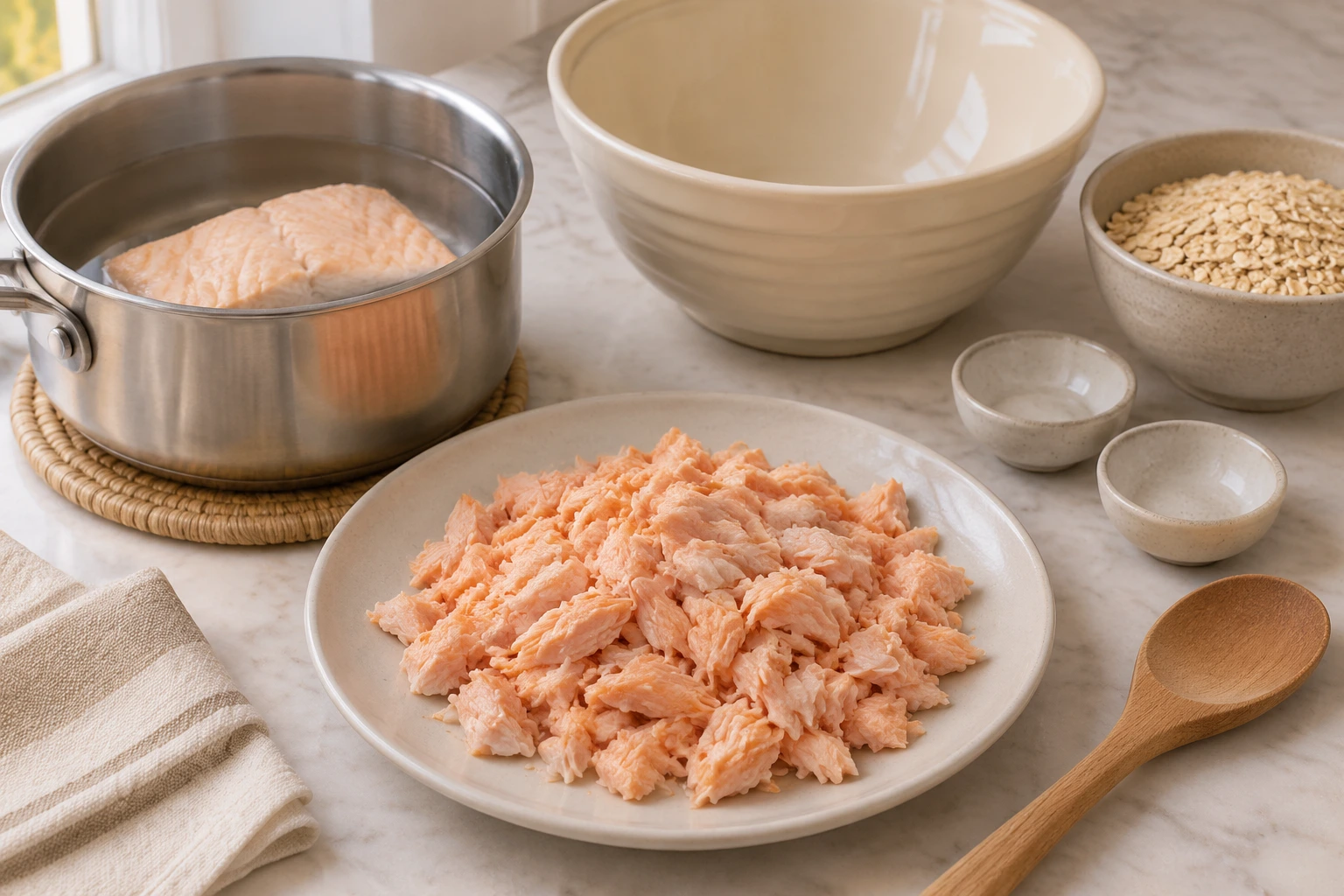
Prepare the oats: Put the rolled oats in a mixing bowl and briefly pulse them in a food processor, or crush them with the back of a spoon, until they resemble coarse flour with a few small flakes left. This helps give the fishcakes structure without making them too dense. Add the cooled salmon flakes and gently mix with a fork, keeping small pieces of fish visible rather than blending everything into a smooth paste.
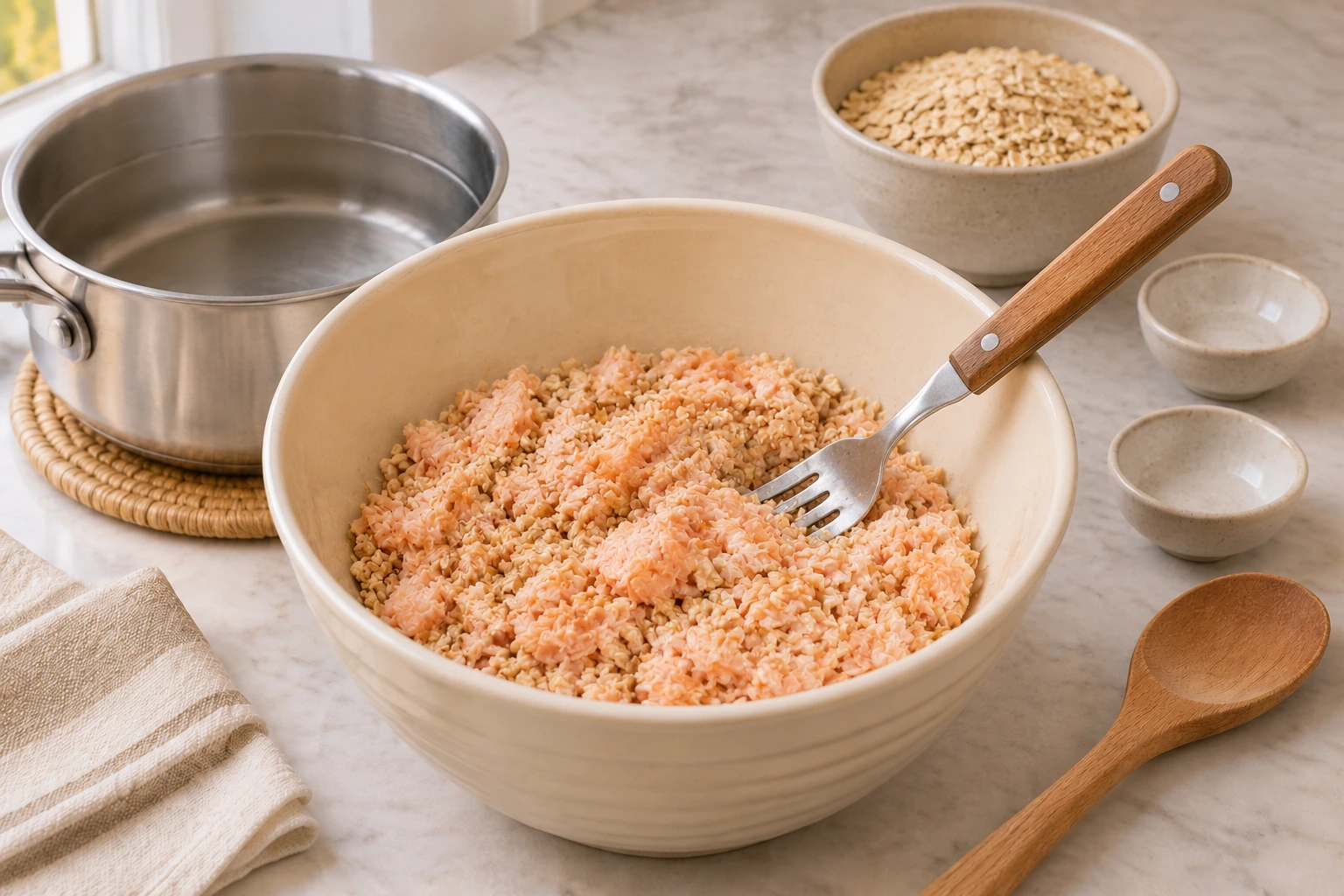
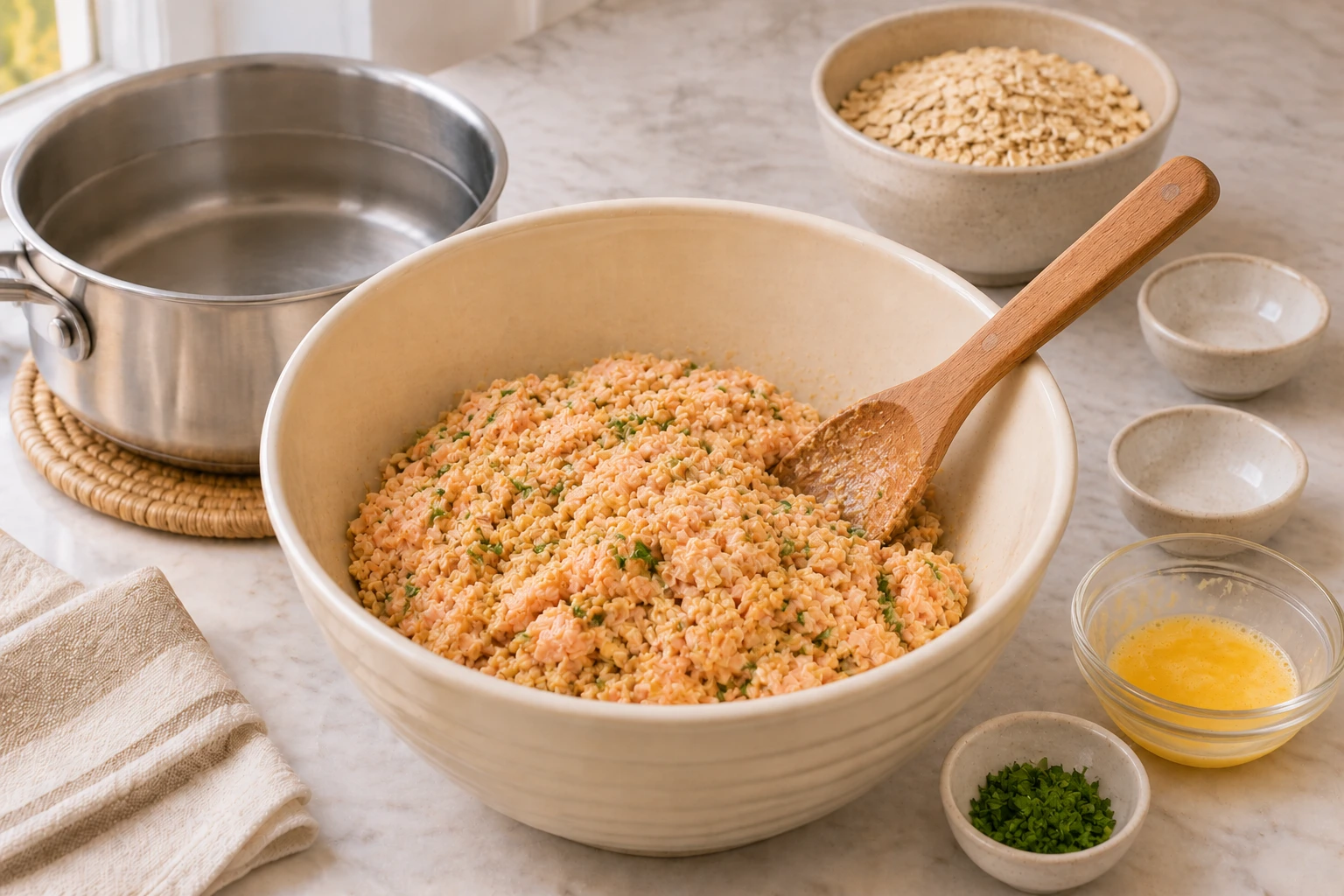
Bind the fishcake mixture: Pour the beaten egg over the salmon and oats, then fold gently until everything is evenly combined and starts to hold together when pressed. Stir in the optional finely chopped parsley, if using. If the mixture seems dry and crumbly, add water a teaspoon at a time; if it feels too loose or wet, let it stand for five minutes so the oats can absorb some moisture, until it is moist but firm enough to shape without spreading across the bowl.
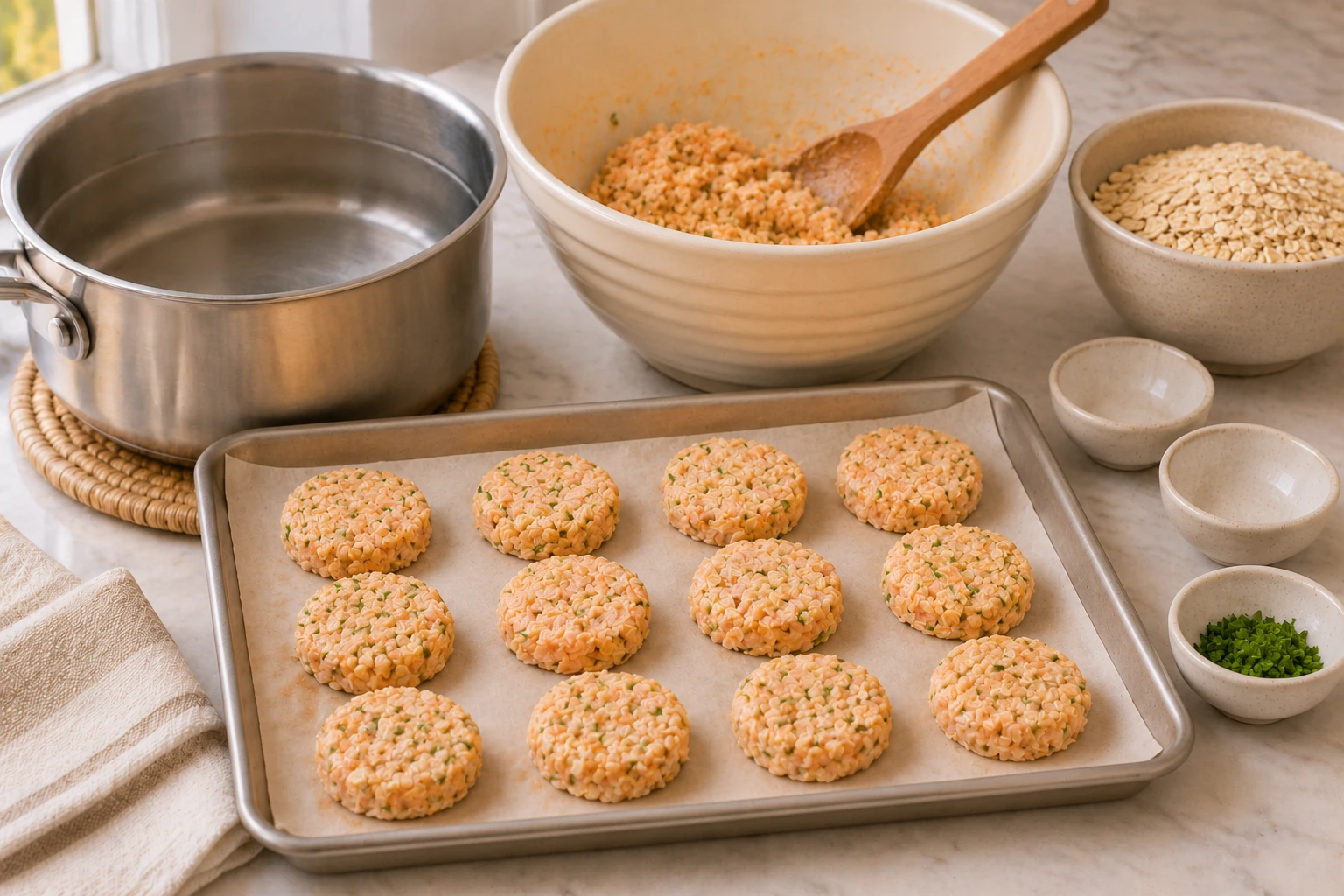
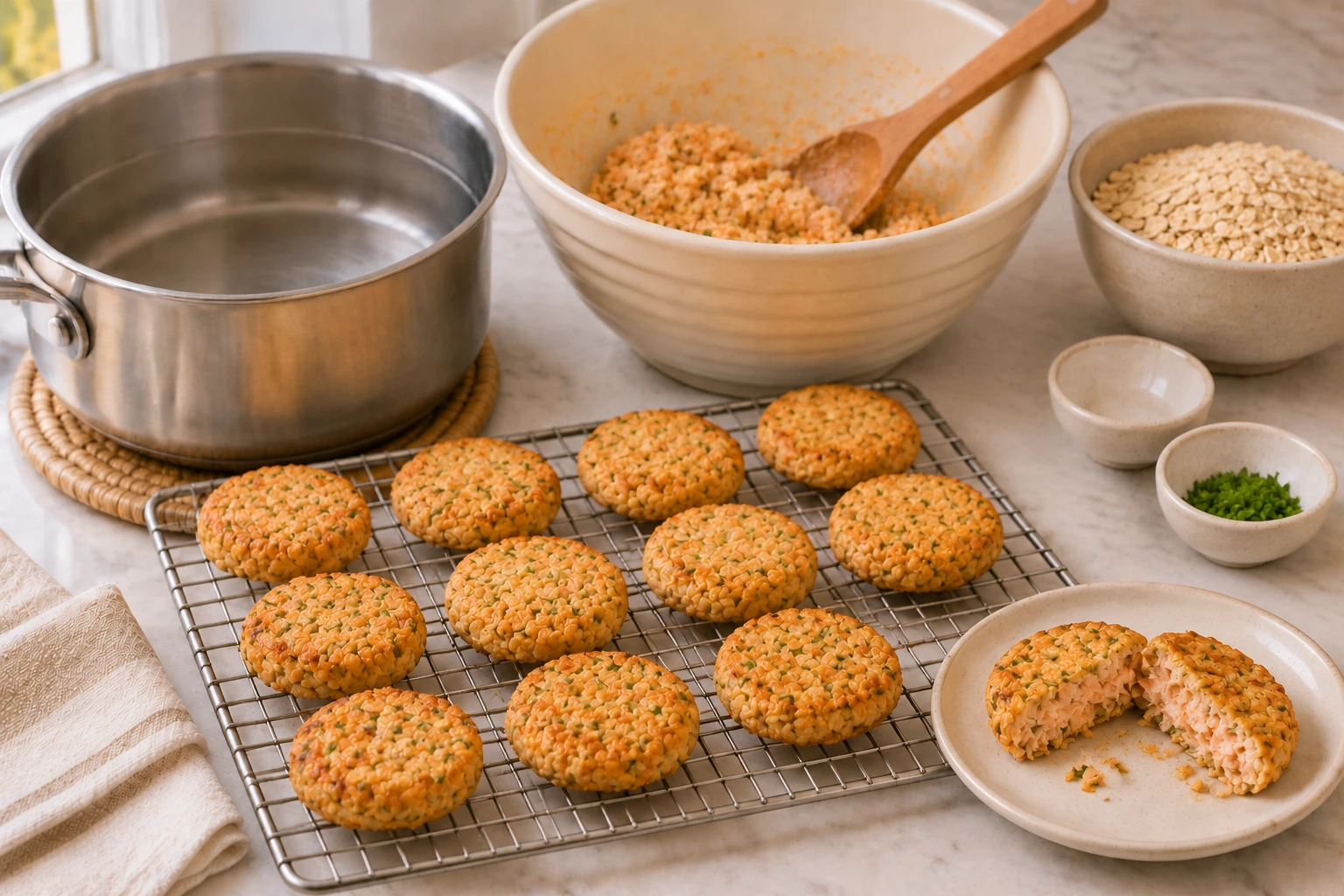
Shape the fishcakes: Line a baking tray with parchment paper and divide the mixture into 10 to 12 portions. Shape each one into an even cake approximately 4 cm wide and 1 to 1.5 cm thick, compacting it gently so it holds together without becoming dense. Arrange the fishcakes on the tray with a little space between them, then wash your hands and clean any surfaces that came into contact with raw egg or raw fish.
Bake and cool completely: Preheat a conventional oven to 180°C and bake the fishcakes for approximately 18 to 22 minutes, carefully turning them once if necessary for even cooking. They should feel set, hold together when lifted and be cooked through, with the egg fully set; check that the centres are hot and thoroughly cooked rather than judging by colour alone. Transfer them to a clean plate or cooling rack and leave them to cool completely before serving, breaking one open to make sure no uncooked mixture remains in the centre.
Made this recipe?
Tap the paw so other pet parents know it’s worth making.
Be the first to make it
Tips & serving
Allow each fishcake to cool completely before serving. Start with a small broken piece to see how your dog handles this unfamiliar treat. For smaller dogs, break a cake into several bite-sized pieces; larger dogs can have a slightly larger piece if appropriate for their size and normal diet. Treats should remain occasional and should not displace a balanced complete food. Major diet changes, including regularly introducing homemade foods, should always be discussed with a veterinarian.
- Salmon provides a fish-based alternative to the poultry and beef ingredients commonly used in homemade dog treats.
- The oat and egg mixture creates a distinct, easy-to-portion texture without requiring specialist ingredients or complicated shaping equipment.
- Baking the portions on parchment avoids the need to add cooking oil or butter.
- Preparing individual small cakes makes it easier to divide treats into measured portions and refrigerate the remaining batch.
- Cool the salmon before mixing so the egg does not begin cooking and the oats absorb moisture evenly.
- Keep the fish flakes visible in the mixture instead of blending everything into a completely smooth paste.
Storage
Refrigerate completely cooled fishcakes in an airtight food-safe container at 4°C or colder. For longer storage, freeze individual cooled fishcakes in a single layer until firm, then transfer them to a labelled freezer-safe container. Use within two months for best quality. Defrost frozen portions in the refrigerator rather than on the countertop. Serve only after they have thawed fully, and do not refreeze previously thawed portions.
Substitutions
Plain rolled oats can be replaced with finely ground plain oats made from the same ingredient. Avoid instant flavored oatmeal, sweetened cereals and seasoned oat mixes. The texture may need a small adjustment with water. If parsley is unavailable, simply leave it out. It is optional and does not provide essential structure. Do not replace it with onion, garlic, chives or mixed seasoning. A different boneless fish fillet, such as plain cod, can replace salmon if fully cooked, carefully deboned and checked for suitability. The flavour and moisture level will differ, so adjust the oats gradually.
Dogs recipe FAQ
Can I serve this treat every day?
Treat it as an occasional extra, not a meal plan. Allow each fishcake to cool completely before serving. Start with a small broken piece to see how your dog handles this unfamiliar treat.
Is boneless salmon fillet okay for dogs?
This recipe uses boneless salmon fillet in a small, dog-appropriate amount. Skip it if your dog has a known sensitivity, and read the foods-to-avoid note on this page before serving.
How long does Dogs Salmon and Oat Savory Fishcakes keep?
Refrigerate completely cooled fishcakes in an airtight food-safe container at 4°C or colder. Use within two days, and discard anything left at room temperature for more than two hours.
How should I introduce this treat?
Start with a taste-size portion next to your dog's usual food, and hold off on serving more until you have seen that it agrees with them.
Can dogs eat homemade salmon fishcakes?
Dogs can generally have small amounts of plain, thoroughly cooked, boneless salmon as an occasional treat. These fishcakes also contain oats and egg, so introduce a small portion first and monitor how your dog tolerates the new food. They should never replace a complete and balanced diet.
Can I make these salmon fishcakes without egg?
Egg helps bind the salmon and oats, so removing it may make the fishcakes more fragile. You can try adding a little extra finely ground oat and enough water to help the mixture hold together. Shape smaller cakes and handle them gently. The texture will be less cohesive.
Sources