

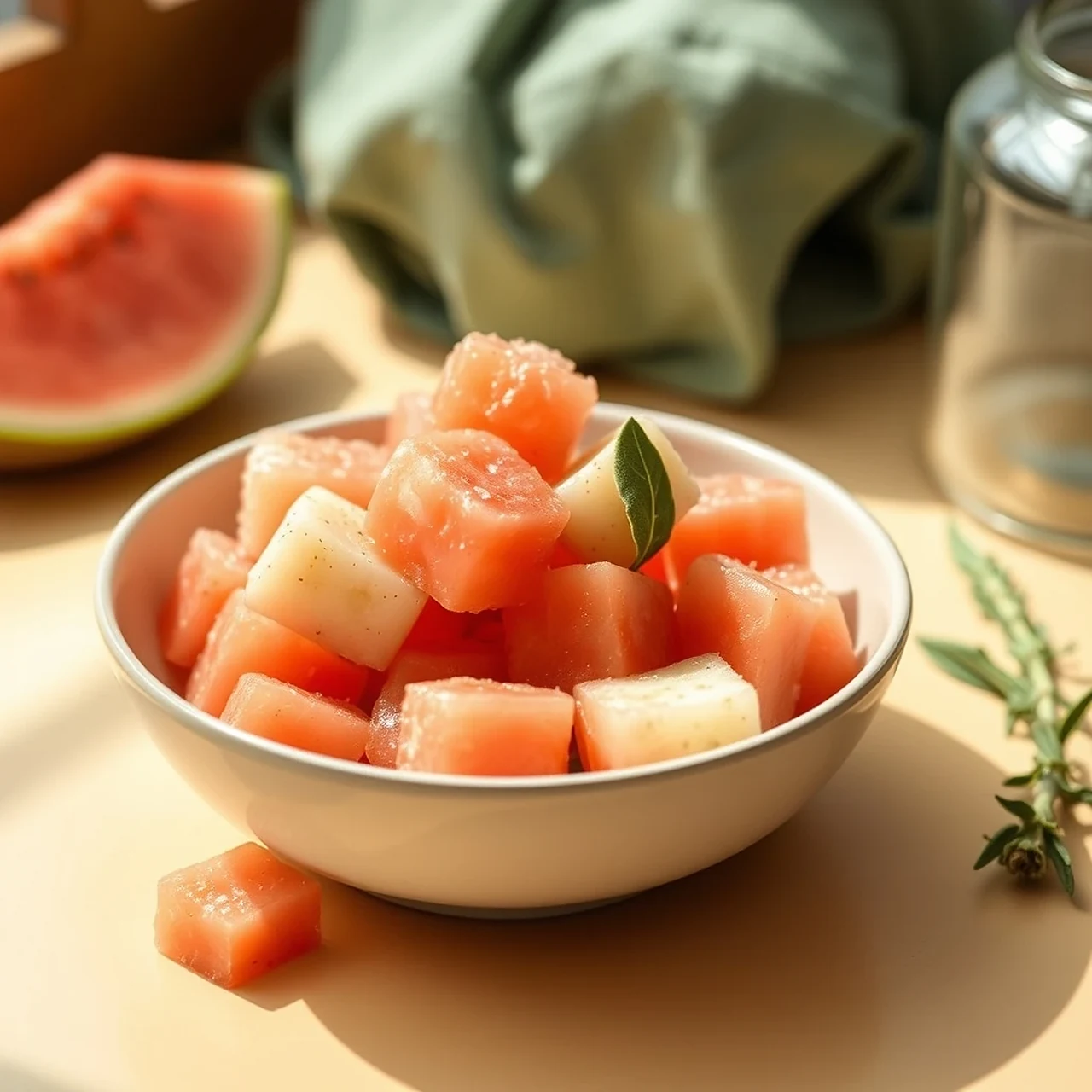
As the weather warms, keeping our furry friends comfortably cool and well-hydrated becomes a top priority. Just like us, pets can benefit immensely from refreshing, moisture-rich snacks during warmer months. These Cooling Melon Hydration Cubes offer a wonderful solution, transforming a simple, wholesome fruit into a delightful frozen treat that's both practical and naturally appealing. This recipe focuses on the inherent goodness of melon, a fruit known for its high water content and natural sweetness. We aim to create a treat that supports your pet's hydration without relying on artificial flavors, added sugars, or unnecessary fillers often found in commercial options. It's a single-ingredient approach, making it easy to digest and suitable for many dietary needs. Before introducing any new treat, even one as seemingly simple as melon, it's always wise to consider your pet's individual dietary sensitivities. While melon is generally safe for most dogs and many small pets, every animal is unique. If your pet has known allergies or a sensitive digestive system, or if you are considering a significant change to their regular diet, a conversation with your veterinarian is highly recommended to ensure these treats are a good fit.
Safety first: Introduce new foods gradually and speak with your veterinarian before making major changes to your dog's diet.
Foods to avoid
Never use melons or other fruits that contain seeds or pits without thoroughly removing them, as these can be choking hazards or contain toxic compounds (e.g., apple seeds, cherry pits). Avoid adding any artificial sweeteners, added sugars, or other ingredients not specifically approved for pets. Do not use citrus fruits or grapes/raisins, as these are toxic to dogs.
Ingredients
Instructions
Prepare the Melon: Thoroughly wash the exterior of the melon under cool running water. Place the melon on a stable cutting board. Carefully cut the melon in half, then scoop out all seeds and discard them.
Remove Rind and Cube: With the melon halves, carefully cut away the green rind, ensuring no white or green parts remain. Cube the melon flesh into manageable pieces, roughly 1-2 inches in size, suitable for blending.
Blend Until Smooth: Transfer all the cubed melon flesh into a blender or food processor. Blend on high until the melon is completely smooth and liquid, with no chunks remaining. If you prefer a very smooth texture, you can pour the liquid through a fine-mesh sieve to remove any pulp.
Pour into Trays: Carefully pour the smooth melon liquid into clean ice cube trays. Fill each compartment to just below the rim to allow for expansion during freezing.
Freeze Solid: Transfer the filled ice cube trays to the freezer. Ensure they are placed on a flat, stable surface to prevent spills. Freeze for a minimum of 4 hours, or until the cubes are completely solid.
Demold and Store: Once fully frozen, gently remove the melon cubes from the trays. Silicone trays make this process particularly easy. Transfer the demolded cubes into an airtight, freezer-safe container or a resealable freezer bag.
Made this recipe?
Tap the paw so other pet parents know it’s worth making.
Be the first to make it
Tips & serving
Serve 1-2 small cubes to dogs as an occasional treat, especially on warm days. For smaller pets like hamsters or rabbits, a tiny piece of a cube may be offered, but always in very small amounts due to their sensitive digestive systems. Always introduce new treats gradually. Remember, treats should not make up more than 10% of your pet's daily caloric intake. Always provide fresh water alongside any treats. Major dietary changes or concerns should always be discussed with your veterinarian.
- Promotes hydration during warm weather.
- Provides a naturally sweet, low-calorie treat.
- Aids in cooling pets down.
- Offers essential vitamins and antioxidants found in melon.
- Single-ingredient simplicity reduces digestive upset risks.
- Ripe Melon is Key: Choose a melon that is ripe but firm. A ripe melon will be sweeter and more flavorful, making the treats more appealing.
Storage
For best freshness and taste, it is recommended to use them within one month.
Substitutions
Other Safe Fruits: While this recipe highlights melon, you can experiment with other pet-safe fruits like blueberries, strawberries, or pureed banana. Ensure they are blended smooth and free of any seeds or pits. Always research fruit safety for your specific pet species before offering. Additives (Optional): For an extra boost, a small amount of plain, unsweetened yogurt (dairy or non-dairy, depending on pet's tolerance) can be blended in. However, for a truly single-ingredient treat, stick to just melon.
Dogs, Small Pets recipe FAQ
Can Refreshing Cooling Melon Hydration Cubes for Pets replace my dog's regular diet?
Treat it as an occasional extra, not a meal plan. Serve 1-2 small cubes to dogs as an occasional treat, especially on warm days. For smaller pets like hamsters or rabbits, a tiny piece of a cube may be offered, but always in very small amounts due to their sensitive.
Is melon okay for dogs?
This recipe uses melon in a small, dog-appropriate amount. Skip it if your dog has a known sensitivity, and read the foods-to-avoid note on this page before serving.
How long does Refreshing Cooling Melon Hydration Cubes for Pets keep?
Store the frozen melon hydration cubes in an airtight freezer-safe container or a heavy-duty freezer bag in the freezer for up to 2-3 months. For best freshness and taste, it is recommended to use them within one month.
How should I introduce this treat?
Start with a taste-size portion next to your dog's usual food, and hold off on serving more until you have seen that it agrees with them.
Can I use any type of melon for these treats?
Watermelon and cantaloupe are excellent choices due to their high water content and safety for most pets. Honeydew melon is also generally safe. Always ensure seeds and rind are completely removed.
How often can I give my pet these melon cubes?
These are best served as an occasional treat, especially when it's warm. Moderation is key to avoid upsetting your pet's digestive system. A couple of small cubes a few times a week is a good guideline for dogs, adjusted for size.
Sources