

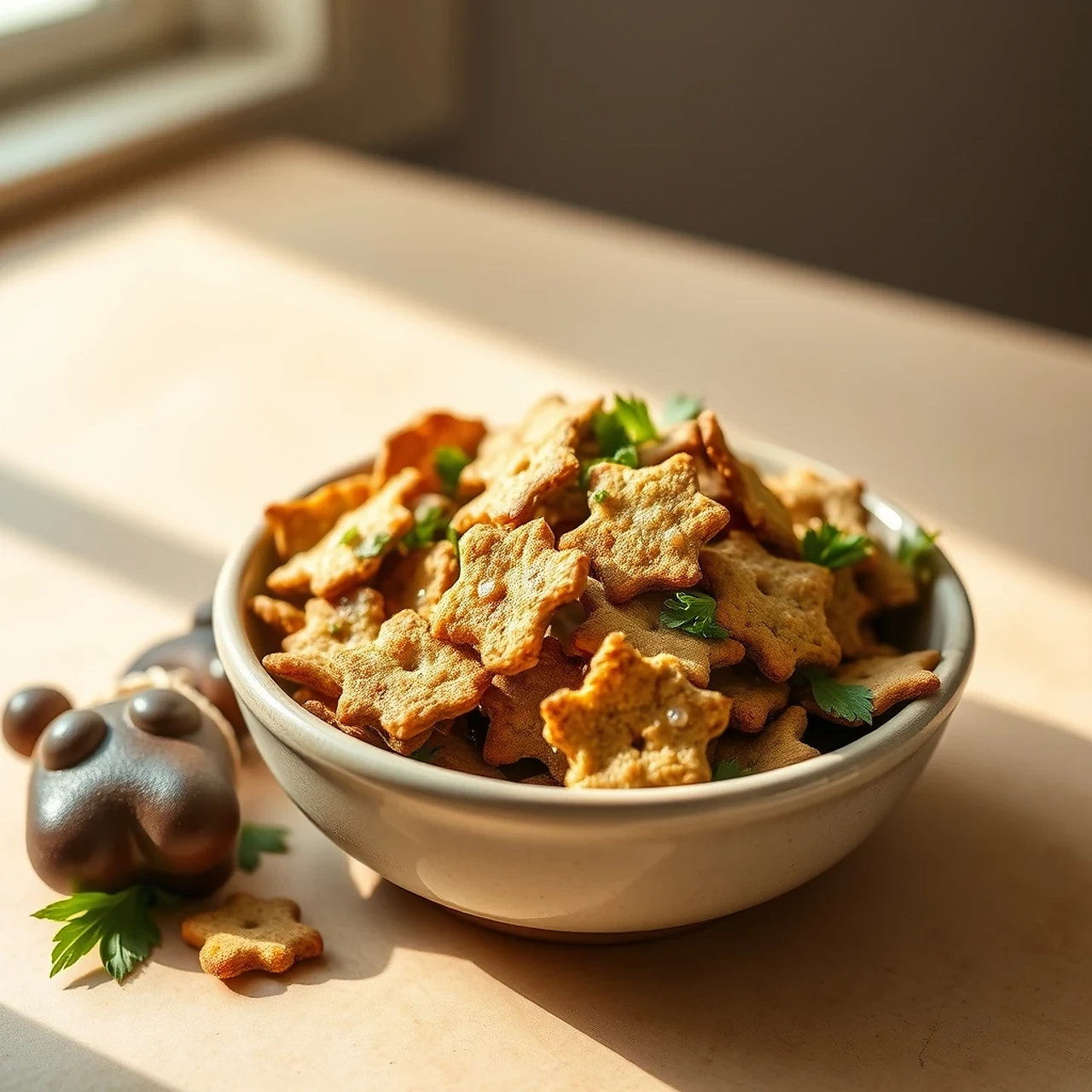
Creating homemade treats for your beloved pets can be a rewarding experience, ensuring they receive wholesome ingredients without unnecessary fillers or artificial additives. These Sardine and Parsley Dehydrated Crisps offer a fantastic way to provide a natural boost of omega-3 fatty acids, known to support healthy skin, a shiny coat, and joint health, while also helping to combat common pet breath issues with fresh parsley. It's a treat that's as beneficial as it is delicious for both dogs and cats. Sardines are a true superfood for pets, offering essential nutrients in a small package. When choosing sardines, it's crucial to select those packed in water with no added salt, as excessive sodium is not good for pets. Fresh parsley is included not just for its mild flavor but also for its natural properties that can help freshen breath, making cuddle time even more enjoyable. As with any dietary change or new treat, moderation is key. Always introduce new foods slowly and observe your pet for any adverse reactions. While these crisps are made with pet-safe ingredients, it is always wise to discuss any major changes to your pet's diet with your veterinarian, especially if your pet has existing health conditions or dietary restrictions. This recipe aims to provide a healthy, crunchy snack that complements a balanced diet, not replace a meal.
Safety first: Skip this recipe if your dog has a known sensitivity to any ingredient, and introduce anything new slowly.
Foods to avoid
Never use sardines packed in oil, sauces, or with added salt, as these can be harmful to pets. Always ensure parsley is the only herb used, as many other herbs can be toxic to dogs and cats. Do not overfeed these treats, as excessive amounts of any food can lead to digestive upset or an imbalanced diet. Always consult your veterinarian before making significant changes to your pet's diet, especially if they have allergies or health concerns.
Ingredients
Instructions
Prepare the Sardines: Open the cans of sardines and drain them thoroughly. It's important to remove as much water as possible to ensure the crisps dehydrate properly. Briefly inspect the sardines for any large bones or scales, although most sardines packed in water are already deboned and descaled. Place the drained sa
Add Fresh Parsley: Wash the fresh flat-leaf parsley thoroughly under cool running water. Pat it dry with a paper towel or spin it in a salad spinner to remove excess moisture. Roughly chop the parsley and add it to the food processor with the drained sardines. The fresher the parsley, the more potent its natural breath
Blend to a Smooth Paste: Process the sardines and parsley together in the food processor until a smooth, uniform paste forms. The consistency should be spreadable, similar to a thick pâté or hummus. If the mixture is too dry and won't blend, you may add a tiny amount of water (about half a teaspoon at a time) to help i
Spread onto Dehydrator Trays: Line your dehydrator trays with parchment paper or silicone dehydrator sheets. Evenly spread the sardine and parsley paste onto the lined trays using a spatula or offset spatula. Aim for a very thin layer, about 1/16 to 1/8 inch (1.5-3 mm) thick. A thin layer is crucial for achieving a tru
Dehydrate Until Crisp: Place the trays into your dehydrator. Set the dehydrator temperature to 145°F (63°C). Dehydrate for 6 to 10 hours, or until the crisps are completely dry, hard, and snap easily when broken. The exact time will vary based on your dehydrator model, the thickness of your spread, and the humidity in
Cool and Break into Pieces: Once fully dehydrated and crisp, remove the trays from the dehydrator and let the crisps cool completely on a wire rack. This allows any remaining latent heat to dissipate and helps them become even crispier. Once cooled, peel the large crisp sheets off the parchment paper and break them int
Store Properly: Ensure the crisps are completely cool and dry before storing them. Store them in an airtight container in a cool, dry place away from direct sunlight. Proper storage is essential to maintain their crispness and prevent spoilage. If you live in a humid climate, consider adding a food-safe desiccant packe
Made this recipe?
Tap the paw so other pet parents know it’s worth making.
Be the first to make it
Tips & serving
These crisps are intended as a treat, not a meal replacement. Offer them in moderation. For smaller pets, 1-2 small pieces a day might be sufficient, while larger dogs may enjoy a few more. Always consider your pet's size, overall diet, and calorie intake when offering treats. If your pet has any health conditions, please consult your veterinarian before introducing new treats.
- Rich in Omega-3 Fatty Acids: Supports healthy skin, a shiny coat, and joint mobility.
- Natural Breath Freshener: Parsley helps neutralize pet breath.
- Whole Food Treat: No artificial additives, fillers, or preservatives.
- Shelf-Stable: A convenient, long-lasting treat option when properly dehydrated.
- Supports Gut Health: Provides a source of natural, unprocessed ingredients.
- For best crispness, ensure the paste is spread as thinly and evenly as possible. Thicker spots will take longer to dry and may remain chewy.
Storage
Airtight container: Store in a sealed container to maintain freshness.
Substitutions
Due to the specific nutritional benefits of sardines and parsley, direct substitutions for these main ingredients are not recommended for this particular recipe. However, if you're looking for other ways to offer omega-3s, other small, oily fish like mackerel (packed in water, no salt) could be used in a separate recipe. For breath freshening, a tiny amount of fresh mint (ensure it is pet-safe and not toxic to pets) could be explored in other treat recipes, but parsley is the primary choice here.
Dogs, Cats recipe FAQ
Can Homemade Sardine and Parsley Dehydrated Crisps for Happy Pets replace my dog's regular diet?
Treat it as an occasional extra, not a meal plan. These crisps are intended as a treat, not a meal replacement. Offer them in moderation. For smaller pets, 1-2 small pieces a day might be sufficient, while larger dogs may enjoy a few more.
Is sardines okay for dogs?
This recipe uses sardines in a small, dog-appropriate amount. Skip it if your dog has a known sensitivity, and read the foods-to-avoid note on this page before serving.
How should I store leftovers?
Airtight container: Store in a sealed container to maintain freshness. Cool, dry place: Keeps well at room temperature for up to 2-3 weeks. Refrigeration: Can be refrigerated for up to 1 month for extended freshness.
How should I introduce this treat?
Start with a taste-size portion next to your dog's usual food, and hold off on serving more until you have seen that it agrees with them.
Can I use sardines packed in olive oil or other oils?
No, it's crucial to use only sardines packed in water with no added salt. Oils and other ingredients can be unhealthy or even harmful to your pets.
How do I know the crisps are fully dehydrated?
The crisps should be hard, brittle, and snap cleanly when broken. There should be no pliability or moisture in the center. If they are not completely dry, they risk molding during storage.
Sources