

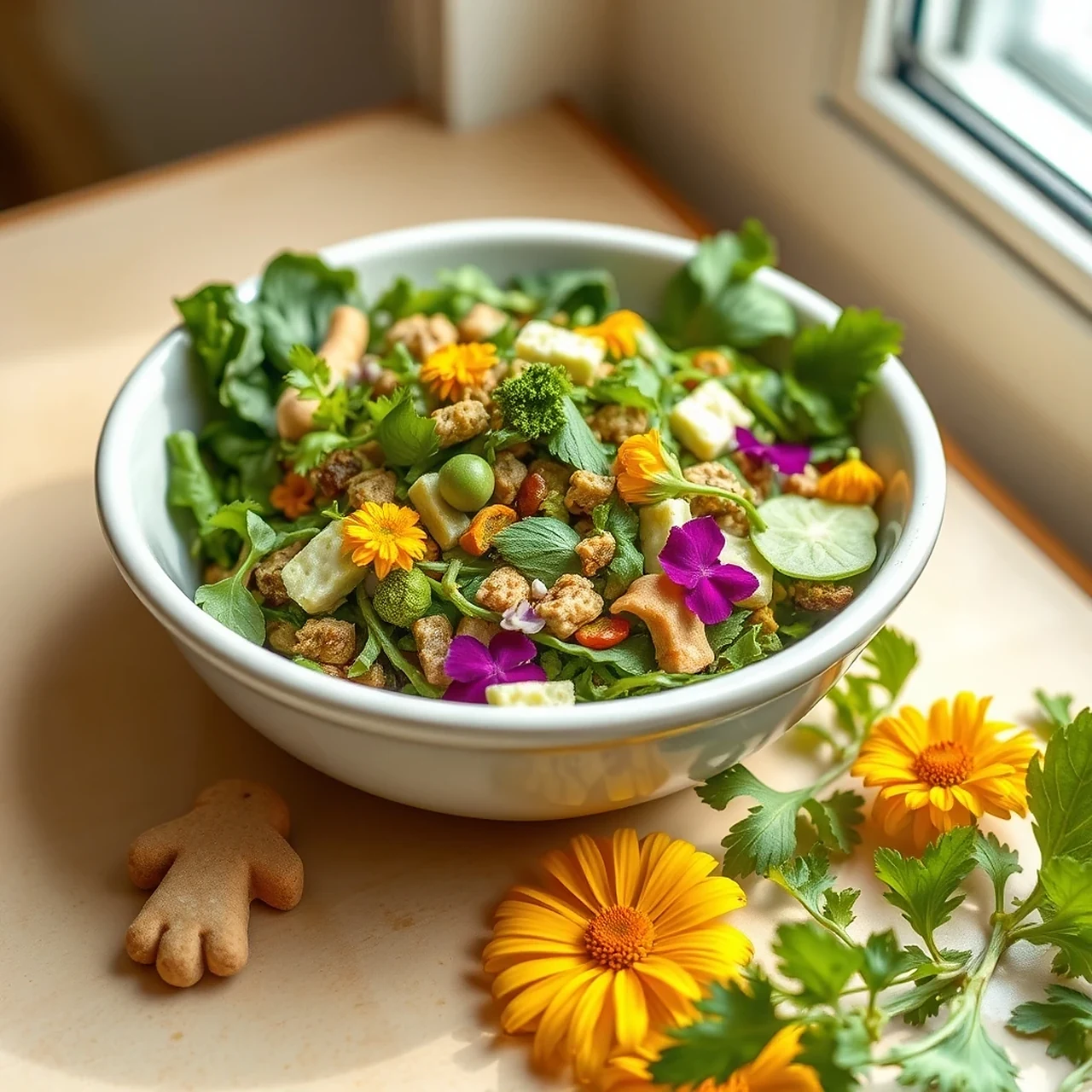
Providing fresh, varied, and safe plant matter is a wonderful way to enrich the lives and diets of many birds, rabbits, and small pets. The Fresh Garden Forage Medley aims to tap into their natural instincts for foraging, offering both mental stimulation and a hydrating burst of nutrients. This recipe focuses on readily available, pet-safe greens and edible flowers, transforming a simple offering into an engaging experience that supports overall well-being. Safety is paramount when introducing any new food. It is crucial to identify all ingredients correctly and ensure they are free from pesticides, herbicides, or any other chemicals. Only use plants that you are absolutely certain are safe for your specific pet. When in doubt, it is always best to consult reliable sources or your veterinarian. This medley is intended as a supplementary treat, not a complete meal, and should always be offered in moderation. Remember, significant changes to your pet's diet should always be discussed with a trusted veterinarian to ensure it aligns with their individual health needs. With careful preparation and mindful selection, you can provide a vibrant, natural addition to your pet's routine, encouraging healthy habits and promoting their innate curiosity.
Safety first: Introduce new foods gradually and speak with your veterinarian before making major changes to your bird's diet.
Foods to avoid
Never use any plants treated with pesticides, herbicides, or other chemicals. Always verify that every single ingredient is safe for your specific pet species. The ASPCA website and a veterinarian are excellent resources for identifying toxic plants. If you are unsure about a plant's safety, do not offer it. Always discuss any major dietary changes or concerns with your veterinarian.
Ingredients
Instructions
Gather and Inspect Ingredients: Begin by carefully gathering all your fresh greens and edible flowers. It is absolutely essential to ensure every item is completely free of pesticides, herbicides, or any other chemicals. If foraging, be certain of your plant identification. Inspect each leaf and petal for any signs of
Thoroughly Wash Produce: Place all greens and edible flowers in a colander. Rinse them under cool, running water for several minutes, gently agitating to remove any dirt, debris, or potential residues. For leafy greens, you might want to soak them briefly in a bowl of cool water to dislodge any stubborn particles, then
Dry and Chop Greens: After washing, gently pat all the greens dry with paper towels or a clean kitchen towel. Excess moisture can lead to quicker spoilage. On a clean cutting board, finely chop the dandelion greens, collard/mustard greens, parsley/cilantro, basil/mint, and romaine lettuce into small, manageable pieces
Prepare Edible Flowers and Optional Add-ins: Carefully remove the petals from the calendula or nasturtium flowers; these are generally the safest parts. If using shredded carrot or apple, ensure these are also finely grated or chopped into small pieces. Remember to remove all seeds from apples as they can be toxic. The
Gently Combine the Medley: Transfer all the chopped greens, flower petals, and any optional add-ins into a large, clean mixing bowl. Using your hands or a spoon, gently toss the ingredients together until they are evenly distributed. Avoid mashing or bruising the delicate greens. The result should be a vibrant, appeali
Serve Fresh and Observe: Offer a small, appropriate portion of the Fresh Garden Forage Medley to your pet. For birds, this might be sprinkled in their food dish or tucked into a foraging toy. For rabbits and small pets, present it in a clean, shallow dish. Observe your pet's reaction; some may be enthusiastic, while ot
Made this recipe?
Tap the paw so other pet parents know it’s worth making.
Be the first to make it
Tips & serving
This medley is a supplementary treat and should not replace your pet's primary diet. For rabbits and small pets, offer a small handful daily. For birds, sprinkle a small amount into their food dish or a foraging toy a few times a week. Introduce new ingredients slowly and in small quantities, observing your pet for any signs of digestive upset. Always remove uneaten portions within a few hours to prevent spoilage.
- Promotes natural foraging behaviors and mental stimulation
- Provides essential vitamins, minerals, and hydration
- Adds dietary variety and enrichment to daily meals
- Supports dental health for rabbits and small pets through chewing
- Encourages exploration and reduces boredom
- Grow your own: Consider starting a small herb or greens garden to ensure a consistent supply of fresh, chemical-free ingredients.
Storage
Discard if the mixture appears wilted, discolored, or has an off smell.
Substitutions
- Greens
Kale, chard, turnip greens, beet greens, spinach (in moderation for rabbits/small pets due to oxalic acid).
- Flowers
Rose petals (unsprayed, organic), hibiscus petals (unsprayed), chamomile flowers (unsprayed).
- Herbs
Oregano, thyme, dill (all in moderation).
- Vegetables
Small amounts of bell pepper (remove seeds), zucchini, cucumber.
Birds, Rabbits, Small Pets recipe FAQ
Can I serve this fresh mix every day?
Treat it as an occasional extra, not a meal plan. This medley is a supplementary treat and should not replace your pet's primary diet. For rabbits and small pets, offer a small handful daily.
Is fresh edible greens okay for birds?
This recipe uses fresh edible greens in a small, bird-appropriate amount. Skip it if your bird has a known sensitivity, and read the foods-to-avoid note on this page before serving.
How do I store this fresh mix?
Store any remaining medley in an airtight container lined with a paper towel in the refrigerator for up to 24 hours. Discard if the mixture appears wilted, discolored, or has an off smell.
How should I introduce this fresh mix?
Start with a taste-size portion next to your bird's usual food, and hold off on serving more until you have seen that it agrees with them.
Can I use store-bought greens for this recipe?
Yes, you can use store-bought greens. However, it is especially important to choose organic options whenever possible and wash them very thoroughly to remove any potential residues.
How often can I offer this Fresh Garden Forage Medley to my pet?
This medley can be offered daily as a supplement for many pets, but always in moderation. For birds, a few times a week might be sufficient. Observe your pet's overall diet and adjust the quantity to ensure it does not displace their primary, balanced food source.
Sources