

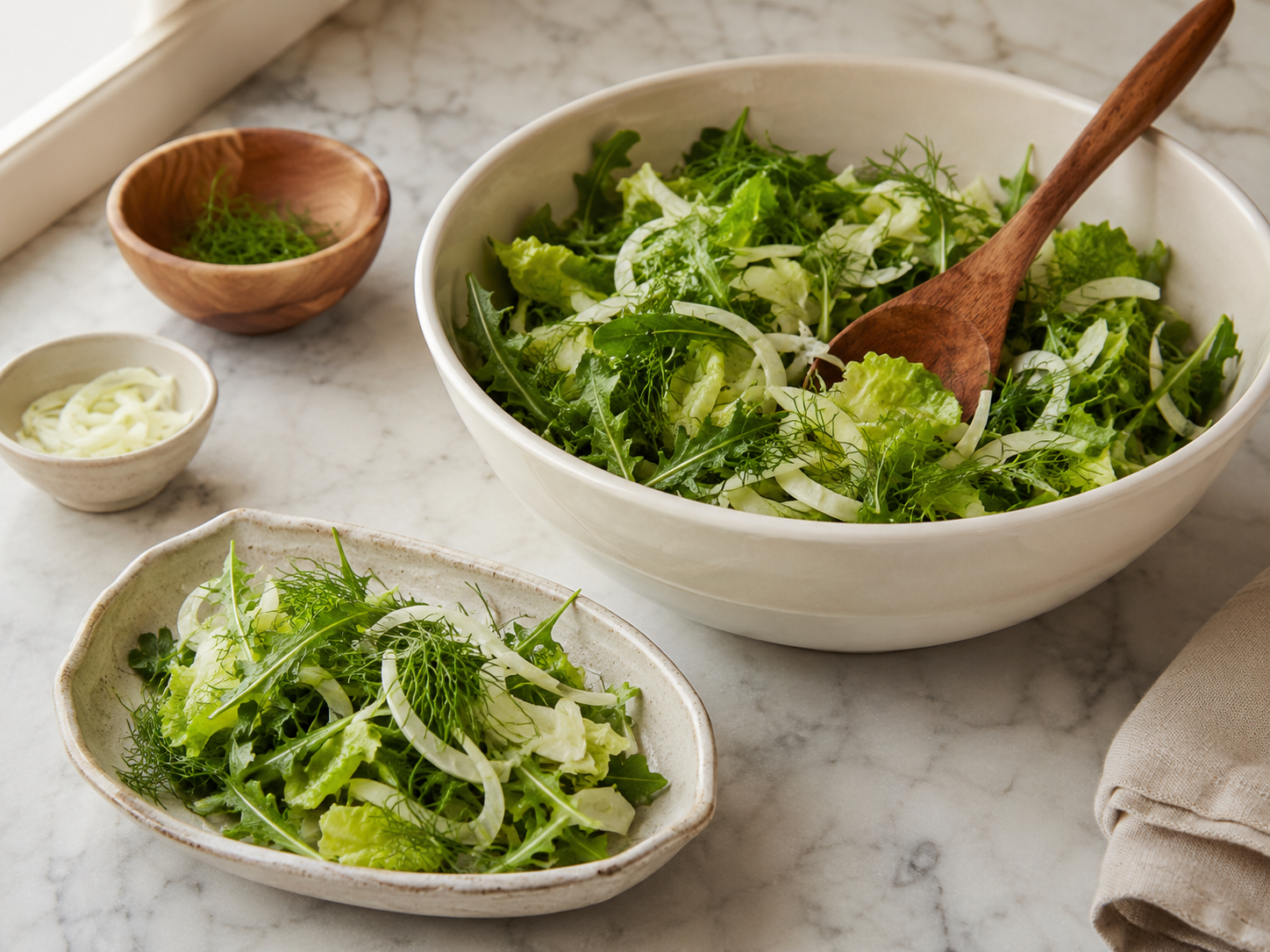
This fresh forage salad is a simple way to add more variety to your rabbit's greens plate without turning vegetables into a sweet treat or a complicated enrichment project. Thin fennel slices bring a crisp bite, while the fronds, torn romaine, and dandelion leaves add different shapes and textures for your rabbit to explore. Use only thoroughly washed, pesticide-free ingredients, and positively identify any foraged dandelion before serving it. Introduce fennel, dandelion, or any unfamiliar green gradually instead of offering several new foods at once. Unlimited grass hay should remain the foundation of the diet, with fresh greens served as part of an appropriately balanced routine.
Safety first: Introduce new foods gradually and speak with your veterinarian before making major changes to your rabbit's diet.
Foods to avoid
Never use unidentified wild plants, roadside dandelions, or greens that may have been exposed to pesticides, herbicides, vehicle pollution, or animal waste. Avoid salad dressings, oils, salt, sugar, seasoning, and other human-food additions. Do not let this fresh mix displace unlimited grass hay, which should remain the dietary foundation.
Ingredients
Instructions
Wash the greens: Rinse the fennel bulb, fennel fronds, romaine, and positively identified dandelion leaves thoroughly under cool running water. Check the bases and folds of the leaves carefully for trapped soil, then shake off the excess water before drying.
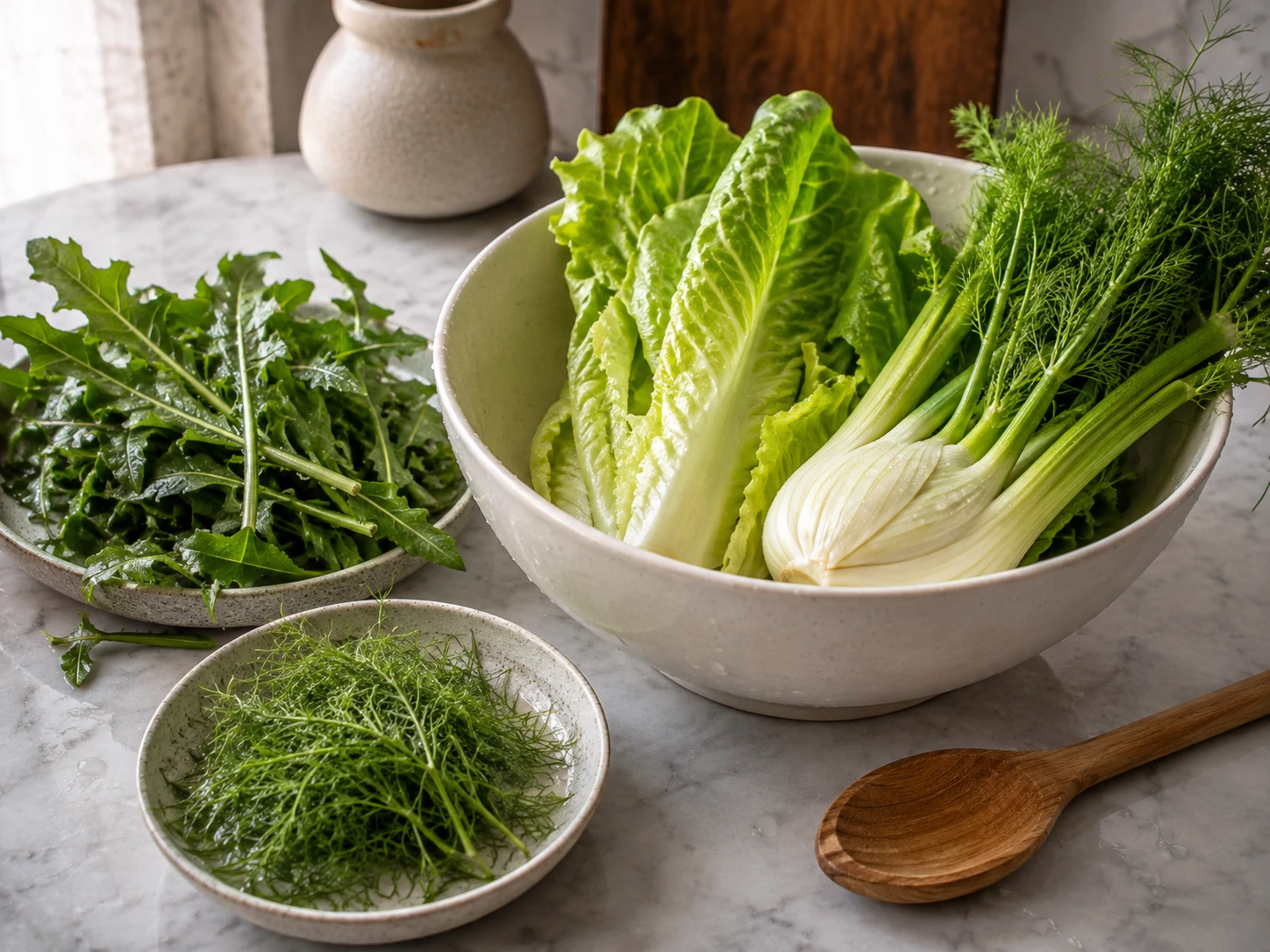
Dry everything well: Dry the washed leaves and fennel thoroughly with a salad spinner or clean kitchen towel. Removing excess surface water keeps the finished mix pleasantly crisp and helps prevent a puddle from collecting at the bottom of the serving bowl.
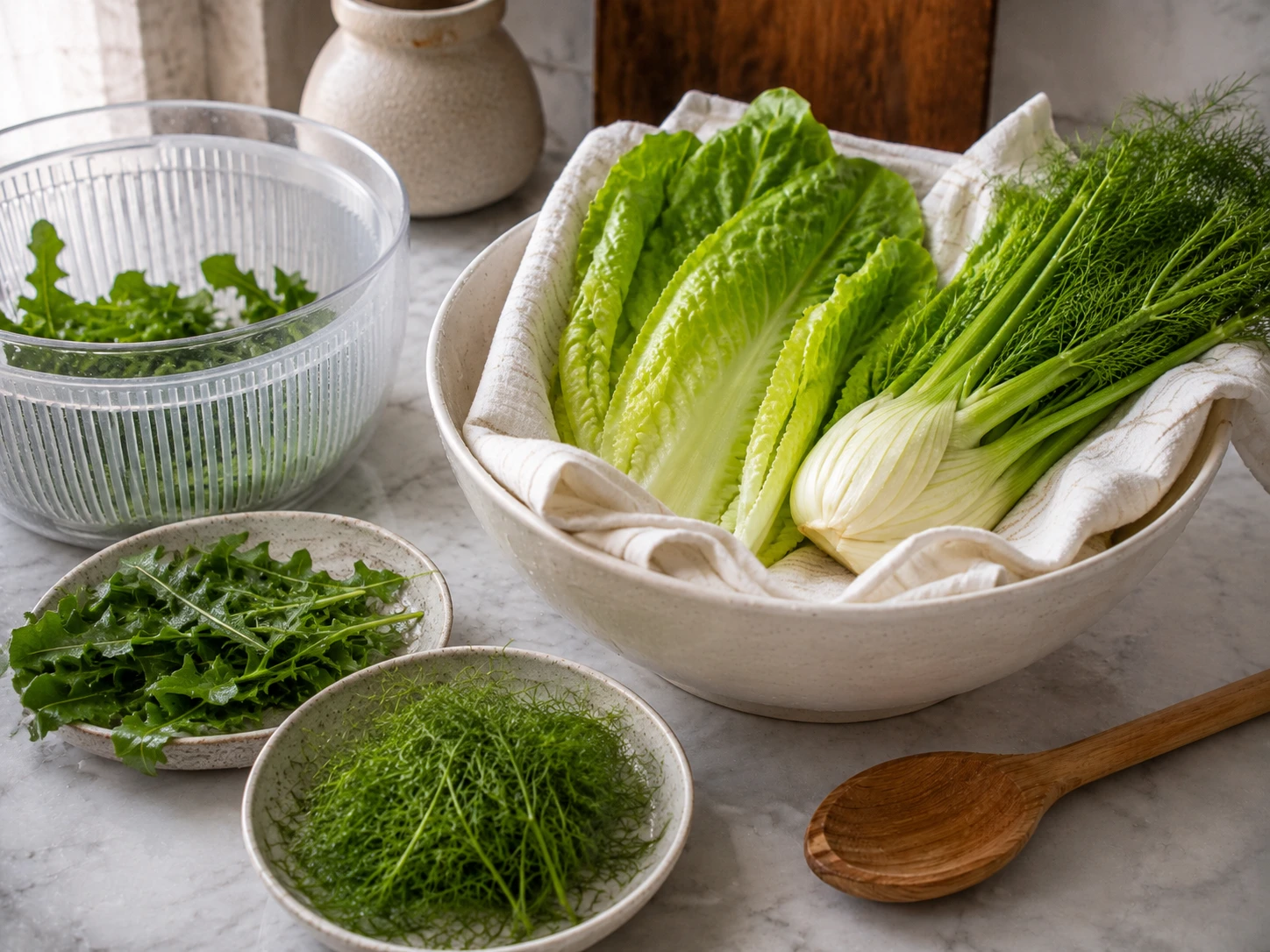
Slice the fennel: Trim away any tough or damaged fennel surfaces, then cut the bulb into very thin, short slices that are easy to pick up and chew. Tear or chop the tender fennel fronds into smaller wispy pieces, then place both parts in the mixing bowl.
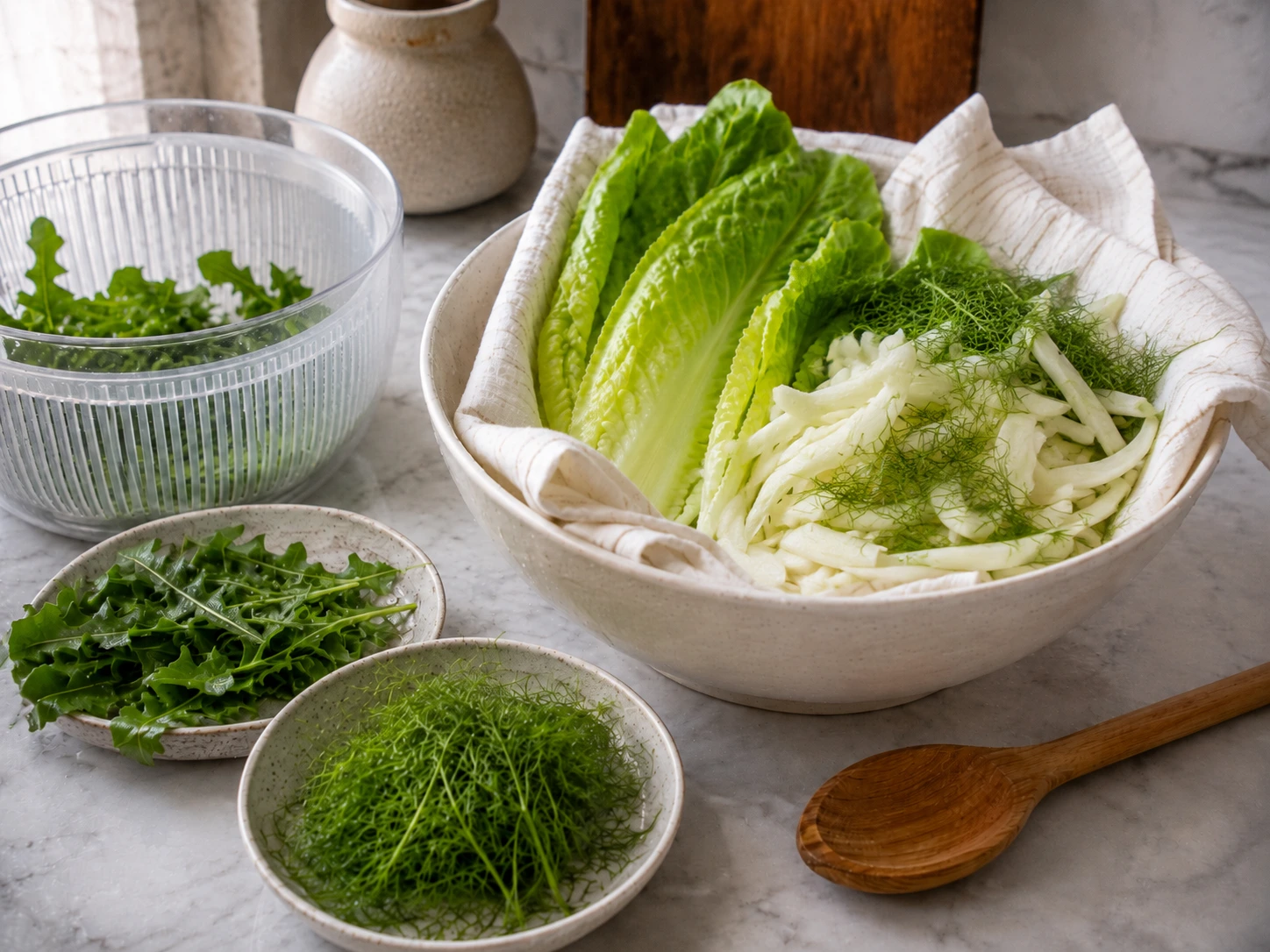
Tear the leafy greens: Tear the romaine and dandelion leaves into loose, irregular bite-sized pieces rather than finely chopping them. Add them to the fennel so the bowl has a mix of crisp slices, soft leafy pieces, and feathery fronds.
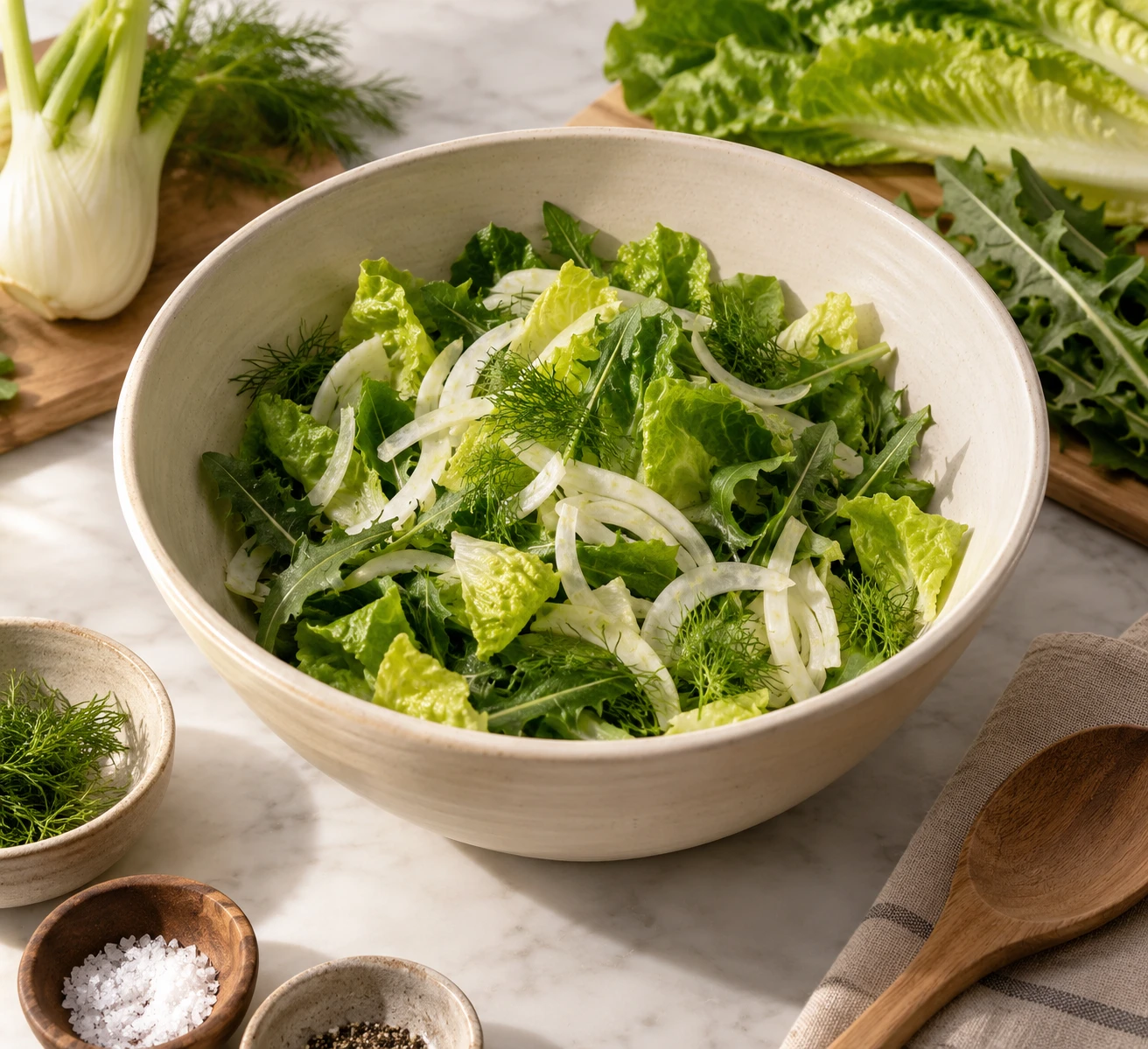
Toss and serve: Gently lift and turn the ingredients several times so the fennel, fronds, romaine, and dandelion are evenly distributed without crushing the leaves. Serve the mixture fresh in a clean rabbit-safe dish, offering only an appropriate amount for your individual rabbit and removing leftovers once they become wilted, dirty, or damp.
Made this recipe?
Tap the paw so other pet parents know it’s worth making.
Be the first to make it
Tips & serving
Offer this salad as part of your rabbit's usual fresh-greens routine rather than as a replacement for unlimited grass hay. Start with a small amount if fennel or dandelion is unfamiliar, introduce new foods individually when possible, and observe how your rabbit tolerates them. Fresh-food needs vary with body size, age, health, and the rest of the diet, so discuss major diet changes with a veterinarian.
- Several leaf shapes and textures encourage natural picking and exploratory feeding behavior.
- Using varied leafy plants adds interest without relying on sugary fruit-based treats.
- The uncooked preparation keeps the greens crisp and makes the recipe quick to assemble.
- Slice the fennel bulb thinly enough that it mixes naturally with the leaves instead of forming large heavy chunks.
- Dry leafy greens thoroughly after washing so the serving bowl stays crisp rather than becoming watery and limp.
- When introducing dandelion or fennel for the first time, change one ingredient gradually so feeding responses are easier to observe.
Storage
For the best texture, prepare only what you expect to use promptly. If necessary, refrigerate the washed and thoroughly dried ingredients separately in clean covered containers and combine them shortly before serving. Do not save salad that has already been offered to your rabbit. Discard leftovers once they are wilted, contaminated with bedding or waste, unusually warm, or sitting in accumulated moisture.
Substitutions
If properly identified pesticide-free dandelion is unavailable, replace it with another rabbit-appropriate leafy green or herb that your individual rabbit already eats comfortably rather than gathering an uncertain wild plant. A familiar rabbit-safe leafy green can replace romaine when needed, but introduce any genuinely new substitute gradually and avoid changing several components of the regular diet at the same time.
Rabbits recipe FAQ
Can Fennel, Dandelion and Romaine Forage Salad for Rabbits replace my rabbit's regular diet?
Treat it as an occasional extra, not a meal plan. Offer this salad as part of your rabbit's usual fresh-greens routine rather than as a replacement for unlimited grass hay.
Is fennel okay for rabbits?
This recipe uses fennel in a small, rabbit-appropriate amount. Skip it if your rabbit has a known sensitivity, and read the foods-to-avoid note on this page before serving.
How long does Fennel, Dandelion and Romaine Forage Salad for Rabbits keep?
For the best texture, prepare only what you expect to use promptly. If necessary, refrigerate the washed and thoroughly dried ingredients separately in clean covered containers and combine them shortly before serving.
How should I introduce this fresh mix?
Start with a taste-size portion next to your rabbit's usual food, and hold off on serving more until you have seen that it agrees with them.
Can rabbits eat fennel bulb and fennel fronds?
Fennel bulb and its leafy fronds are commonly included among rabbit-appropriate fresh plant foods. Serve them plain, thoroughly washed, and in sensible amounts within a varied diet. If fennel is new to your rabbit, introduce a small amount gradually rather than changing the fresh-food routine abruptly.
Can I pick dandelion leaves from my garden for this salad?
Only use garden or foraged dandelion when you can identify the plant confidently and know the area is free from pesticides, herbicides, roadside contamination, and animal waste. When there is any uncertainty, commercially grown or otherwise reliably sourced greens are the safer choice.
Sources