

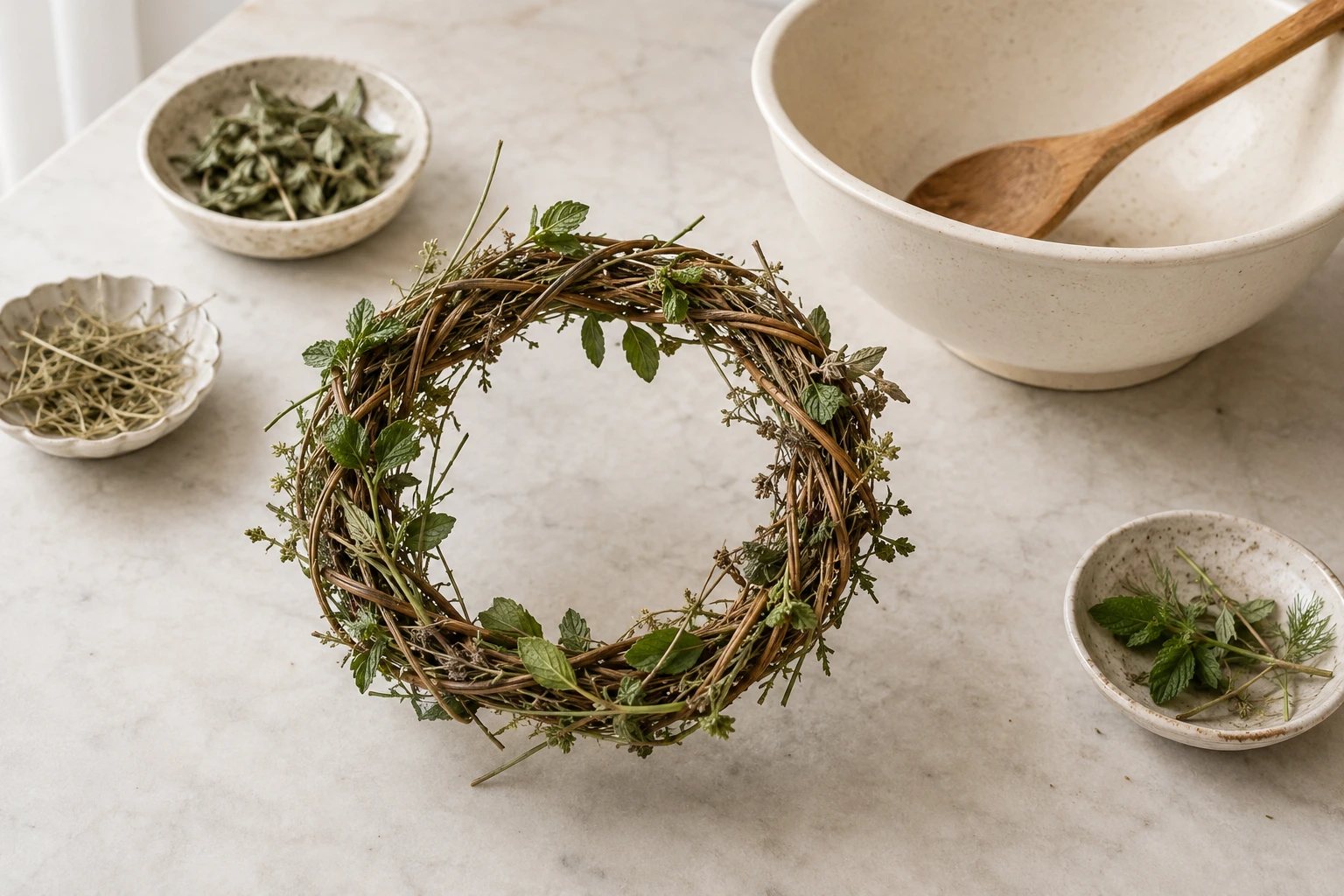
This forage ring makes a handful of familiar rabbit-safe plants more engaging than simply scattering dried herbs over hay. Flexible untreated willow creates a chewable base, while fully dried mint, basil, and dill are tucked around the ring so your rabbit can sniff, tug, and nibble while exploring it. Take extra care with plant identification and cleanliness. Use only pesticide-free willow and herbs you can confidently identify as rabbit-safe, with no mold, dampness, sprays, glue, wire, or decorative coatings. This is enrichment, not a balanced meal, so unlimited grass hay should remain the foundation of an adult rabbit diet alongside appropriate greens and other foods suited to the individual rabbit.
Safety first: Offer a small taste the first time and watch your rabbit for any tummy upset before serving more.
Foods to avoid
Do not use florist willow, painted or preserved branches, craft-store wreath rings, glue, wire, string, ribbon, chemically treated wood, lawn clippings, moldy forage, or plants you cannot identify confidently. Avoid herbs gathered from roadsides or areas exposed to pesticides, herbicides, animal waste, or other contamination. Never use a decorative plant merely because it resembles an edible species.
Ingredients
Instructions
Inspect the forage: Spread the willow, dried mint, basil, dill, and hay over a clean, completely dry work surface. Check the willow for paint, glue, wire, obvious contamination, or mold, and discard anything questionable. Gently rub a few herb leaves between dry fingers; they should feel crisp, not cool, soft, or damp, and any dusty, discolored, moldy, or unidentified plant material should be removed.
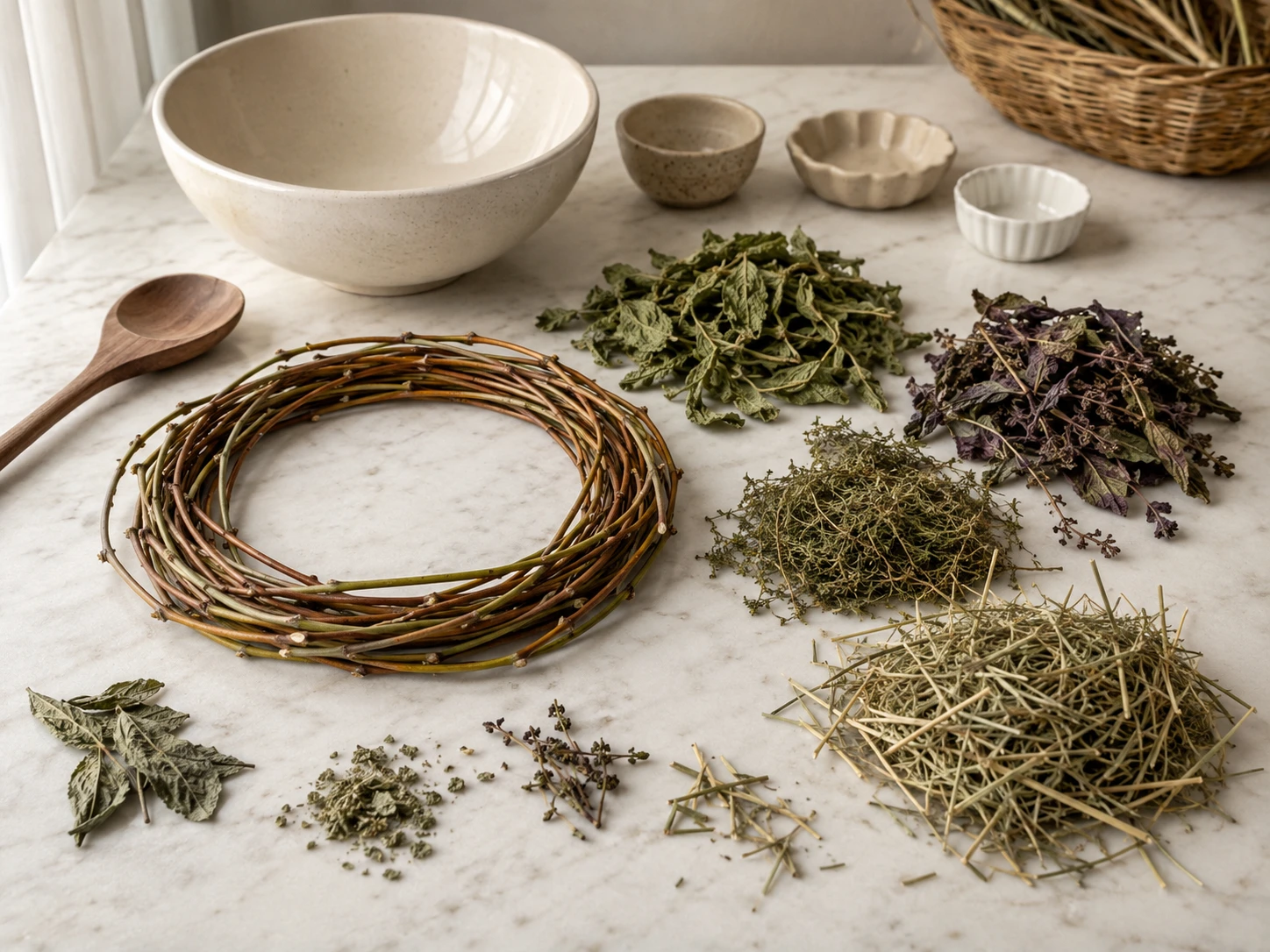
Shape the willow ring: Curve one flexible willow whip into a small circle about 10 to 12 centimeters across. Overlap the ends generously, then wrap the remaining willow around the circle to secure the shape. If needed, weave in another thin whip until the ring holds together without string, wire, glue, or fasteners, keeping the weave firm but with small natural gaps for the herbs.
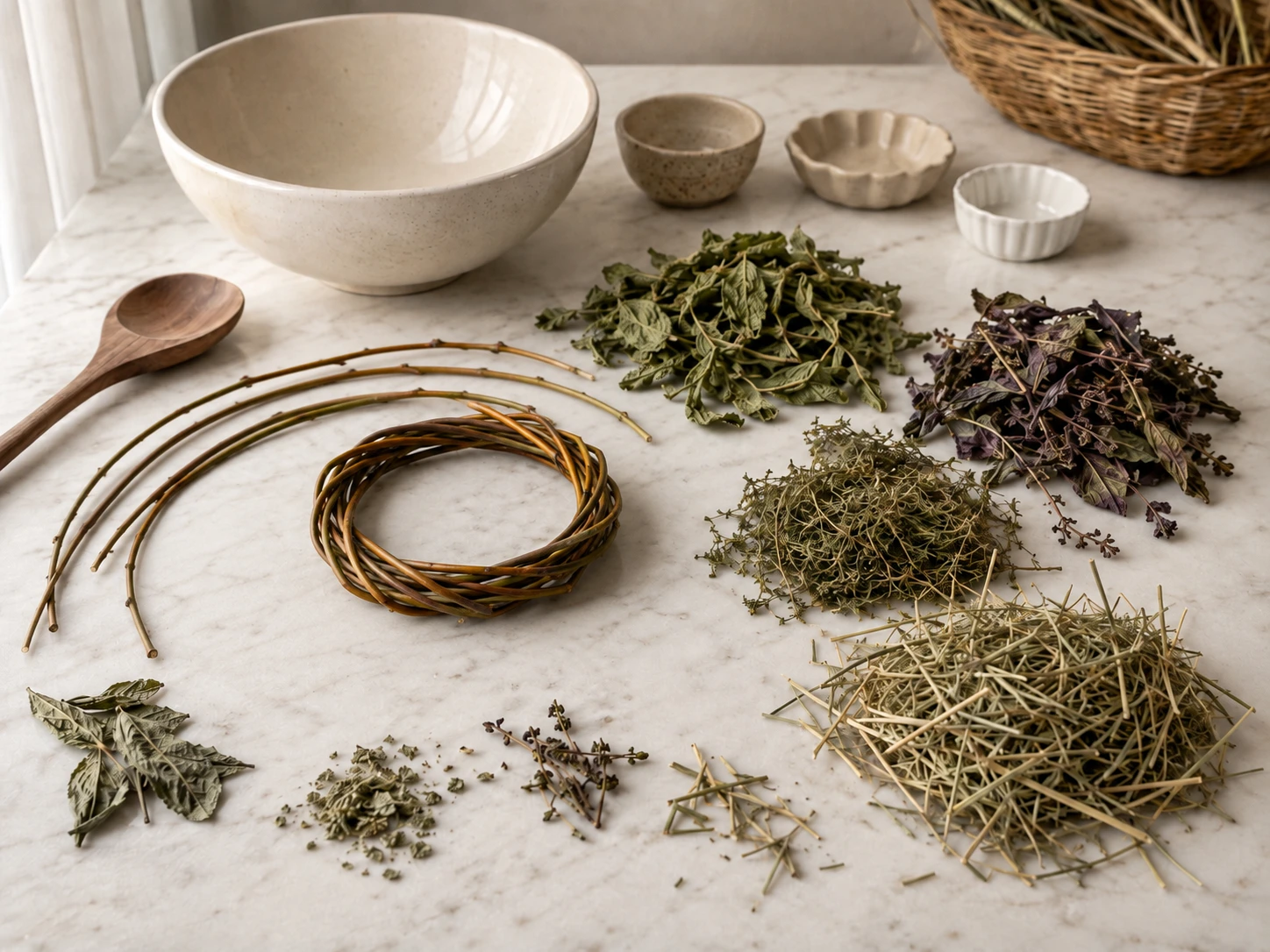
Sort the dried herbs: Place the dried mint, basil, and dill in the shallow bowl and gently separate any large clumps. Leave some small stems attached because they are easier to weave securely than loose crushed leaves, and break unusually long stems into manageable pieces with clean fingers or snips. Avoid grinding the herbs into powder so the intact leaves and stems keep their texture and are less likely to fall through the willow.
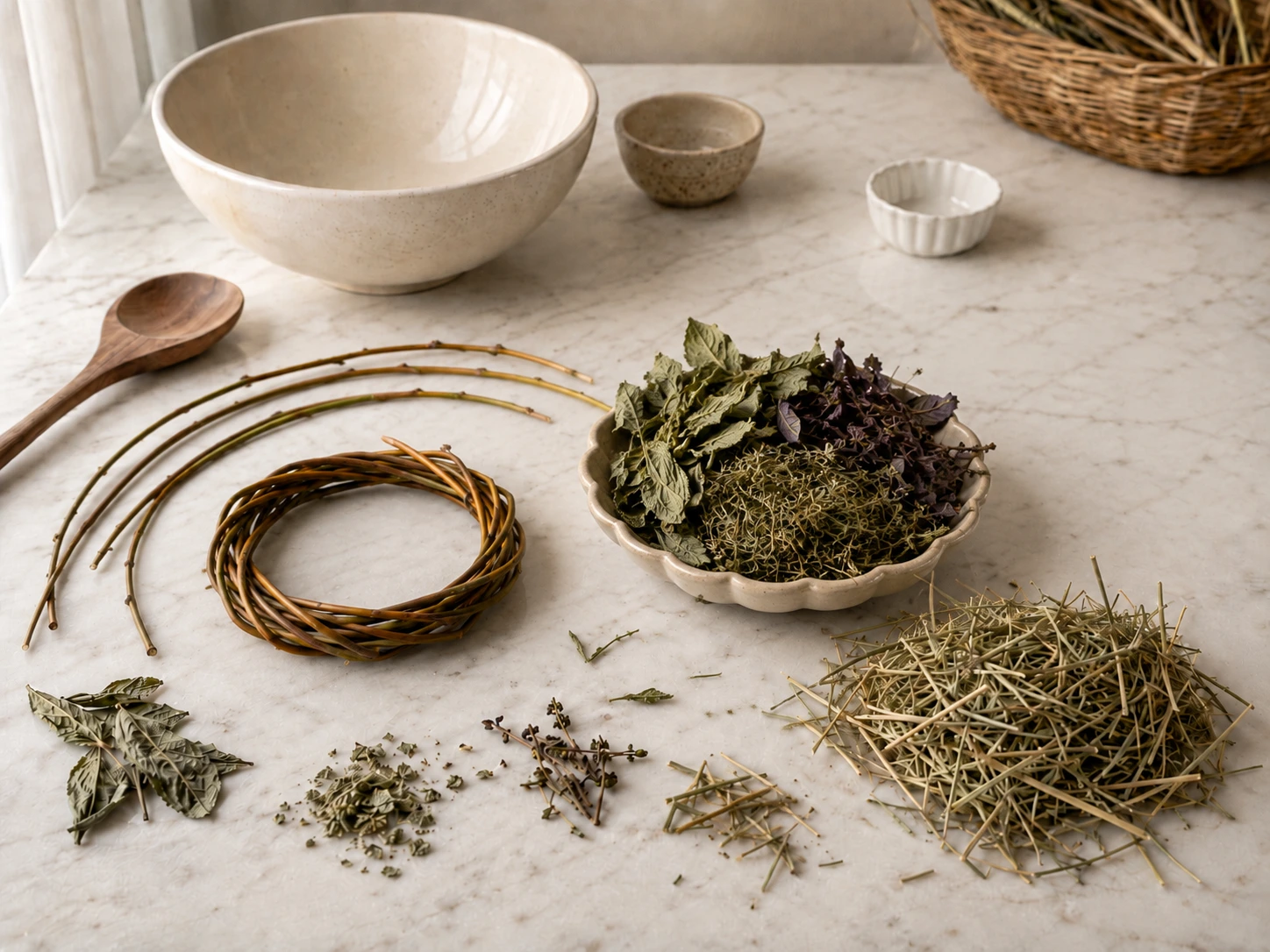
Weave in the forage: Tuck small sprigs of mint, basil, and dill through different gaps around the willow ring, alternating the herbs instead of packing one area heavily. Add several wisps of plain grass hay wherever the ring looks sparse. Push the stems beneath one or two willow strands so they stay put when moved, while leaving the leafy ends exposed for easy sniffing and pulling.
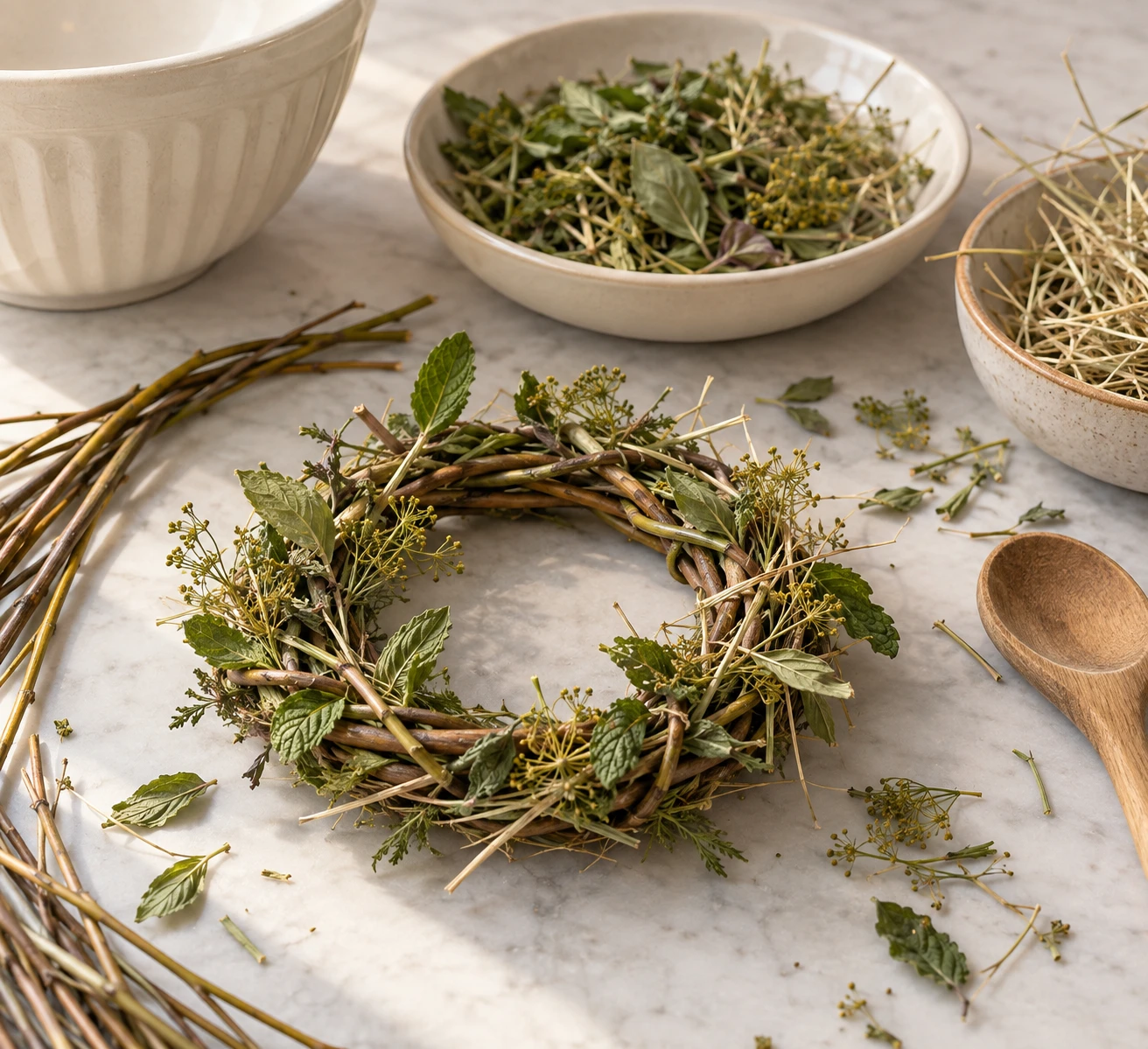
Check and finish: Lift the completed ring over the work surface and give it one gentle shake. Reweave any stems that fall free right away, trim only sharp projecting ends that could catch during handling, and check again for damp herbs, mold, foreign fibers, wire, glue, or loose non-food material. The finished ring should feel dry, lightweight, and loosely textured, giving your rabbit something to investigate without needing to consume the whole item at once.
Made this recipe?
Tap the paw so other pet parents know it’s worth making.
Be the first to make it
Tips & serving
Offer the forage ring as an occasional supervised enrichment snack rather than as a replacement for hay or normal meals. Start with a modest amount of dried herbs, especially if they are unfamiliar to your rabbit, and remove the ring if it becomes wet, dirty, or contaminated. Unlimited grass hay should remain available at all times. Discuss major diet changes or questions about suitable foods for your individual rabbit with a veterinarian.
- Encourages sniffing, pulling, chewing, and foraging through a simple edible enrichment activity.
- Provides several plant textures while keeping the portion of dried herbs easy to control.
- Offers a practical way to use carefully identified garden herbs after they have been completely dried.
- Choose thin willow whips that bend smoothly without splintering, since they are much easier to weave into a stable food-safe ring.
- Keep dried leaves mostly intact instead of crushing them, because larger pieces stay in the willow weave and create better pulling opportunities.
- Introduce only a few herb types at once so you can keep the ingredients recognizable and avoid turning the ring into an unnecessarily complicated mixture.
Storage
Store finished rings only when every herb and willow component is completely dry. Keep them in a breathable paper bag or dry cardboard container in a cool, dark cupboard away from humidity. Check for softening, condensation, unusual odor, insects, or mold before serving and discard the entire ring if any spoilage is suspected. If you dry fresh garden herbs yourself, store them only after the leaves and small stems are crisp throughout. Residual moisture trapped inside bundled forage can encourage deterioration during storage even when the outside feels dry.
Substitutions
Instead of mint, basil, or dill, use another correctly identified rabbit-safe herb or forage plant that your rabbit already tolerates. Keep the replacement completely dried and pesticide-free, and verify unfamiliar plants with a reliable rabbit-care source before offering them. If suitable untreated willow is unavailable, serve the same dried herb mixture scattered through a portion of the rabbit's usual grass hay rather than replacing the ring with craft hoops, treated wood, string, or decorative wreath materials.
Rabbits recipe FAQ
Can I serve this snack every day?
Treat it as an occasional extra, not a meal plan. Offer the forage ring as an occasional supervised enrichment snack rather than as a replacement for hay or normal meals.
Can rabbits have willow and rabbit-safe herbs?
This recipe uses willow and rabbit-safe herbs in a small, rabbit-appropriate amount. Skip it if your rabbit has a known sensitivity, and read the foods-to-avoid note on this page before serving.
How do I store this snack?
Store finished rings only when every herb and willow component is completely dry. Keep them in a breathable paper bag or dry cardboard container in a cool, dark cupboard away from humidity.
What's the safest way to try this with my rabbit?
Offer a small amount beside regular food, introduce one new recipe at a time, and watch appetite, stool, skin, and behavior for a day or two.
Can rabbits eat the willow as well as the dried herbs?
Rabbit-safe untreated willow can be used as a chewable part of the enrichment ring when it is correctly identified and free from pesticides, preservatives, paint, mold, and contamination. The ring should still be offered under supervision, with unlimited grass hay available separately.
Can I make this ring with freshly picked herbs?
For this version, use fully dried herbs so the ring stays dry and stores more safely. Fresh herbs contain substantially more moisture and can wilt or dampen the willow during storage. If you prefer fresh herbs, offer them separately rather than storing a moist assembled ring.
Sources