
Duck is a lovely change of pace when chicken and turkey have been showing up regularly in your dog's food bowl. It has plenty of natural flavour on its own, so there's no need for seasoning, butter or extra ingredients. In this recipe, boneless duck breast cooks slowly in a covered oven dish with celeriac and carrot until everything is tender. Take a little extra care before serving. Duck can be quite fatty, especially around the edges, so trim it generously and remove any visible fat after cooking. Even with boneless meat, check carefully for stray bone fragments. This is a supplemental topper, not a complete meal, and it should always be served plain and fully cooled.
Safety first: Every dog is different: age, allergies, and health conditions all matter, so check with your vet when in doubt.
Foods to avoid
Never add onion, garlic, leek, chives, grapes, raisins, chocolate, xylitol-containing ingredients, alcohol, seasoning mixes or salty stock cubes. These are unnecessary additions and some can be toxic to dogs. Do not use cooked duck bones or leave bone fragments in the meat. Trim excess fat carefully because rich, fatty leftovers can upset a dog's digestion. Do not serve raw or partly cooked duck. Always check that the thickest part reaches 74°C (165°F) using a food thermometer. Wash equipment and surfaces that have touched raw poultry thoroughly before using them for cooked food.
Ingredients
Instructions
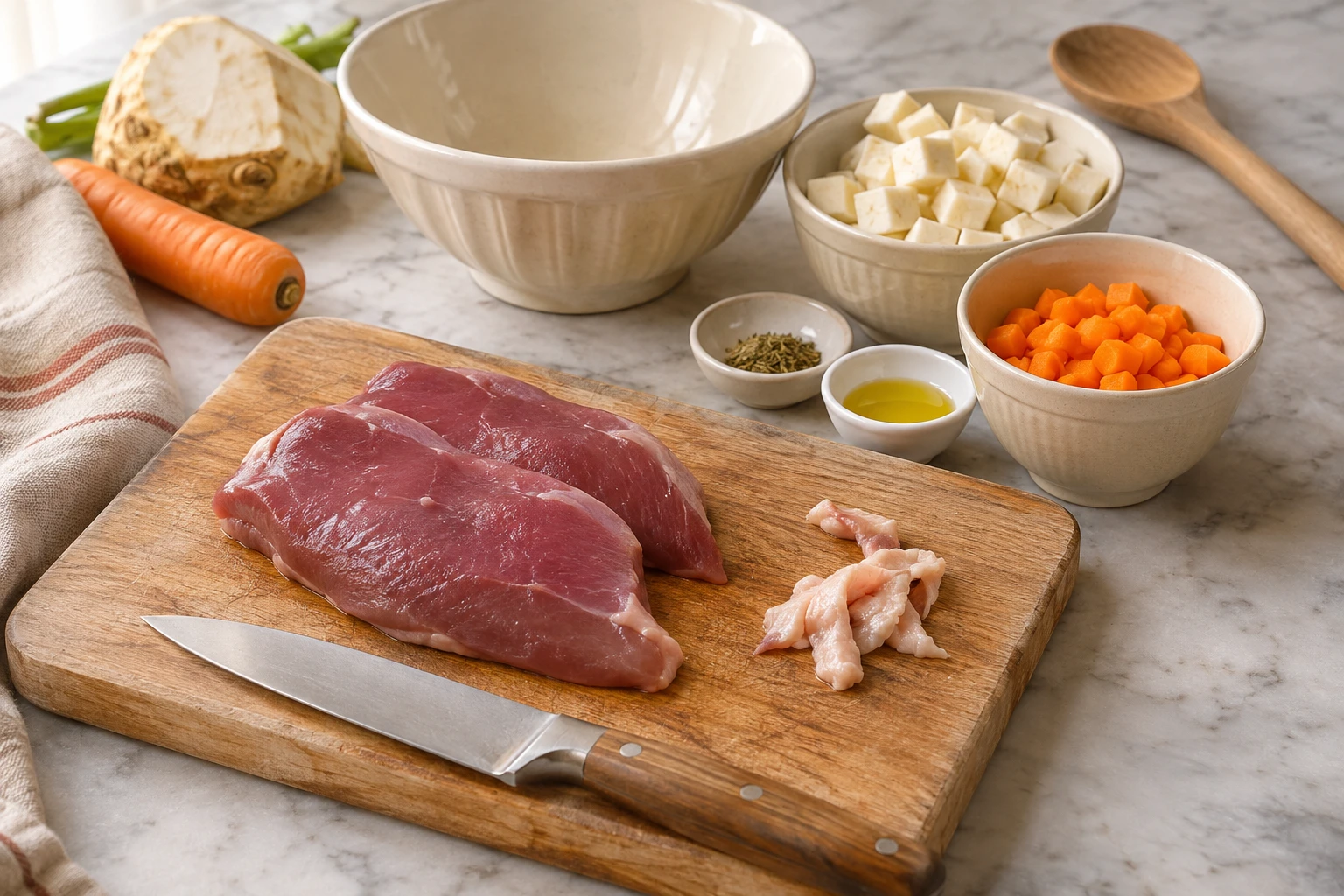
Prepare the Duck and Vegetables: Preheat the oven to 160°C (320°F). Take the duck breast out of its packaging and place it on a clean chopping board. Trim away visible excess fat, loose skin and any unwanted connective tissue, then check the meat carefully for bone fragments, even though it's sold as boneless. Peel the celeriac and carrot, cut the celeriac into approximately 1 cm cubes and dice the carrot into similarly small pieces so the vegetables cook evenly. Wash your hands, knife and board thoroughly after handling the raw duck.
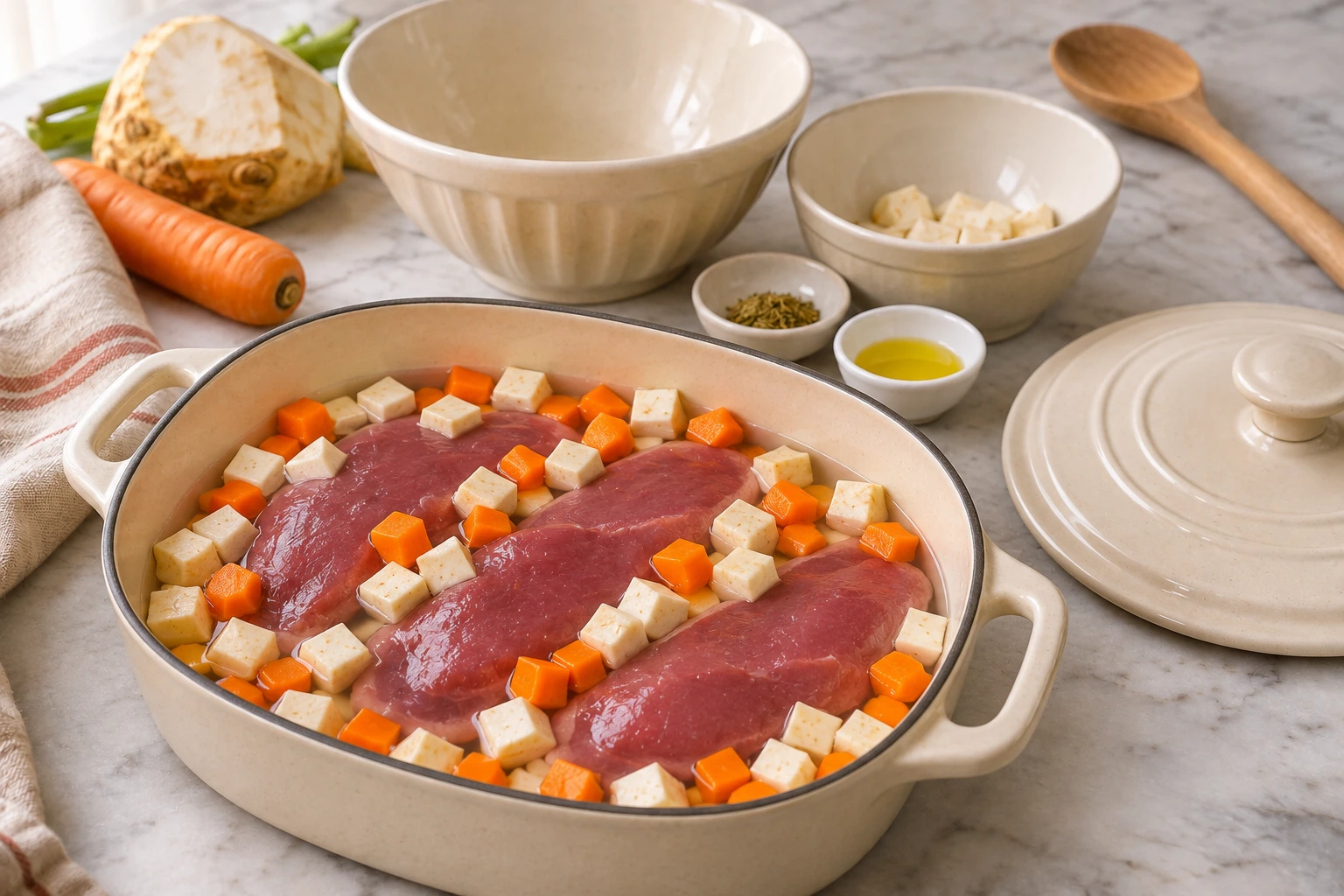
Arrange Everything in the Casserole Dish: Arrange the trimmed duck breasts in a single layer across the bottom of the casserole dish. Scatter the diced celeriac and carrot around and over the meat, then pour in the 250 ml of plain water. The water should sit around the ingredients without completely covering the duck. Leave out salt, stock cubes, onion, garlic, pepper, herbs, butter and cooking wine. None of these are needed, and some common cooking ingredients can be harmful to dogs. Check that the lid fits securely before putting the dish in the oven.
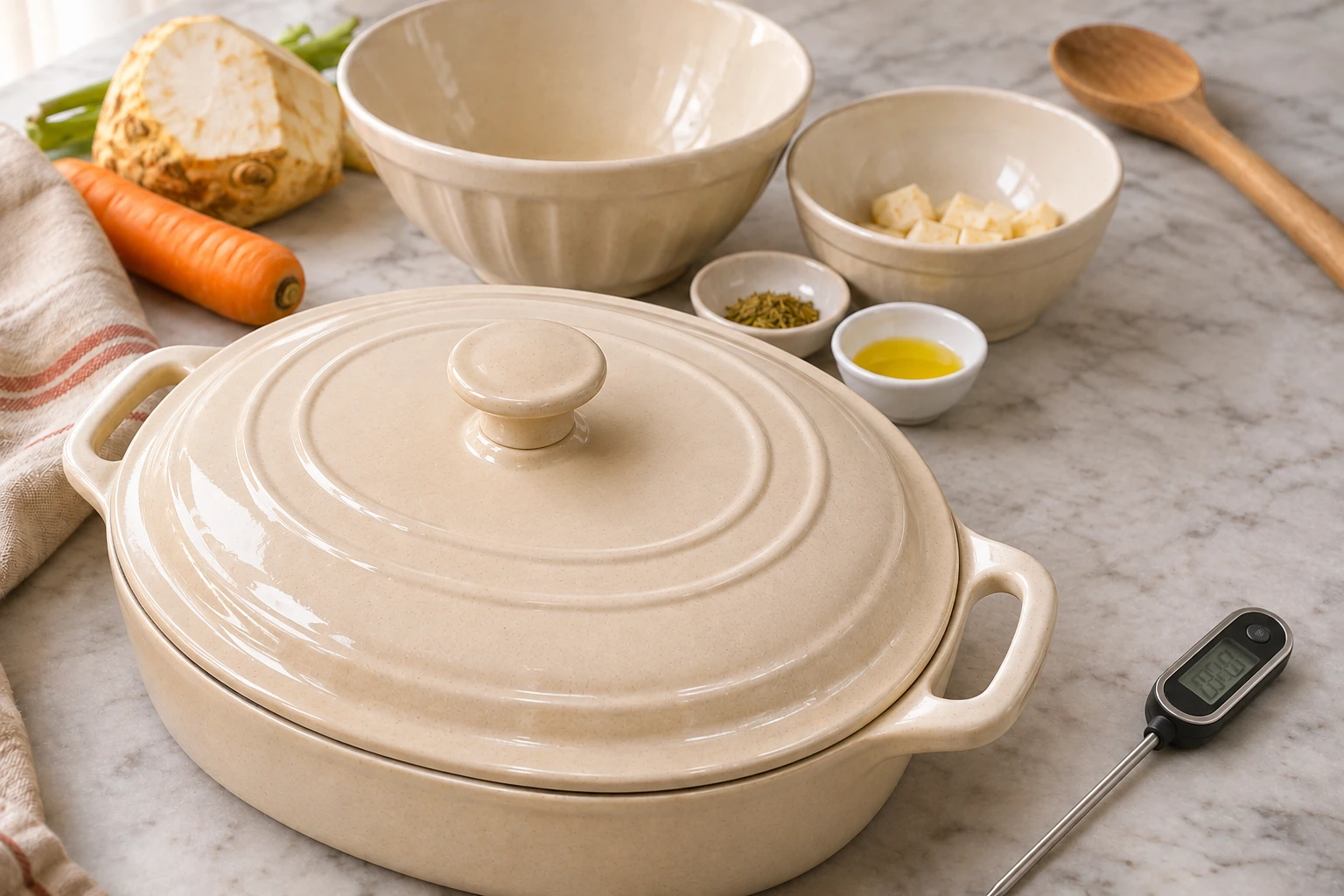
Braise Slowly in the Oven: Cover the casserole dish firmly with its lid and place it in the preheated 160°C oven. Cook for approximately 55 to 65 minutes, depending on the thickness of the duck breasts and the size of the vegetable pieces. Try not to keep opening the oven or lifting the lid, as escaping steam can slow things down. Towards the end of cooking, check the thickest part of the duck with an instant-read thermometer. Poultry must reach an internal temperature of 74°C (165°F). The celeriac should pierce easily with a fork, and the carrot should be completely soft. If the duck hasn't reached the required temperature, continue cooking and check again.
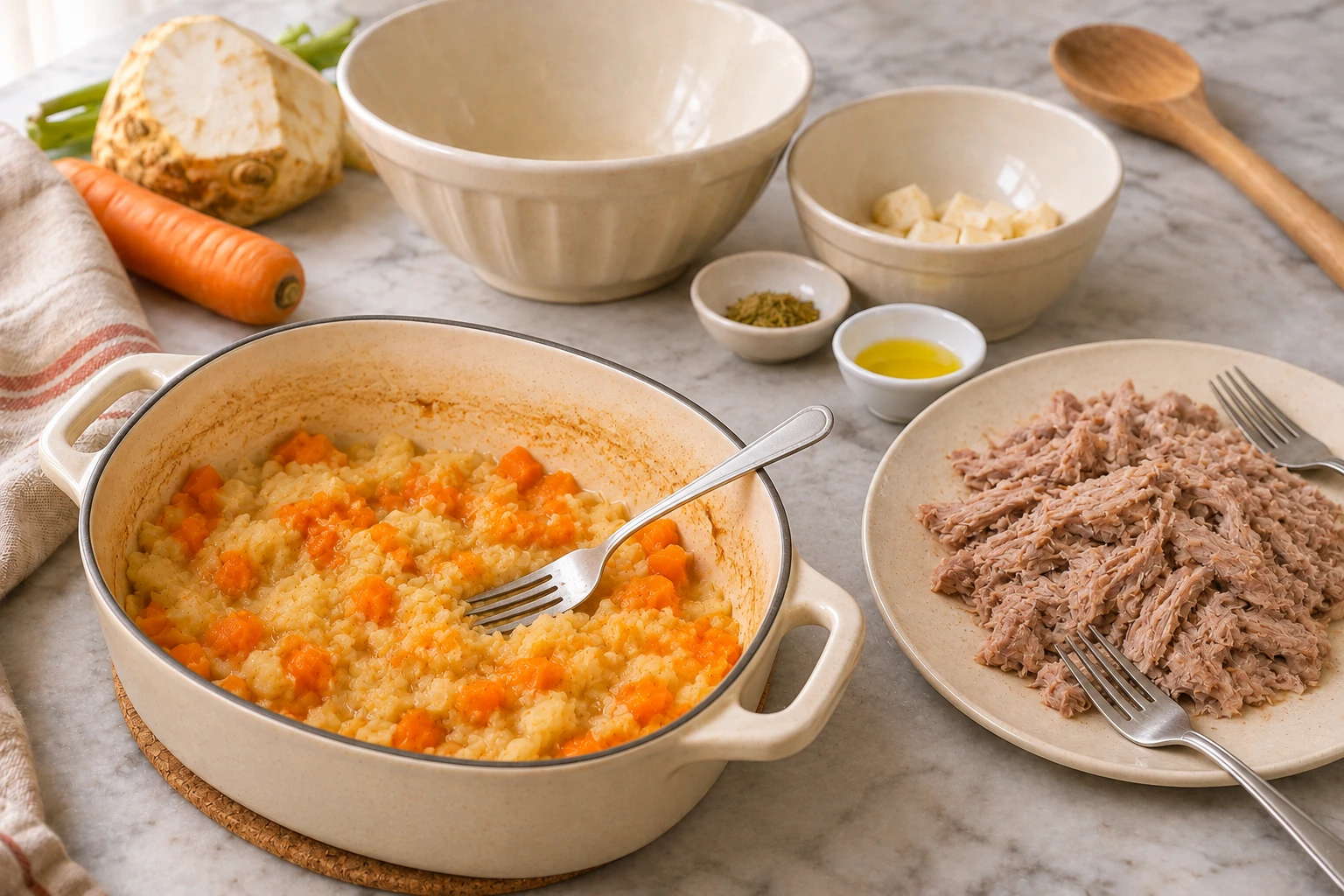
Shred and Inspect the Cooked Duck: Take the casserole dish out of the oven and let everything settle briefly. Using a fork, transfer the cooked duck to a clean plate and check its internal temperature if you haven't already. Pull the meat into small, soft shreds with two forks, checking each piece for remaining bone fragments, tough connective tissue and visible pockets of fat. Mash the cooked celeriac and carrot lightly with a fork until they're soft and manageable. If the mixture seems too dry, stir in a spoonful of the plain cooking liquid. Discard any concentrated layer of rendered duck fat rather than mixing it back into the topper.
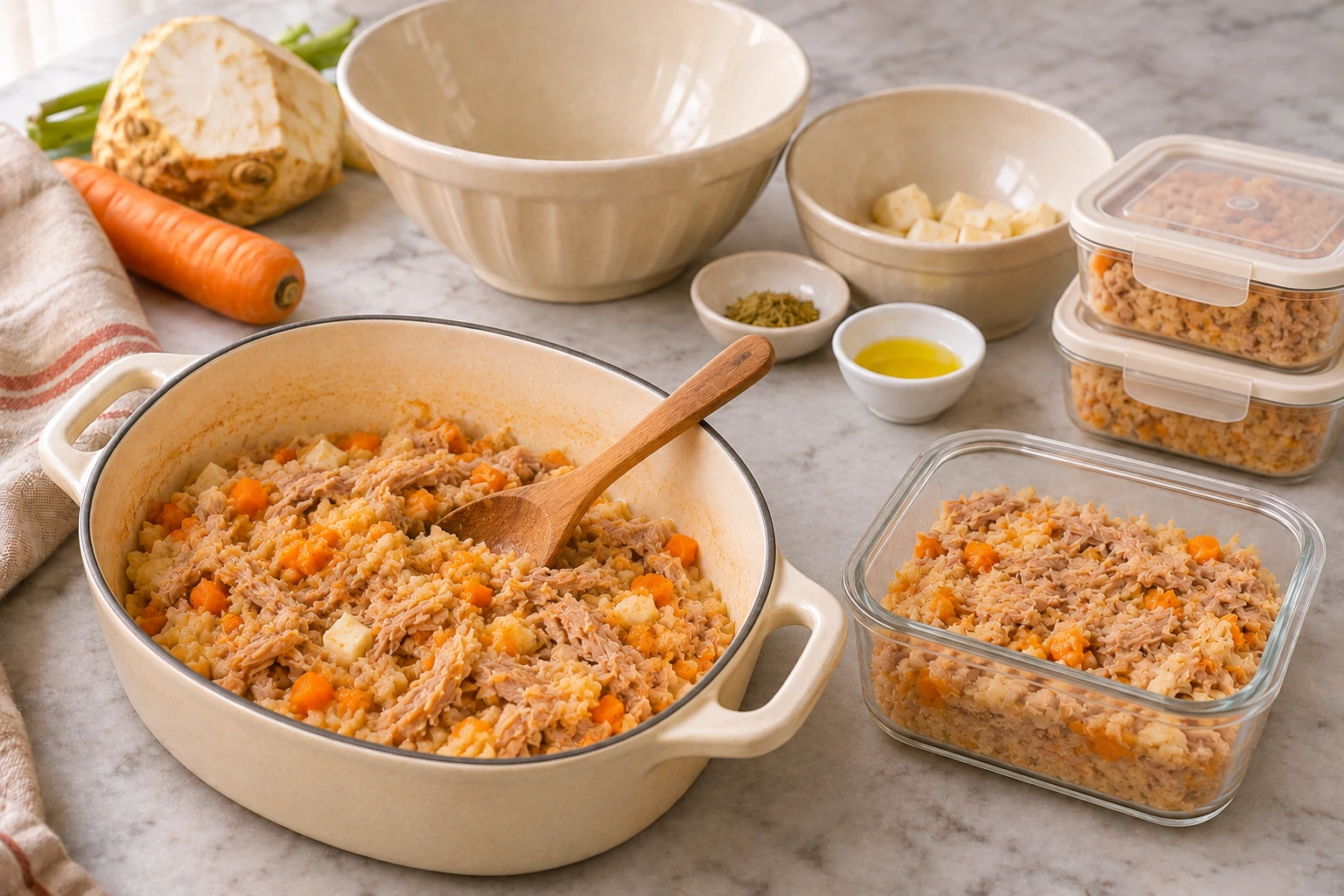
Cool and Portion the Topper: Return the shredded duck to the cooked vegetables and gently mix everything together. Keep the mixture moist, but don't let it sit swimming in cooking liquid. Transfer it to a shallow, clean container to cool, allowing the warmth to escape more quickly. Never serve it hot. Once completely cooled, divide it into small portions suited to your dog's size and usual food intake. Refrigerate the portions you'll use within three days and freeze the rest in clearly dated airtight containers. Before serving, check the texture and break up any larger pieces. The finished topper should be soft, moist and easy to mix through your dog's regular food.
Made this recipe?
Tap the paw so other pet parents know it’s worth making.
Be the first to make it
Tips & serving
Let the pot roast cool completely before offering any to your dog. Start with a small spoonful mixed into familiar food rather than serving a large portion straight away. The mixture is an occasional supplemental topper, not a nutritionally complete meal. Keep toppers and other extras within approximately 10% of daily calories, with the dog's complete and balanced food providing the main nutrition. The right amount depends on body size, activity and existing diet. Discuss major diet changes and regular homemade additions with your veterinarian, particularly if your dog has dietary restrictions or an existing health condition.
- Duck provides a different meat option for owners looking to vary their homemade topper ingredients beyond chicken and turkey.
- Slow oven braising produces tender meat that can be shredded into small pieces and mixed easily through ordinary dog food.
- Celeriac and carrot add two different vegetable textures without requiring complicated preparation or additional seasoning.
- Batch cooking makes it easier to prepare several measured portions rather than handling raw duck every time a topper is needed.
- Choose evenly sized duck breasts so the centre cooks reliably without the thinner edges becoming excessively dry.
- Trim the visible fat before cooking and remove rendered fat from the cooking liquid before combining the ingredients.
Storage
Refrigerator: Transfer completely cooled portions into clean, airtight containers and refrigerate promptly. Use within 2 to 3 days. Keep the containers covered and avoid repeatedly warming and cooling the entire batch. Freezer: Divide the cooled topper into individual portions before freezing. Label each container with its contents and preparation date. Thawing: Defrost frozen portions overnight in the refrigerator. Use thawed portions within 24 hours and do not refreeze previously thawed food.
Substitutions
Celeriac can be replaced with peeled butternut squash in a similar quantity. Cut it into small cubes and check that it becomes completely soft during braising. Carrot can be replaced with a similar quantity of peeled courgette. It softens faster, so cut it into slightly larger pieces and check the texture before finishing the cooking. If duck breast is unavailable, boneless, skinless chicken breast can be used in the same quantity. Trim visible fat and follow the same poultry temperature and bone-inspection precautions. The flavour and finished texture will be different.
Dogs recipe FAQ
Is this topper a complete meal for my dog?
Treat it as an occasional extra, not a meal plan. Let the pot roast cool completely before offering any to your dog. Start with a small spoonful mixed into familiar food rather than serving a large portion straight away.
Can dogs have boneless skinless duck breast?
This recipe uses boneless skinless duck breast in a small, dog-appropriate amount. Skip it if your dog has a known sensitivity, and read the foods-to-avoid note on this page before serving.
How long does Dogs Duck and Celeriac Savory Pot Roast keep?
Refrigerator: Transfer completely cooled portions into clean, airtight containers and refrigerate promptly. Use within 2 to 3 days. Keep the containers covered and avoid repeatedly warming and cooling the entire batch.
What's the safest way to try this with my dog?
Offer a small amount beside regular food, introduce one new recipe at a time, and watch appetite, stool, skin, and behavior for a day or two.
Can dogs eat cooked duck breast?
Plain, thoroughly cooked duck breast can be offered to many dogs in small amounts as an occasional extra. Remove bones, skin, visible excess fat and seasoning. Introduce unfamiliar ingredients gradually, and check with your veterinarian if your dog has dietary restrictions or a history of food intolerance.
Why does duck need to be cooked slowly in this recipe?
Gentle oven braising allows the duck breast to cook surrounded by moisture rather than sitting in a dry roasting dish. The result is easier to shred and portion. Cooking time still depends on thickness, so always confirm that the centre reaches 74°C (165°F).
Sources