
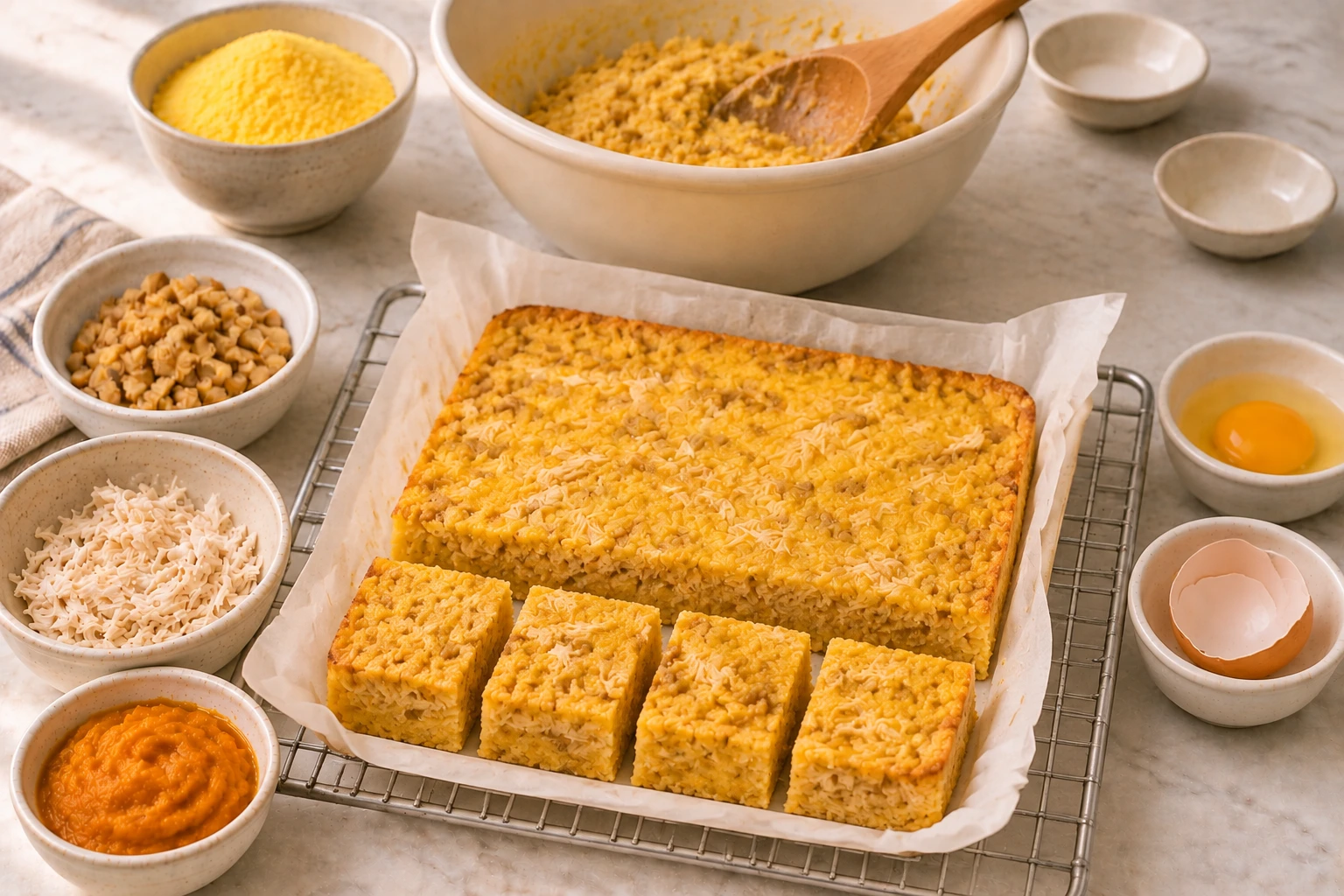
When the weather turns cooler, chicken and chestnuts make a familiar combination in the kitchen. This homemade dog recipe brings those ingredients together in a soft polenta bake, using shredded cooked chicken for substance and a little finely chopped sweet chestnut for seasonal flavour. The polenta helps hold everything together without creating a hard or crunchy treat. The important detail is moisture. Polenta continues to firm as it cools, and an uncovered bake can develop dry edges before the middle sets. A little plain pumpkin and careful baking help keep the texture tender. This recipe is an occasional homemade meal component, not a complete and balanced daily diet. Use only identifiable edible sweet chestnuts, never horse chestnuts or conkers.
Safety first: Keep treats and extras under about 10% of your dog's daily food - the regular diet should do the heavy lifting.
Foods to avoid
Use only edible sweet chestnuts from a reliable food retailer or positively identified as Castanea species. Horse chestnuts, conkers and buckeyes belong to the Aesculus group and are toxic to dogs. Never collect unidentified nuts from the ground for this recipe. If a dog eats a horse chestnut, contact a veterinarian promptly. Also avoid salted or candied chestnuts, chestnut puree containing sugar or flavourings, seasoned polenta, commercial stock, onion, garlic, chives, butter and added salt. Remove every chicken bone before preparation. This recipe is not nutritionally complete and should not replace a properly formulated canine diet.
Ingredients
Instructions
Prepare the chicken and chestnuts: Preheat the oven to 180°C. Check that the chicken breast is completely cooked, with no pink or translucent sections, and allow it to cool before handling. Remove any skin, bones, gristle or fatty pieces. Shred the chicken into short, fine strands so it distributes evenly through the polenta. Use commercially purchased edible sweet chestnuts or chestnuts positively identified as Castanea. They must be fully cooked, completely peeled and free from salt, sugar, butter or seasoning. Never use wild horse chestnuts, also called conkers. Finely chop the chestnut into small pieces rather than leaving large chunks. Set both ingredients aside.
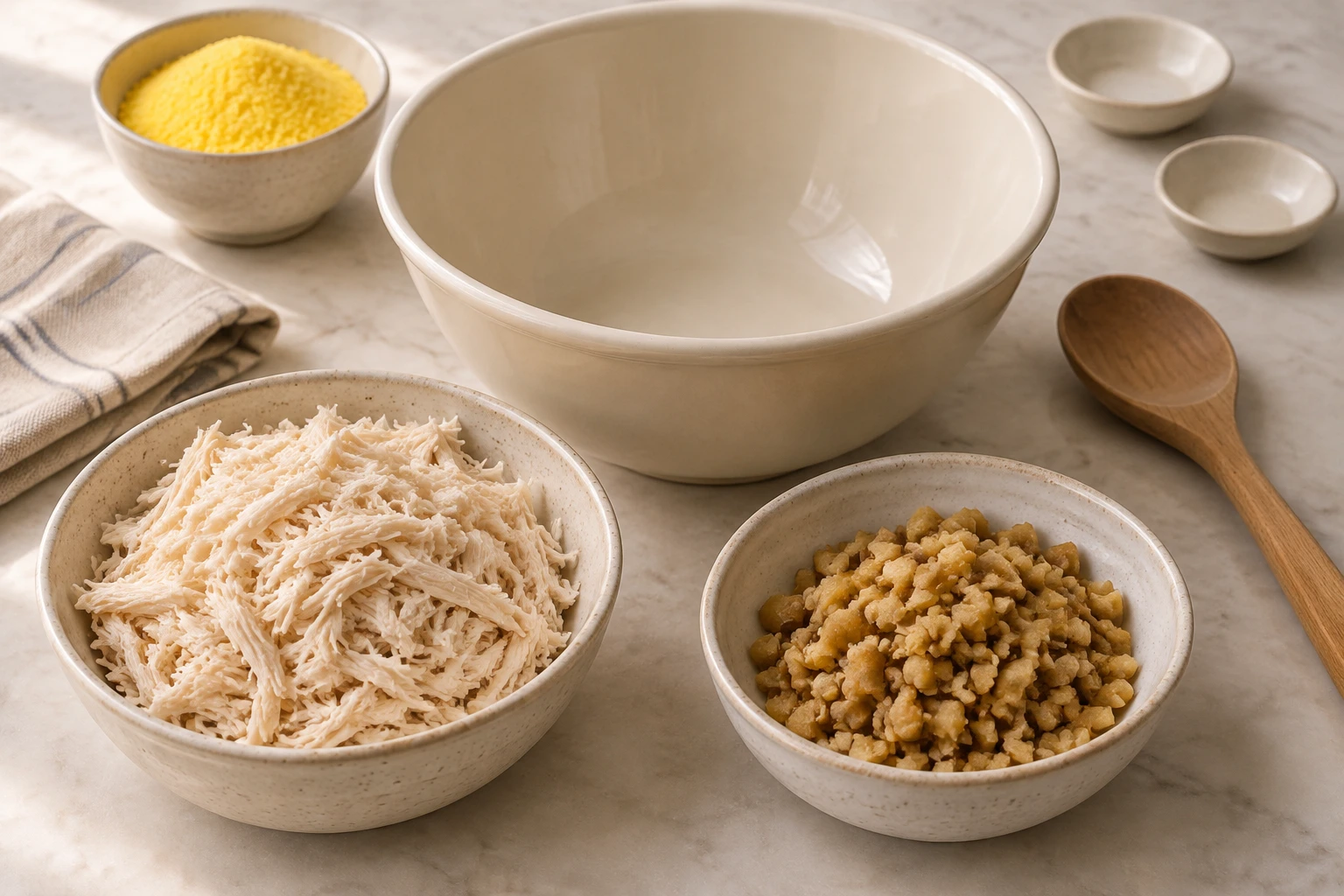
Cook the soft polenta: Pour 300 ml of water into a small saucepan and bring it to a gentle simmer. Slowly sprinkle in the plain polenta while stirring continuously to prevent lumps from forming. Reduce the heat and cook according to the package instructions, stirring regularly. The mixture should become thick and creamy but remain soft enough to fold with the other ingredients. If it becomes stiff before cooking is complete, add a small splash of water. Do not add salt, butter, milk, stock cubes or seasoning. Remove the saucepan from the heat once the grains are tender and the polenta holds together while still looking moist.
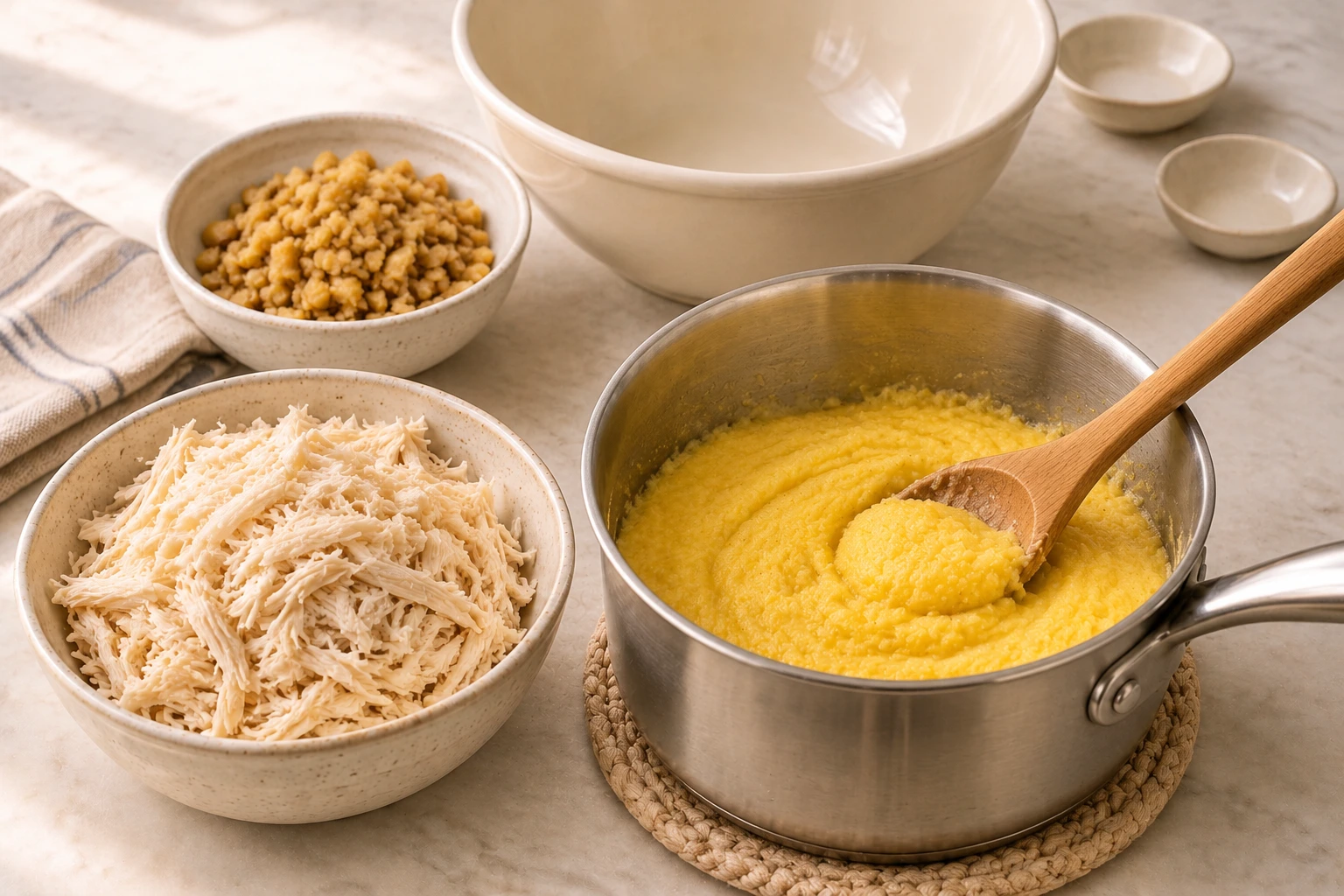
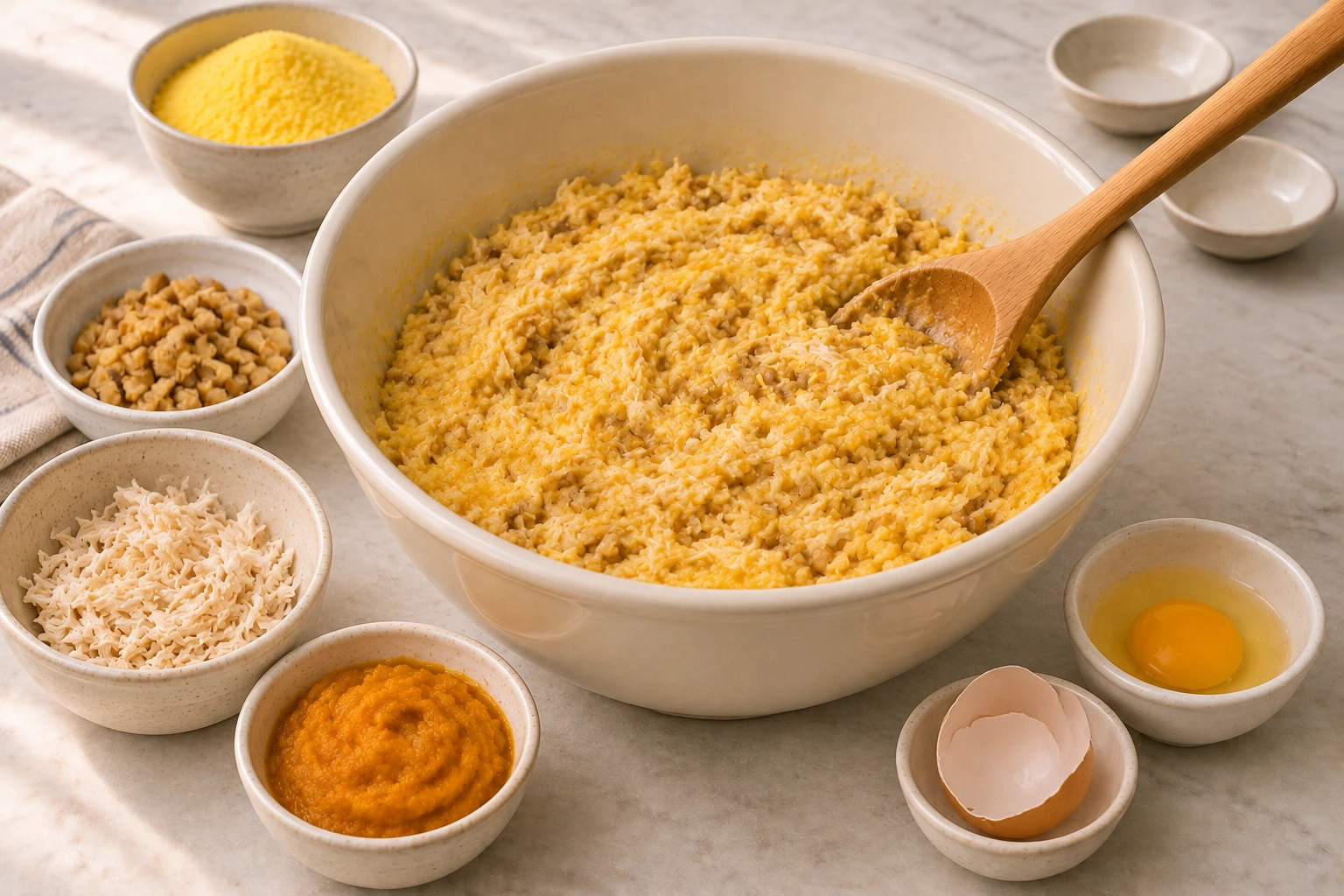
Combine the chicken and chestnut mixture: Transfer the warm polenta into a mixing bowl. Add the shredded chicken, finely chopped sweet chestnut and plain pumpkin puree. Crack in the egg and mix thoroughly until all the ingredients are evenly distributed. The egg helps bind the mixture as it bakes, while pumpkin contributes moisture and a softer texture. Check the consistency before transferring it to the dish. It should be thick and spoonable, not crumbly or watery. If the mixture looks too stiff, stir in one teaspoon of water at a time. Break up any large chicken strands or chestnut pieces so the finished bake can be sliced into manageable portions.
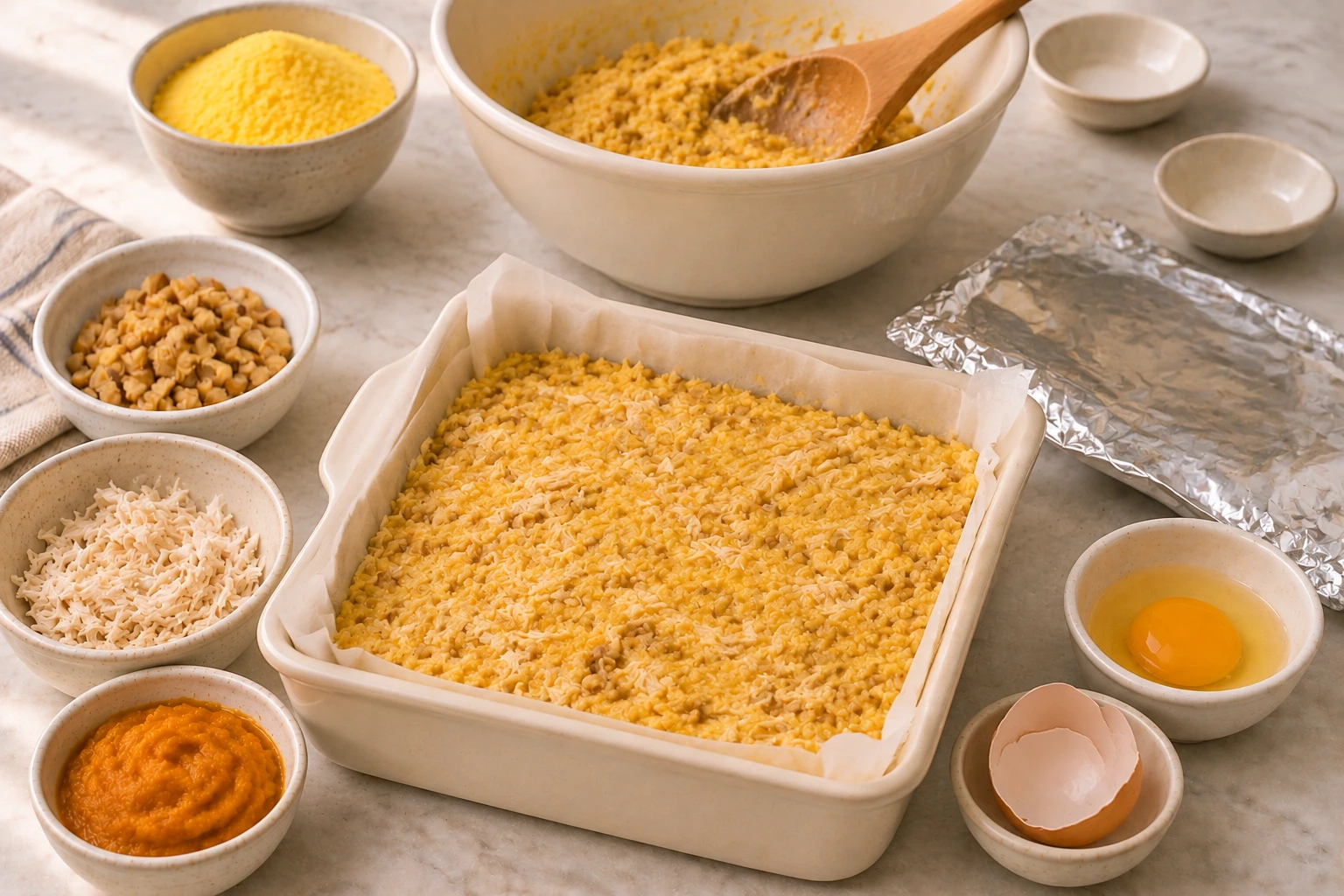
Bake gently until the centre sets: Line the small square baking dish with baking paper and lightly moisten the paper with water so it sits neatly against the sides. Transfer the mixture into the dish and spread it evenly, keeping the surface level without pressing it down too firmly. Cover the dish loosely with aluminium foil to limit moisture loss around the edges. Bake at 180°C for approximately 20 minutes. Remove the foil and continue baking for another 5 to 10 minutes, checking the centre. The egg-containing mixture must reach at least 74°C internally and should be set without becoming dry or browned heavily around the sides. Adjust the baking time to your dish and oven.
Cool completely and slice: Remove the dish from the oven and place it on a wire cooling rack. Leave the bake in its dish until it is cool enough to handle, then lift it out using the baking paper. Allow it to cool completely before cutting. This resting period helps the polenta firm up naturally, making cleaner slices without needing additional flour or binders. Cut into small, soft pieces appropriate for your dog's size and chewing ability. Check that the centre has cooled fully before serving. Refrigerate portions that will not be used promptly, and never leave the finished bake sitting at room temperature for extended periods.
Made this recipe?
Tap the paw so other pet parents know it’s worth making.
Be the first to make it
Tips & serving
Allow the bake to cool completely before serving. Cut it into small pieces appropriate for your dog's size, chewing ability and usual eating habits. Start with a particularly small taste if sweet chestnut or polenta is new to your dog, and observe how they tolerate it. Treat this recipe as an occasional homemade addition rather than a complete meal replacement. Keep all extras within the recommended daily calorie allowance, generally no more than 10% of daily calories for treats and unbalanced additions. Account for other snacks given that day. Dogs with dietary restrictions or existing health concerns need individual advice. Always discuss major diet changes with your veterinarian.
- Cooked chicken breast provides a familiar, protein-rich ingredient that is easy to shred and distribute throughout the bake.
- Soft polenta creates a sliceable structure without requiring a hard biscuit texture or additional flour.
- Finely chopped sweet chestnut introduces a seasonal ingredient in a measured amount rather than making the recipe heavily nut-based.
- The moist consistency makes the bake easy to divide into small pieces for measured occasional servings.
- The square baking dish produces portions that can be cooled, divided and refrigerated without complicated preparation.
- Shred the chicken while it is cool enough to handle, using short strands that distribute evenly without creating large chewy clumps.
Storage
Keep the refrigerator at 4°C or colder and use within 3 days. Separate portions with small pieces of baking paper if they tend to stick together. Thaw overnight in the refrigerator rather than leaving portions on the counter. Serve thawed portions chilled or bring them gently to room temperature.
Substitutions
Plain cooked turkey breast can replace chicken in the same approximate quantity. Remove the skin, bones and visible fat, and shred the meat finely before combining it with the polenta. Plain cooked mashed pumpkin can be replaced with an equal amount of plain cooked mashed butternut squash, provided it contains no added salt, butter, onion, garlic or seasoning. If you cannot source identifiable edible sweet chestnuts, simply leave them out rather than using an uncertain wild nut. The recipe will still hold together with chicken, pumpkin and polenta.
Dogs recipe FAQ
Can Dogs Chicken and Chestnut Polenta Bake replace my dog's regular diet?
Treat it as an occasional extra, not a meal plan. Allow the bake to cool completely before serving. Cut it into small pieces appropriate for your dog's size, chewing ability and usual eating habits.
Is boneless skinless cooked chicken breast okay for dogs?
This recipe uses boneless skinless cooked chicken breast in a small, dog-appropriate amount. Skip it if your dog has a known sensitivity, and read the foods-to-avoid note on this page before serving.
How should I store leftovers?
Refrigerate completely cooled portions in an airtight food-safe container within two hours of cooking. Keep the refrigerator at 4°C or colder and use within 3 days. Separate portions with small pieces of baking paper if they tend to stick together.
How should I introduce this meal?
Start with a taste-size portion next to your dog's usual food, and hold off on serving more until you have seen that it agrees with them.
Can dogs eat chestnuts in this chicken and polenta bake?
Dogs can have small amounts of plain edible sweet chestnut, provided it is properly identified, cooked, peeled and finely chopped. Horse chestnuts, also called conkers or buckeyes, are toxic and must never be used. Keep the quantity modest because chestnuts are starchy.
How do I stop homemade chicken and polenta bake from becoming dry?
Keep the polenta creamy before mixing, include the measured pumpkin puree, and cover the dish loosely with foil during the first part of baking. Check the centre rather than waiting for a deeply browned surface. Allow the bake to set naturally as it cools.
Sources