

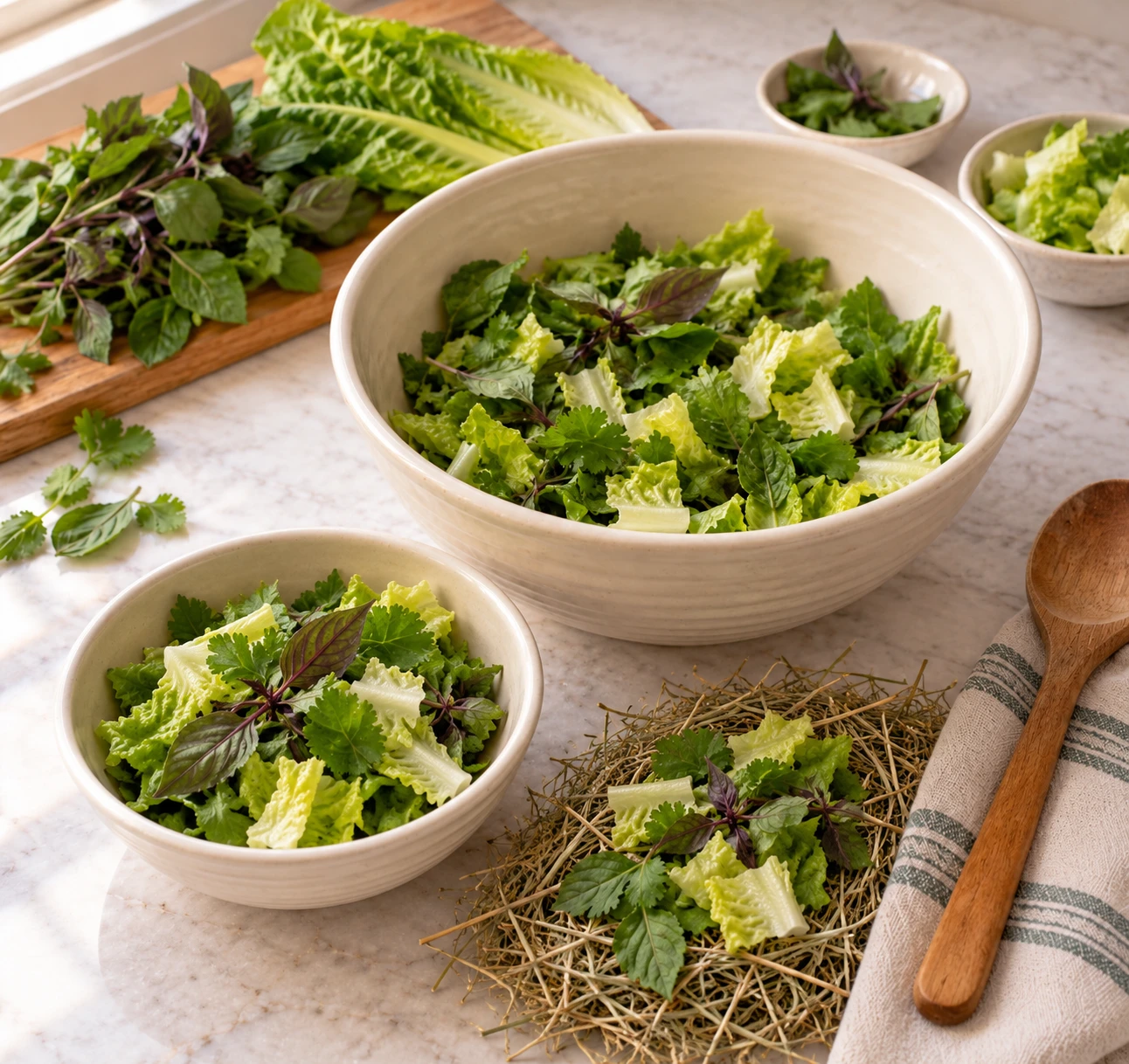
This fresh scatter mix turns part of a rabbit's normal leafy-green allowance into a simple foraging activity using cinnamon basil, romaine, cilantro, and dandelion greens. Cinnamon basil is a culinary basil variety, so use only the fresh herb itself, never ground cinnamon, cinnamon sticks, oils, or flavorings. Washing, drying, and tearing the leaves into uneven pieces encourages a rabbit to sniff, sort, and nibble instead of eating from one compact pile. Keep unlimited grass hay available before, during, and after serving. Introduce unfamiliar greens one at a time and in small amounts, and discuss major diet changes with a veterinarian who knows your rabbit's individual needs.
Safety first: Introduce new foods gradually and speak with your veterinarian before making major changes to your rabbit's diet.
Foods to avoid
Use only correctly identified, rabbit-safe culinary herbs and greens from clean, pesticide-free sources. Cinnamon basil means the fresh Ocimum basilicum herb, not ground cinnamon, cinnamon sticks, flavor extracts, or essential oils. Do not add onion, garlic, chives, dressings, salt, sugar, oils, or unidentified wild plants.
Ingredients
Instructions
Inspect and wash the greens: Check every leaf carefully, removing any damaged, slimy, discolored, or unidentified plant material. Rinse the cinnamon basil, romaine, cilantro, and dandelion greens thoroughly under cool running water, paying close attention to folds and stems where grit can collect.
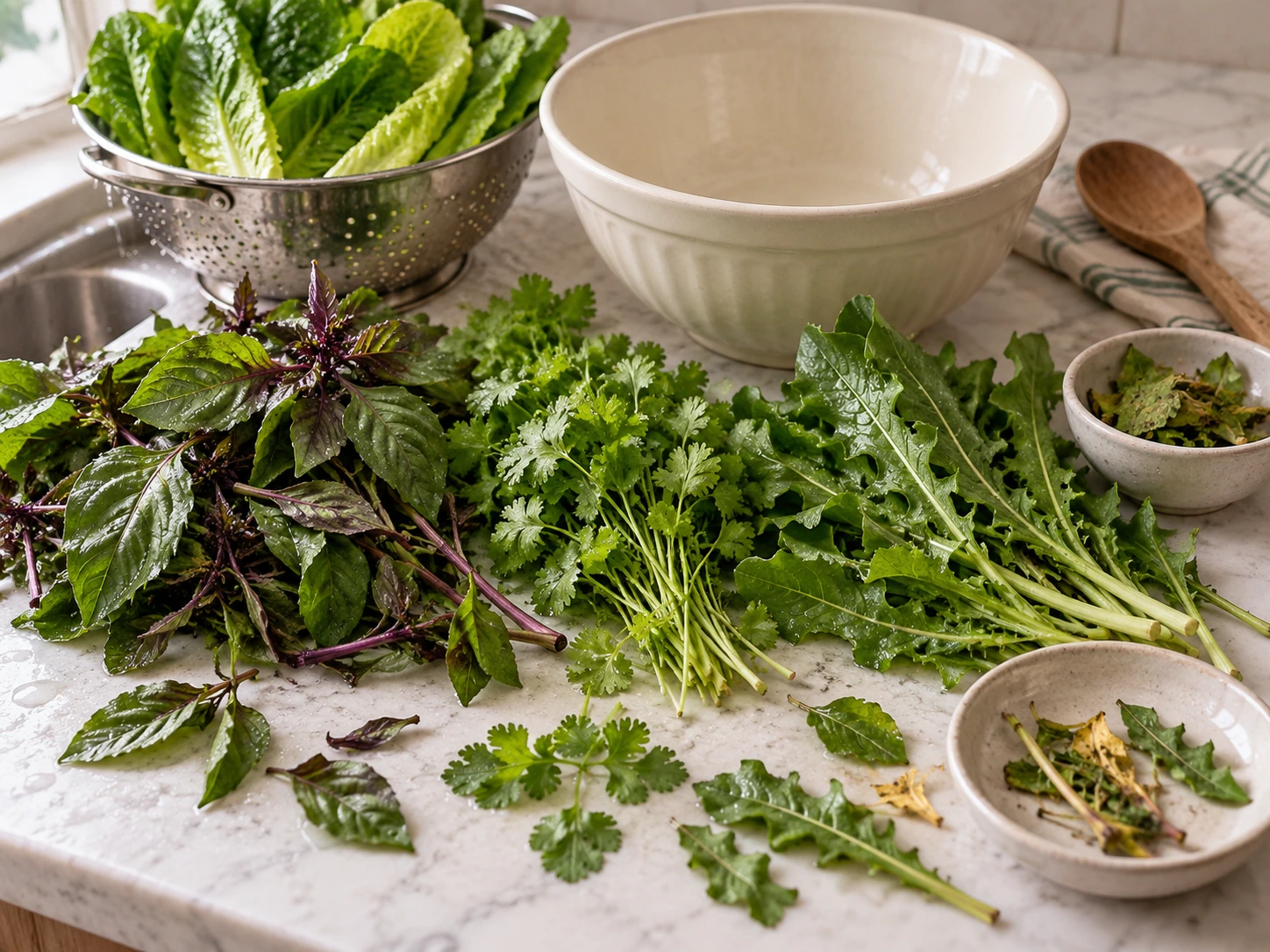
Dry the leaves well: Drain the washed greens thoroughly, then gently pat them dry with a clean towel or use a salad spinner without crushing the leaves. Removing excess surface water helps the forage pieces stay separate and keeps leftover greens cleaner during storage.
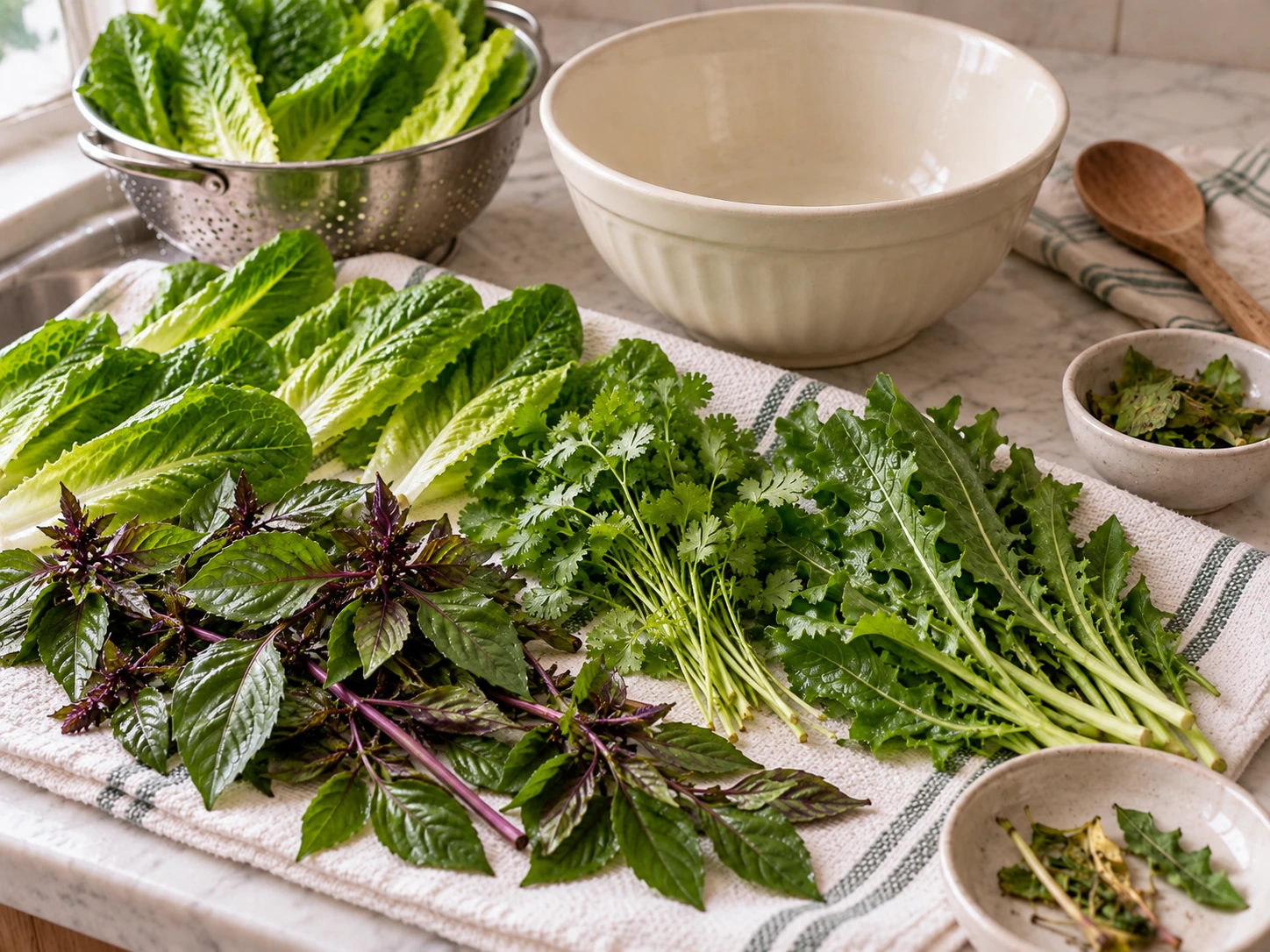
Tear into forage pieces: Tear the romaine and larger dandelion leaves into loose bite-sized pieces, leaving the smaller basil and cilantro leaves mostly whole. Keep the pieces slightly uneven instead of making a uniform salad, since varied shapes work better for scattering and searching.
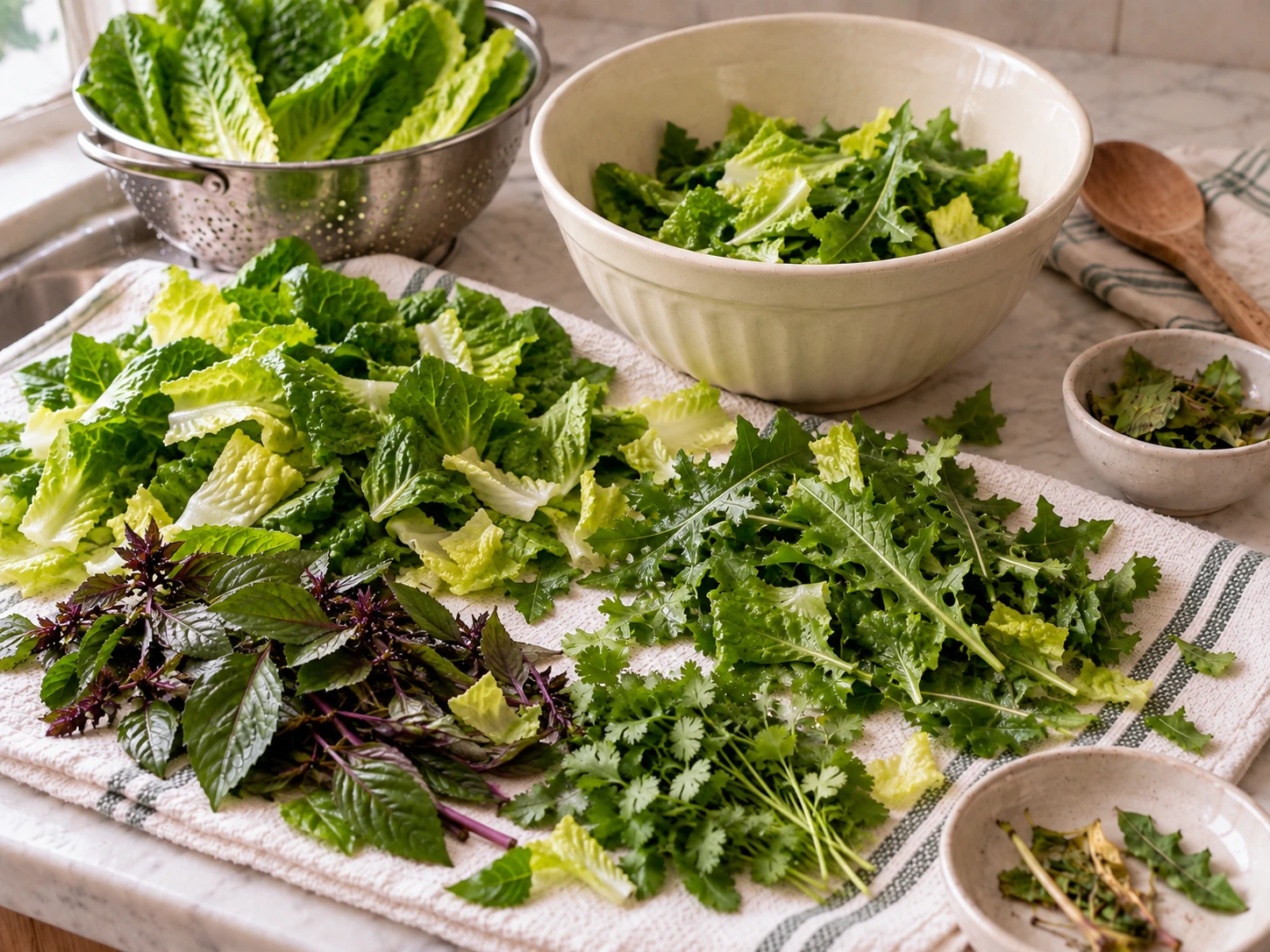
Mix without crushing: Place all the prepared greens in the cream ceramic bowl and toss gently with clean hands or by lifting and turning the leaves with the bowl. Stop as soon as the herbs are evenly distributed so the leaves remain springy and distinct rather than bruised or compacted.
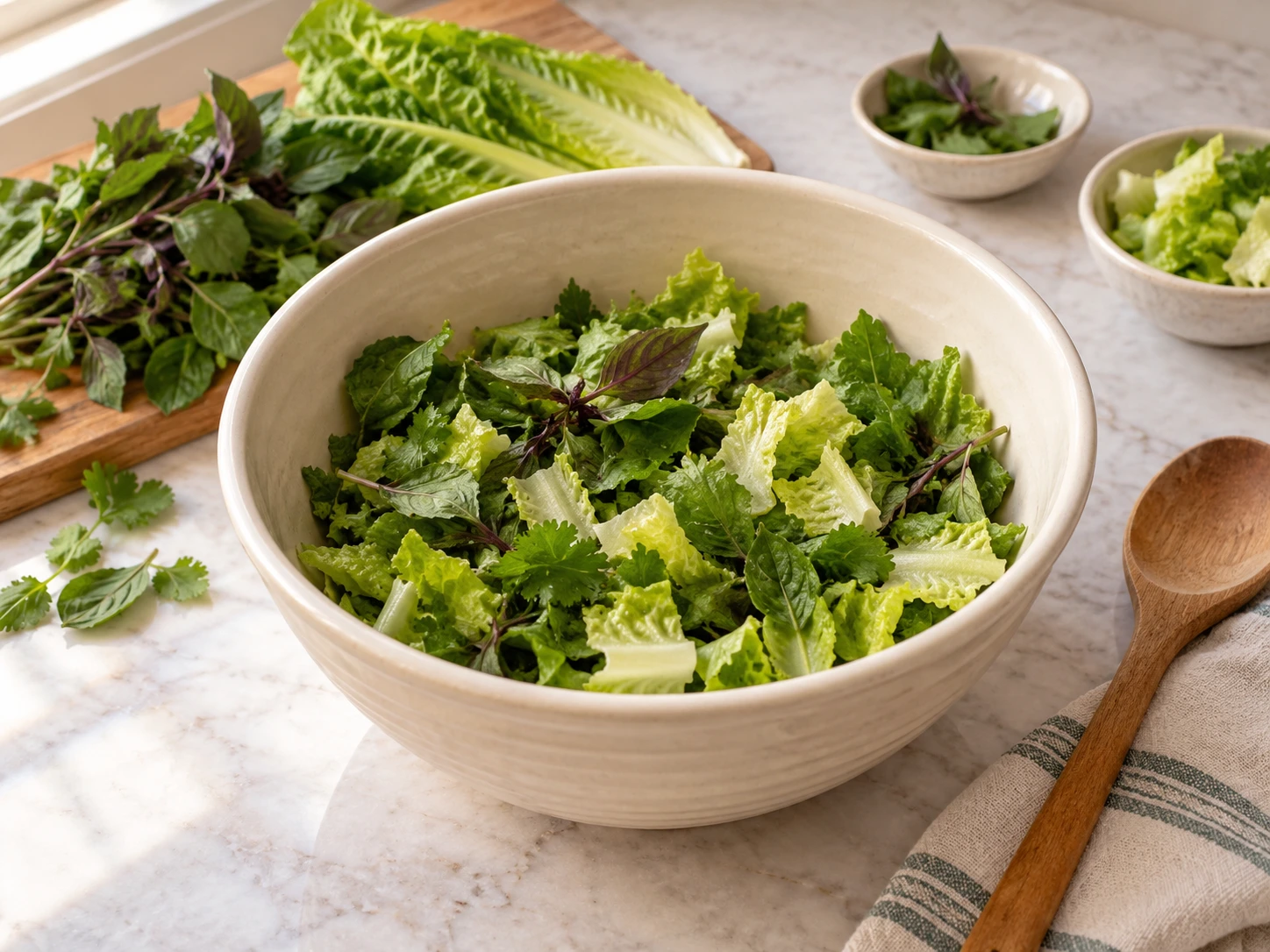
Portion for scattering: Measure a small serving from the mixed greens and place it loosely in the small cream ceramic dish without packing it down. At serving time, scatter that measured amount through clean hay or across a clean rabbit-safe forage surface, then refrigerate the remaining dry mix promptly.
Made this recipe?
Tap the paw so other pet parents know it’s worth making.
Be the first to make it
Tips & serving
Offer a small handful scattered loosely through clean hay or across a clean forage surface, and count it toward the rabbit's normal daily leafy greens allowance rather than adding it as an extra meal. Keep unlimited grass hay and fresh water available. Introduce unfamiliar greens slowly, and discuss major diet changes with a veterinarian.
- Creates varied leaf sizes and aromas that encourage slower searching and nibbling.
- Uses fresh leafy greens that fit naturally within a hay centered rabbit feeding routine.
- Lets owners use part of the normal greens allowance for enrichment instead of adding sugary treats.
- Dry the leaves well after washing so the mix stays loose instead of collapsing into a wet clump.
- Tear some leaves larger and some smaller to create different textures and make the scatter more interesting to search.
- Count this recipe toward the rabbit's daily leafy greens rather than serving it on top of an already full greens portion.
Storage
Discard leaves that become slimy, sour smelling, excessively wilted, or visibly spoiled.
Substitutions
If cinnamon basil is unavailable, use plain sweet basil. Dandelion greens can be replaced with red leaf lettuce or additional romaine, but introduce unfamiliar greens separately and gradually rather than changing several ingredients at once.
Rabbits recipe FAQ
Can I serve this fresh mix every day?
Treat it as an occasional extra, not a meal plan. Offer a small handful scattered loosely through clean hay or across a clean forage surface, and count it toward the rabbit's normal daily leafy greens allowance rather than adding it as an extra meal.
Is rabbit safe leafy herbs okay for rabbits?
This recipe uses rabbit safe leafy herbs in a small, rabbit-appropriate amount. Skip it if your rabbit has a known sensitivity, and read the foods-to-avoid note on this page before serving.
How do I store this fresh mix?
Refrigerate any unused mix promptly in a clean covered container lined with dry absorbent paper, and use it within about twenty four hours. Discard leaves that become slimy, sour smelling, excessively wilted, or visibly spoiled.
How should I introduce this fresh mix?
Start with a taste-size portion next to your rabbit's usual food, and hold off on serving more until you have seen that it agrees with them.
Can rabbits eat cinnamon basil?
Cinnamon basil is a culinary form of Ocimum basilicum, and basil is commonly listed among rabbit-safe leafy greens. Offer the fresh washed leaves and tender stems only. Do not add ground cinnamon, cinnamon sticks, extracts, or essential oils, and introduce the herb gradually if it is new.
How much of the forage scatter should I serve?
Treat this blend as part of the rabbit's normal fresh greens allowance, not as an extra meal. A commonly used adult guideline is roughly one to two cups of vegetables per four pounds of body weight, but individual needs differ, so follow your veterinarian's advice.
Sources