
Small pets often enjoy the chance to forage, chew, and discover new textures during their daily routine. These carrot and timothy hay stuffed treat pouches turn simple ingredients into a gentle enrichment snack that adds variety to feeding time. This recipe is meant to be offered as a small extra alongside a balanced diet, not as a replacement for regular nutrition. Introduce new foods gradually and discuss major diet changes with a veterinarian, especially for pets with specific dietary needs.
Safety first: Every pet is different: age, allergies, and health conditions all matter, so check with your vet when in doubt.
Foods to avoid
Avoid using treated wood, scented materials, sugary additions, seasoned ingredients, or any plant material that is not known to be suitable for the specific small pet species. Major diet changes should be discussed with a veterinarian.
Ingredients
Instructions
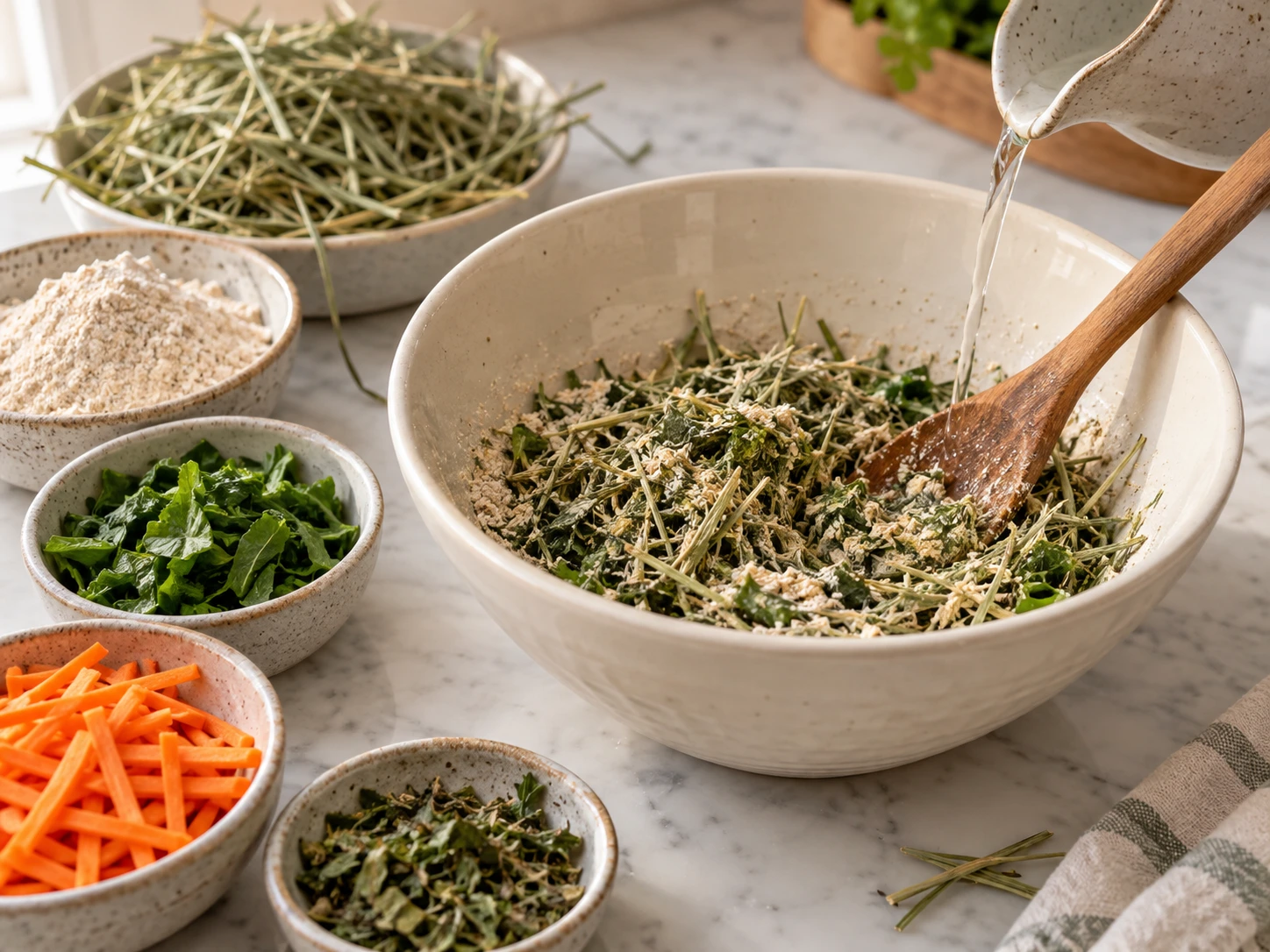
Prepare the hay mixture: Place the timothy hay in a mixing bowl and gently mix it with the oat flour, chopped leafy greens, and small herb pieces. Slowly add water while stirring until the mixture holds together lightly without becoming wet or sticky.
Shape the pouch shells: Take small portions of the hay mixture and press them into thin pouch-like shapes with your fingers or a spoon. Keep the layers loose enough for small pets to explore while making sure the pieces stay together during drying.
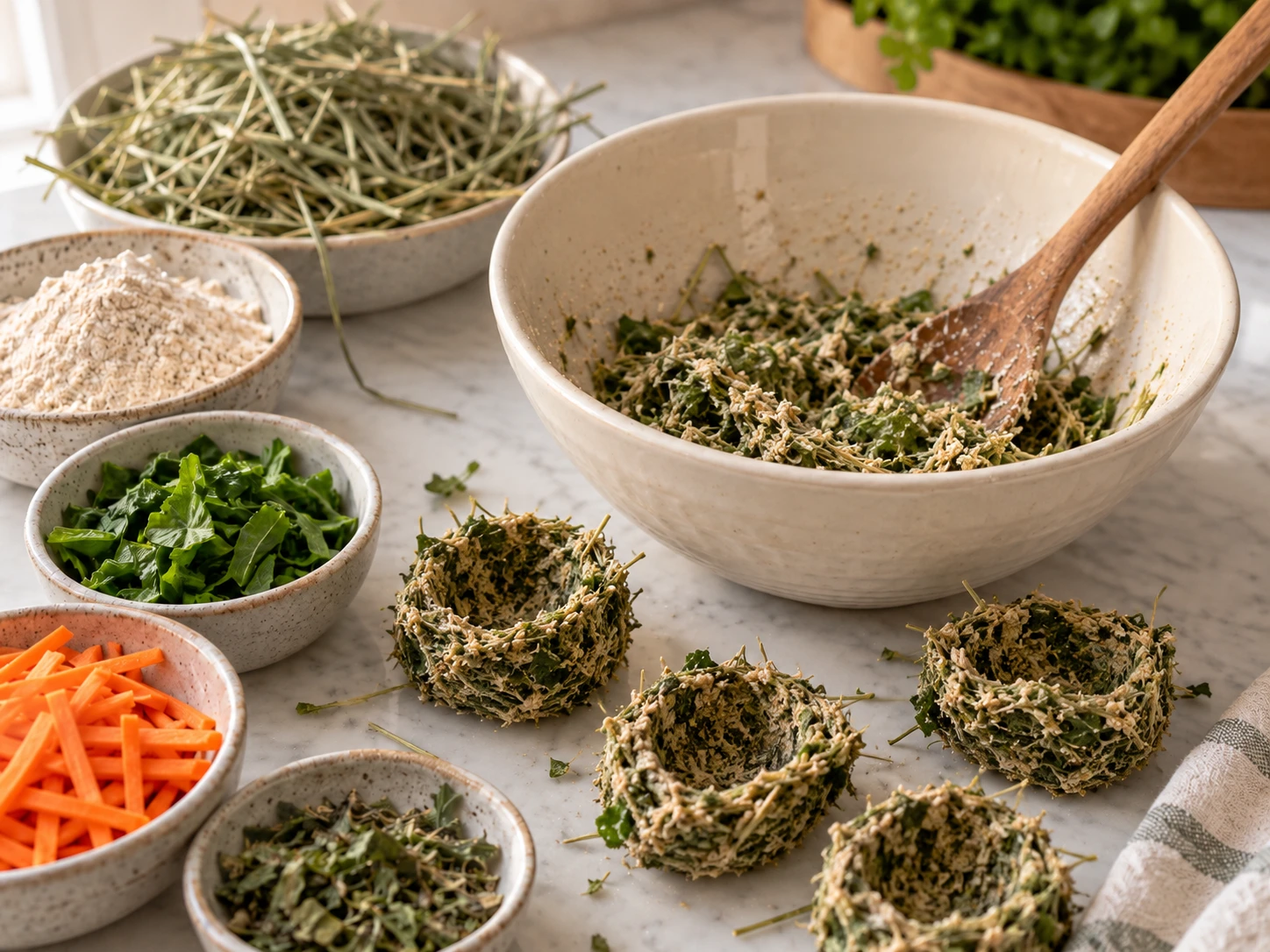
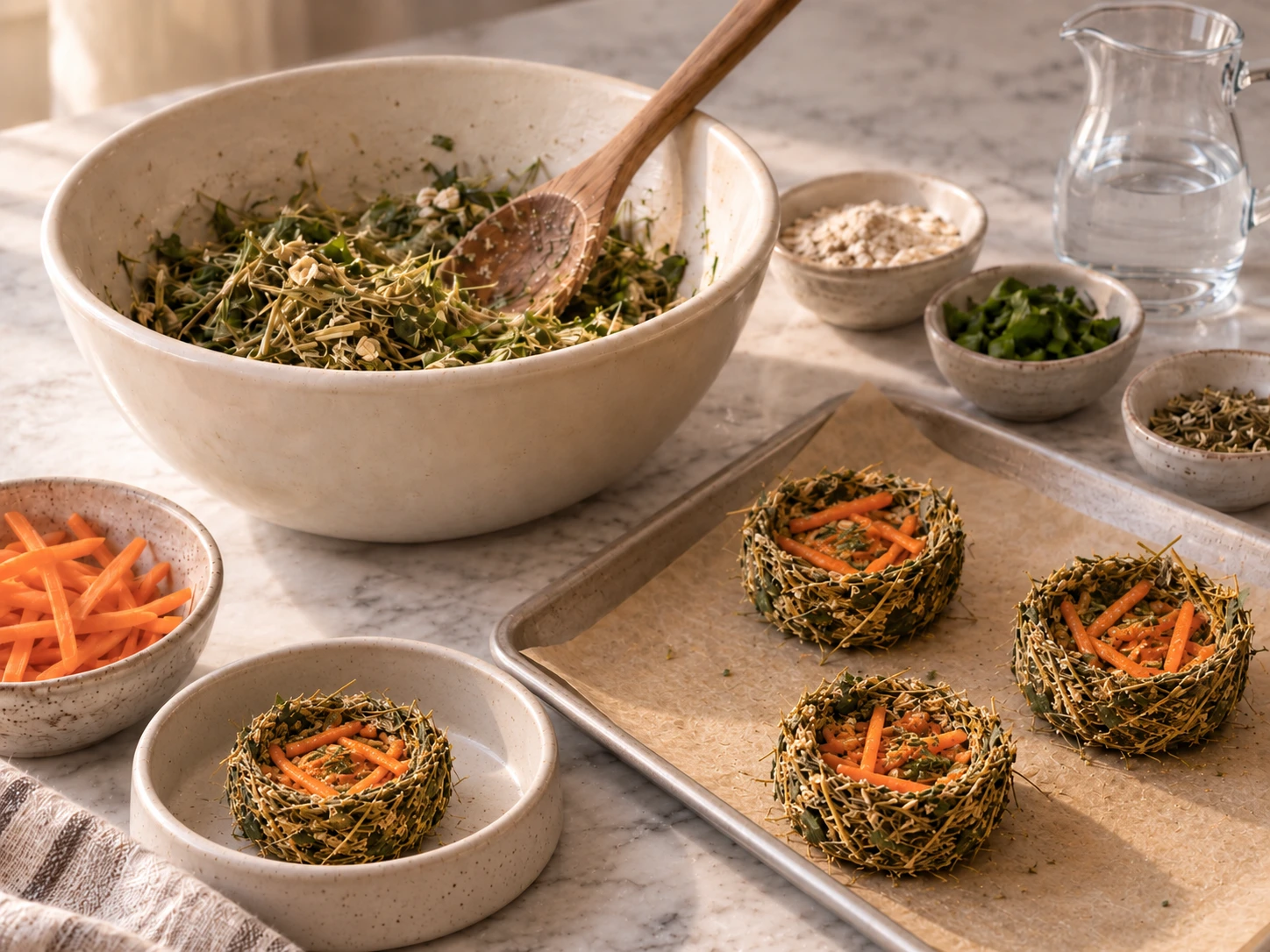
Add the carrot filling: Add a few thin carrot strips into the centre of each pouch shell. Gently fold the hay mixture around the carrot pieces, leaving a small opening that gives pets an interesting area to explore.
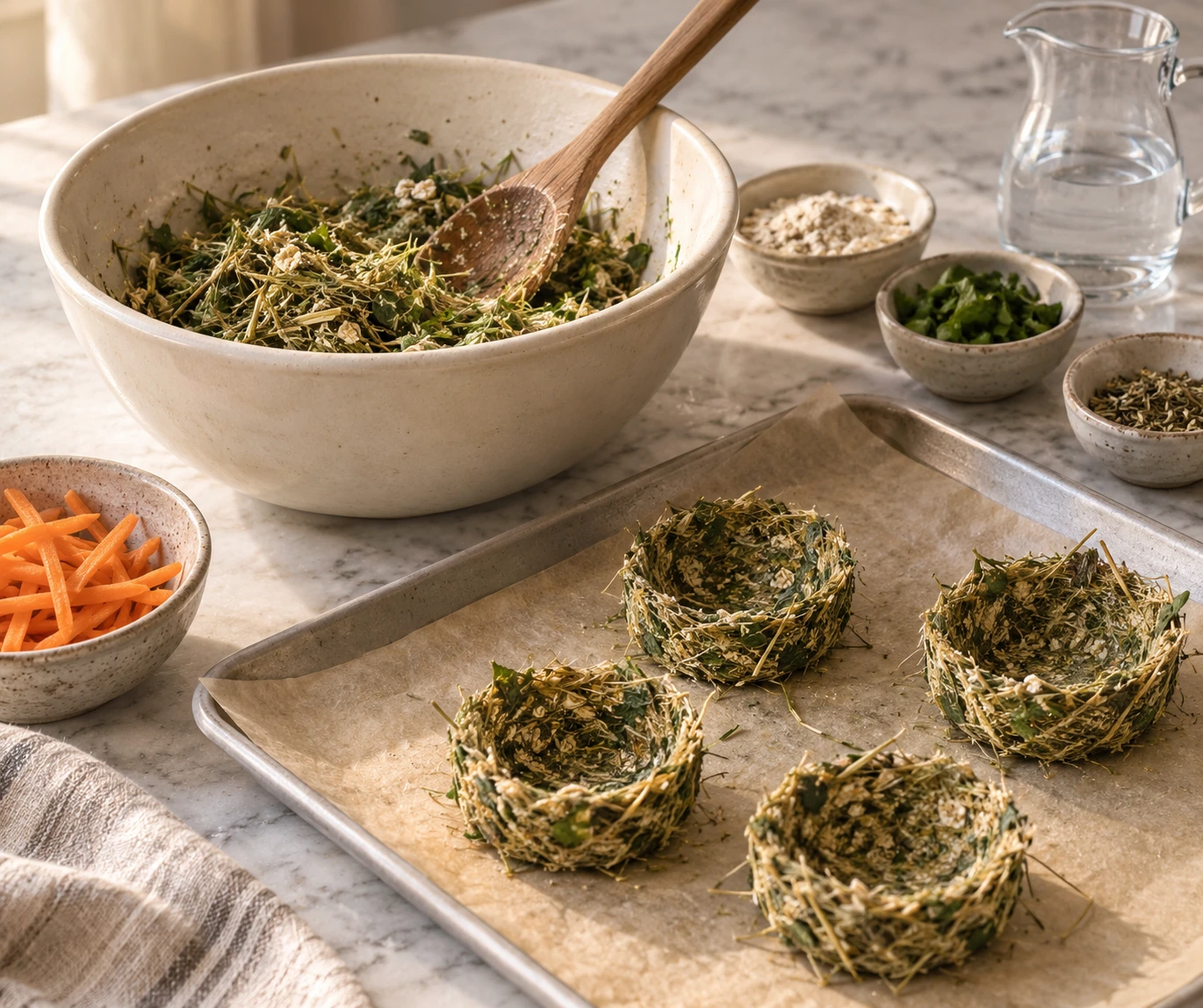
Dry the pouches: Arrange the filled pouches on the lined baking tray with space between each piece. Bake at a low temperature until the outside feels dry and firm, helping the snack become easier for small pets to handle.
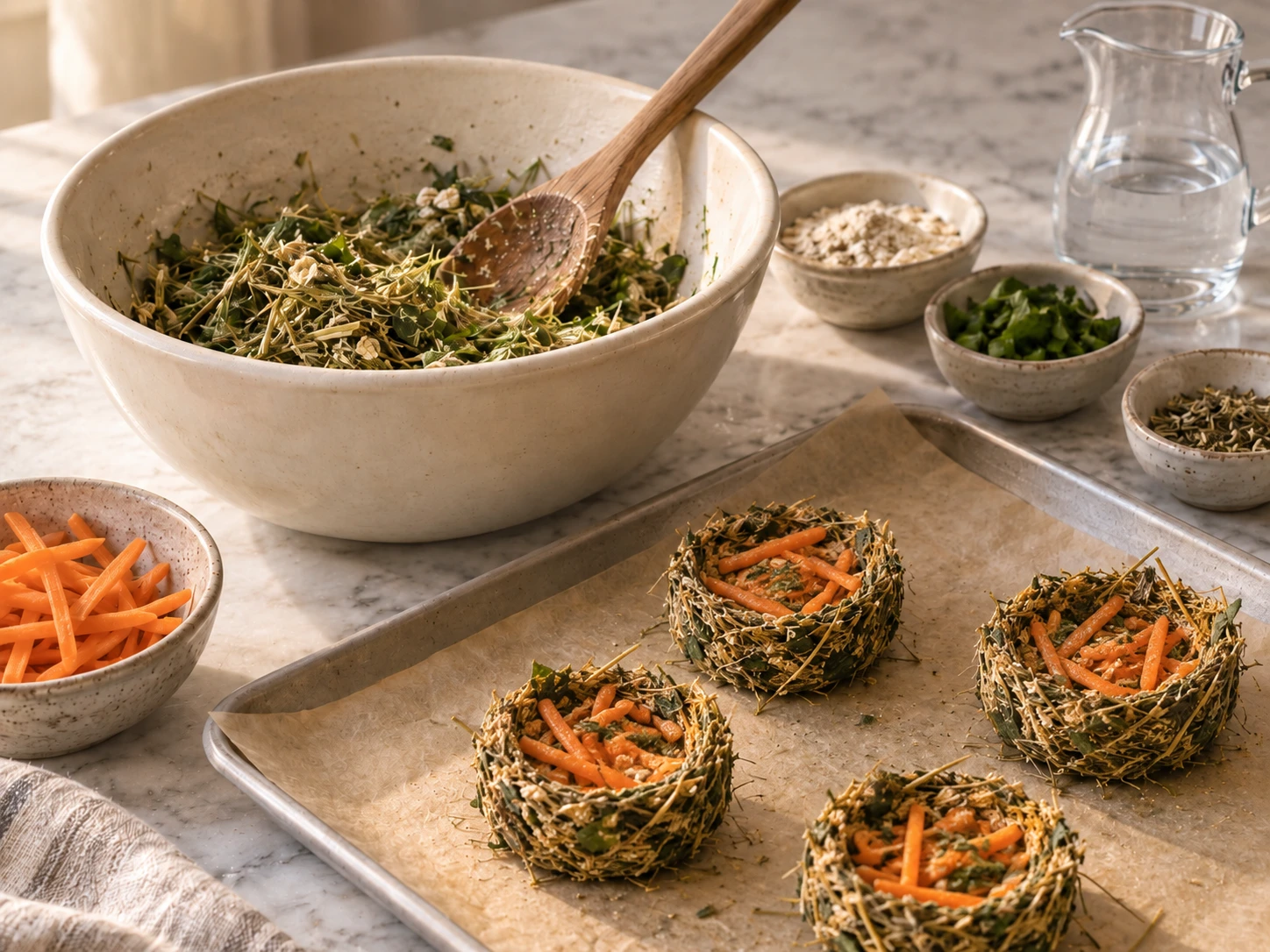
Cool and serve: Let the finished treat pouches cool completely before offering a small portion. Place one pouch in a clean feeding area and remove any uneaten fresh ingredients within an appropriate time to help maintain freshness.
Made this recipe?
Tap the paw so other pet parents know it’s worth making.
Be the first to make it
Tips & serving
Offer this treat pouch as an occasional snack alongside your small pet's normal diet, adjusting portions based on the animal's size and usual food intake. Always monitor new foods carefully and discuss major diet changes with a veterinarian.
- Provides a textured snack format that encourages small pets to explore and interact with their food.
- Creates a simple homemade enrichment activity using familiar ingredients and gentle natural textures.
- Offers owners a way to add variety to occasional snack routines without replacing balanced feeding habits.
- Use fresh, clean timothy hay with a pleasant smell because the hay forms the main texture and structure of this enrichment snack.
- Keep the pouch pieces small enough for your pet to handle comfortably and avoid making portions too large for occasional treats.
- Introduce the snack gradually and observe how your small pet responds before offering it again as part of a routine.
Storage
Store completely cooled pouches in an airtight container in a cool, dry place for several days. Check texture and freshness before serving, and discard any pieces that become damp, mouldy, or spoiled.
Substitutions
If oat flour is unsuitable, plain finely ground hay-based ingredients can sometimes be used to help bind the mixture, but avoid adding sweeteners, seasonings, or ingredients not appropriate for small companion animals.
Small Pets recipe FAQ
Can Carrot and Timothy Hay Stuffed Treat Pouch for Small Pets replace my pet's regular diet?
Treat it as an occasional extra, not a meal plan. Offer this treat pouch as an occasional snack alongside your small pet's normal diet, adjusting portions based on the animal's size and usual food intake.
Can pets have timothy hay?
This recipe uses timothy hay in a small, pet-appropriate amount. Skip it if your pet has a known sensitivity, and read the foods-to-avoid note on this page before serving.
How should I store leftovers?
Store completely cooled pouches in an airtight container in a cool, dry place for several days. Check texture and freshness before serving, and discard any pieces that become damp, mouldy, or spoiled.
What's the safest way to try this with my pet?
Offer a small amount beside regular food, introduce one new recipe at a time, and watch appetite, stool, skin, and behavior for a day or two.
Can guinea pigs eat this carrot and timothy hay treat pouch?
Many guinea pigs enjoy timothy hay and suitable vegetables as part of their normal feeding routine, but every pet has individual needs. Offer only small amounts of new snacks and make sure all ingredients match your guinea pig's usual dietary requirements.
Can this treat pouch be made ahead of time?
Yes, the pouches can be prepared ahead when fully dried and stored correctly. Keeping them dry is important because moisture can change the texture and shorten storage time. Always check each piece before serving.
Sources