
This fresh hay confetti is less about making a treat and more about giving a guinea pig a different way to find familiar food. Tiny pieces of bell pepper, coriander, and parsley are scattered through loose grass hay, encouraging natural searching and grazing instead of putting every vegetable together in a bowl. Keep the vegetable portion modest, since the hay is still the important part of the activity. Use only clean, fresh ingredients your guinea pig already tolerates, and introduce unfamiliar foods gradually rather than combining several new ingredients at once. Serve the finished confetti fresh so damp vegetables are not left sitting in the hay for long periods.
Safety first: Skip this recipe if your pet has a known sensitivity to any ingredient, and introduce anything new slowly.
Foods to avoid
Use only correctly identified guinea-pig-safe vegetables and herbs. Do not add onion, garlic, chives, avocado, potatoes, seasoning, oils, dressings, nuts, seeds, or sweet human foods. Avoid lawnmower clippings and never use wild forage from places that may have been treated with pesticides or contaminated by animals. Discard damp, mouldy, or musty hay.
Ingredients
Instructions
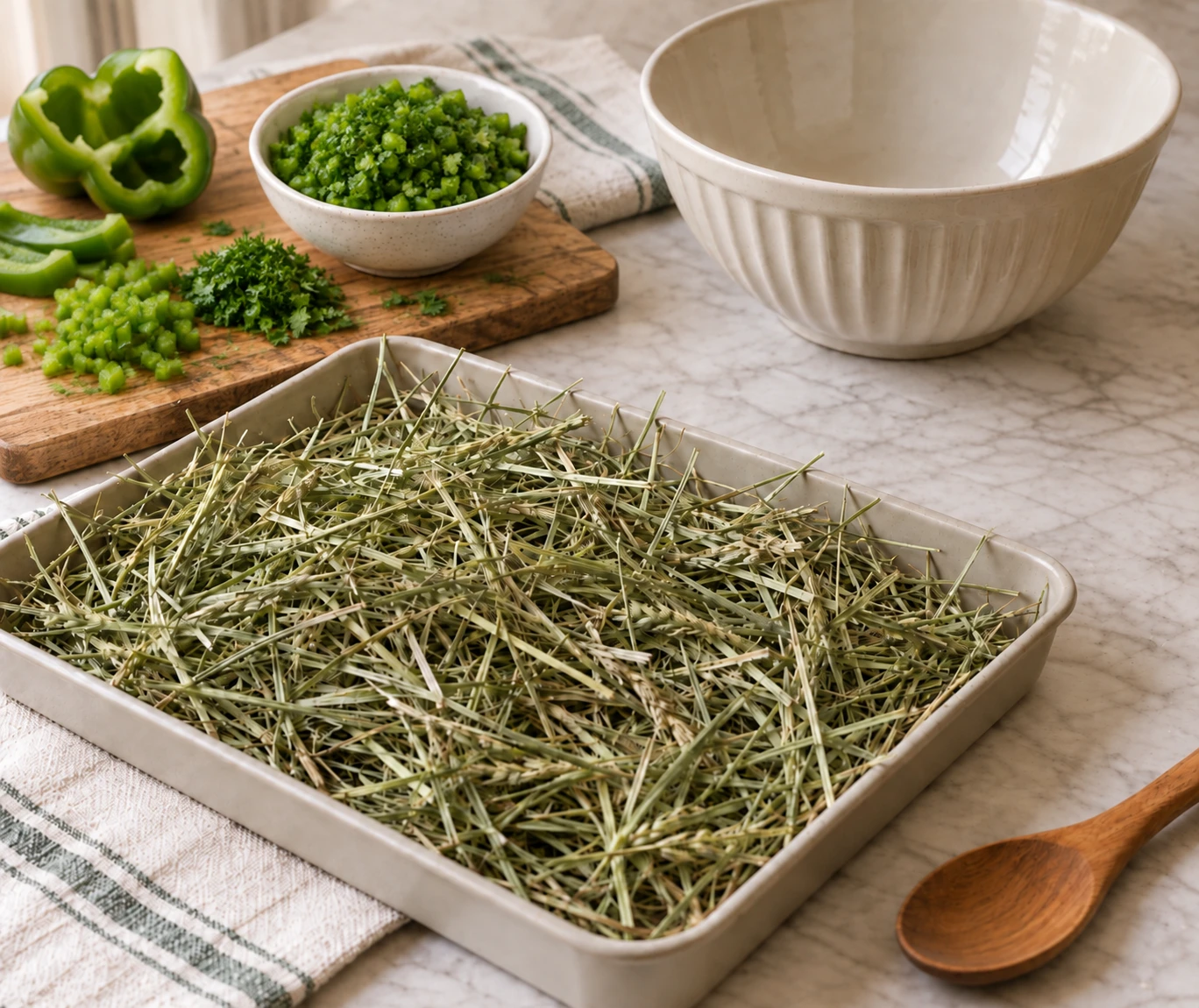
Fluff the Hay: Place the fresh grass hay in a clean shallow tray and gently loosen it with your fingers, creating plenty of gaps for the small vegetable pieces to fall into. Remove any dusty, damp, discoloured, or musty pieces rather than tucking fresh food into questionable hay.
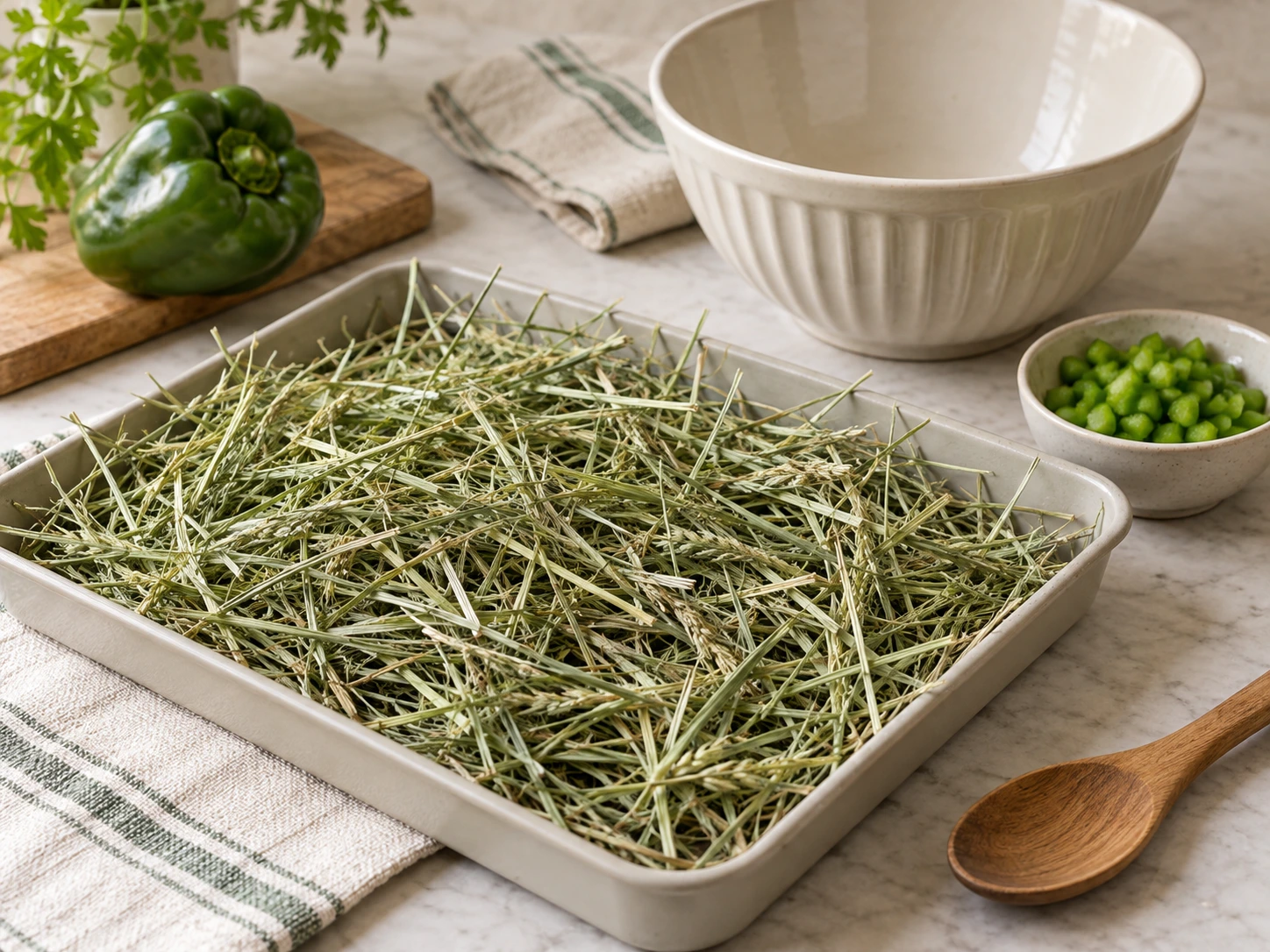
Wash and Dry: Wash the bell pepper, coriander, and parsley thoroughly, then dry them well with a clean kitchen towel. Removing excess surface water is important because wet vegetable pieces can quickly make the surrounding hay damp and less suitable for leaving in the enclosure.
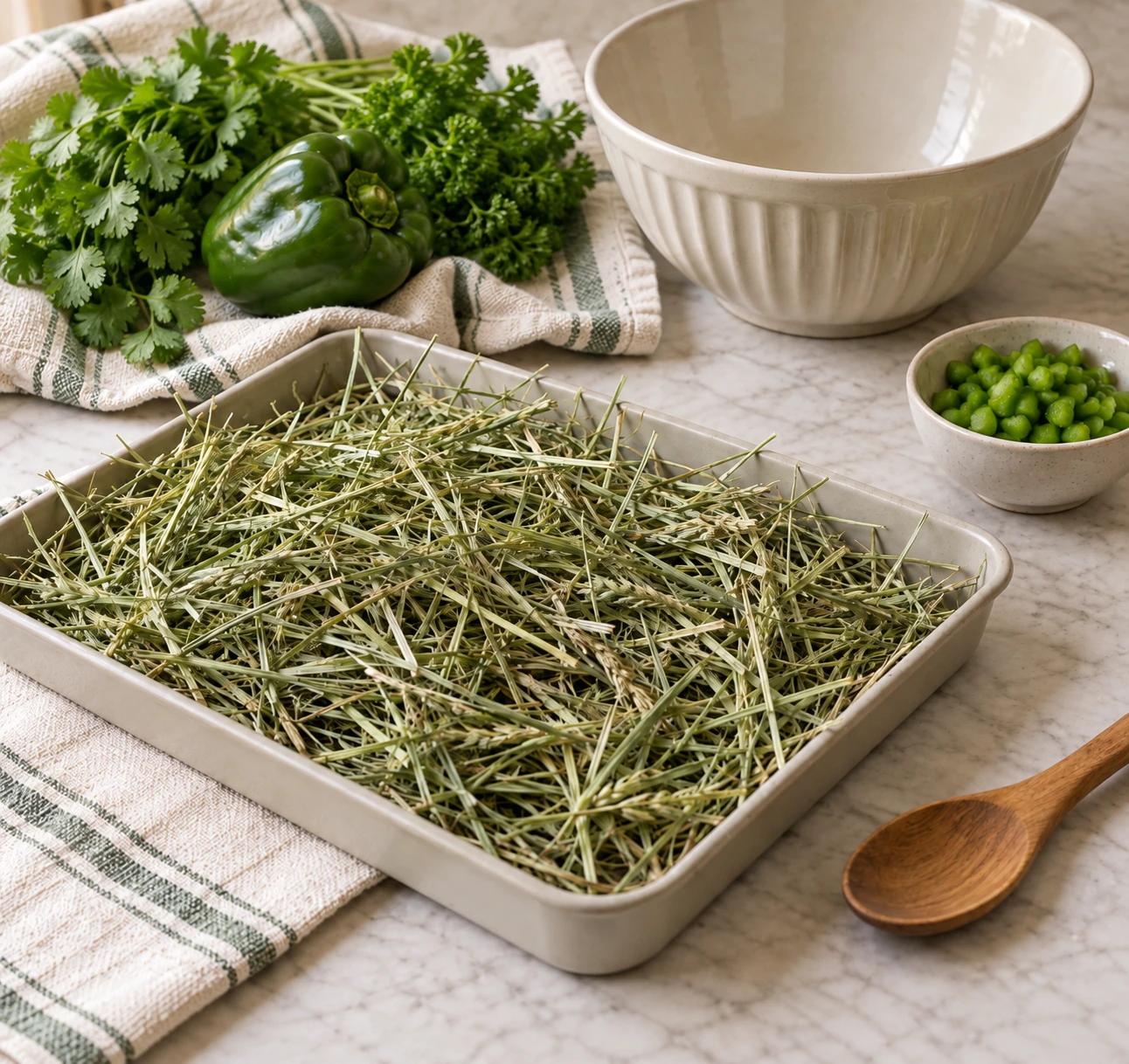
Dice the Pepper: Remove the bell pepper stem, seeds, and pale inner core, then cut the flesh into very small pieces. Aim for little confetti-like squares that slip easily between the strands of hay rather than large chunks that can simply be picked from the surface.
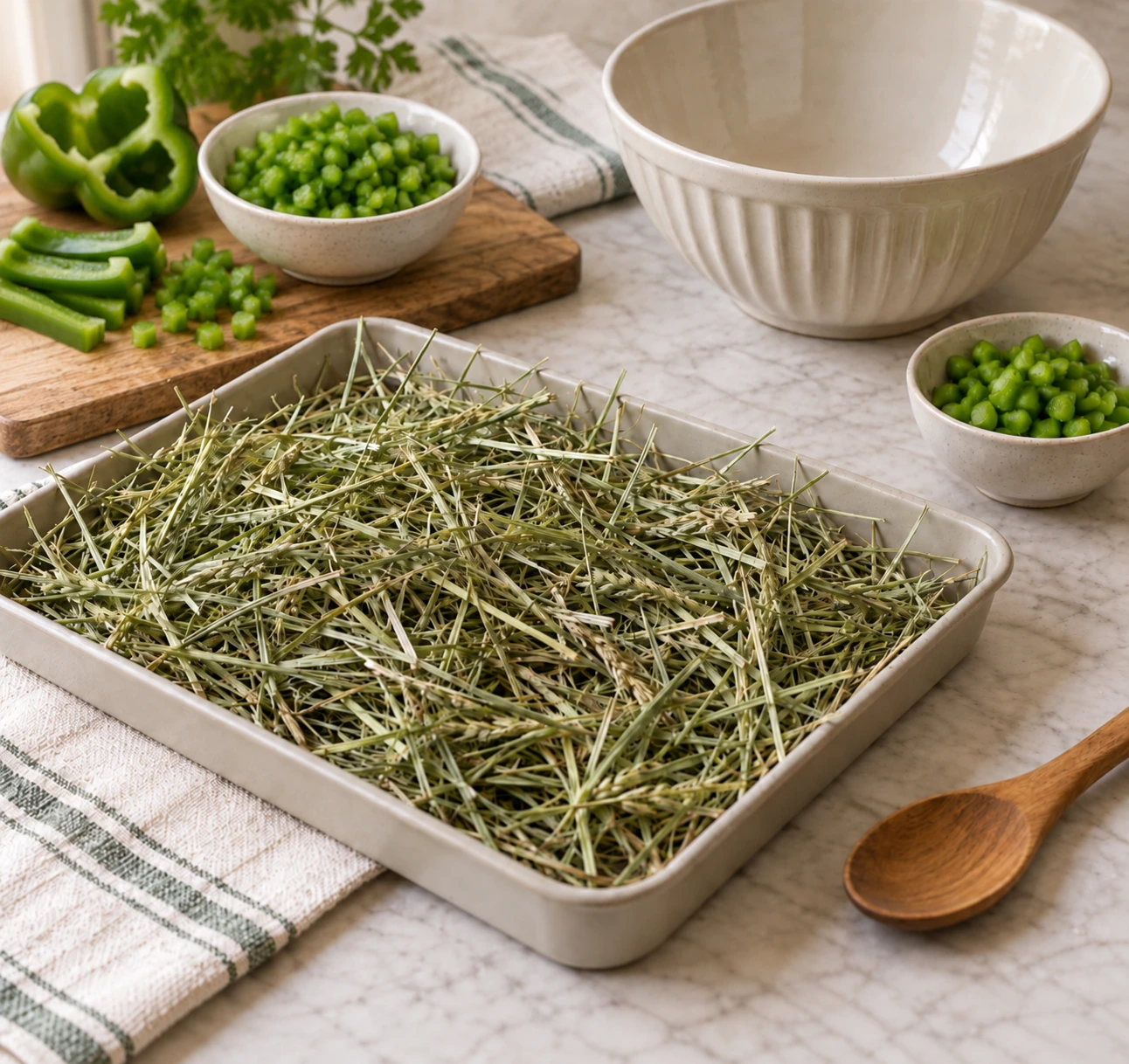
Chop the Herbs: Finely chop the coriander and parsley leaves, keeping the pieces small enough to scatter evenly. Combine the chopped herbs with the diced pepper in the small prep bowl, then toss lightly with clean fingers so the mixture stays loose rather than becoming crushed or wet.
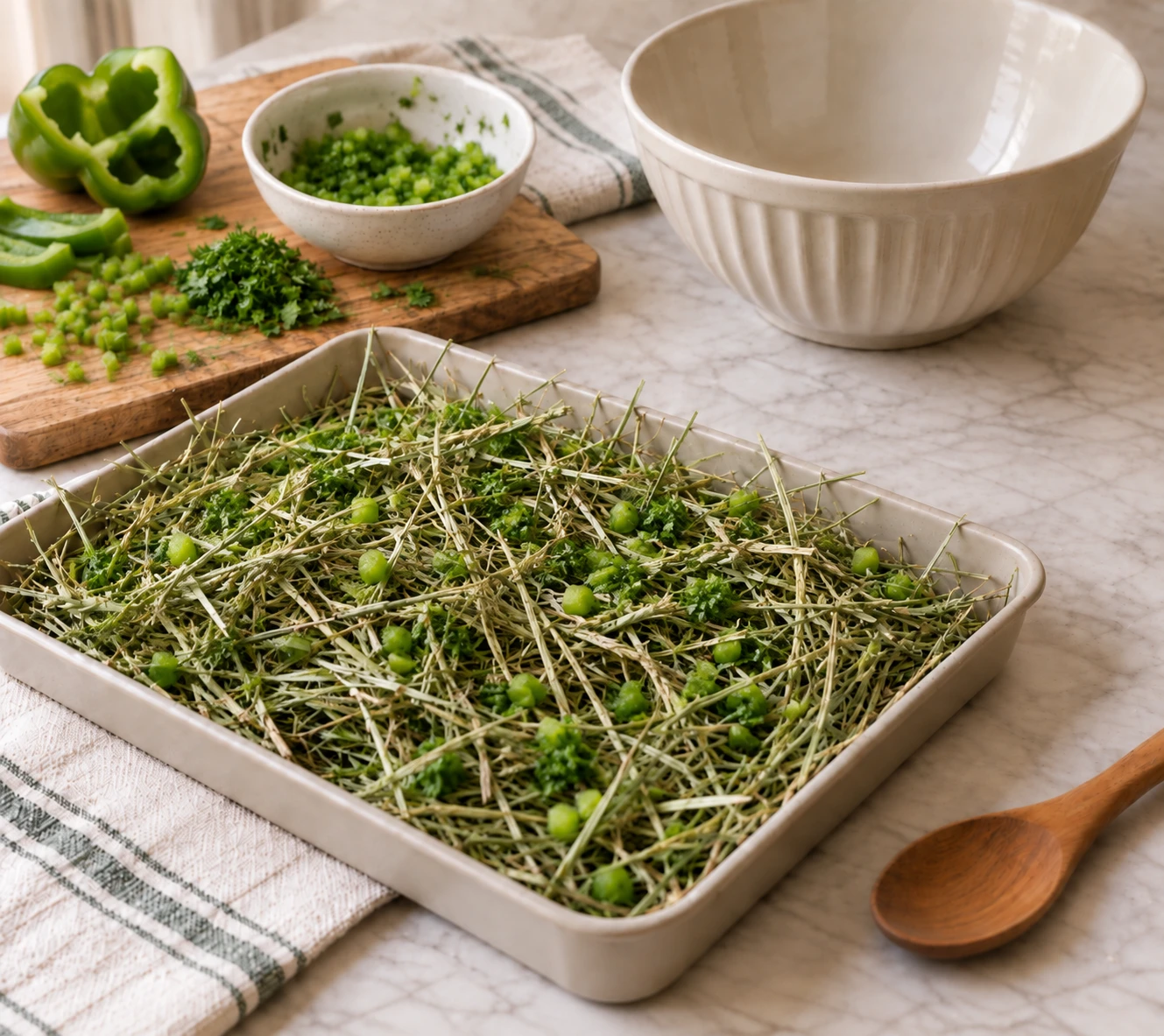
Scatter and Serve: Sprinkle the pepper and herb mixture lightly through the hay, lifting a few strands so some pieces settle below the surface instead of leaving everything on top. Serve immediately in a clean forage area, and remove any damp vegetable remnants and affected hay once the fresh food has been sitting out long enough to lose its freshness.
Made this recipe?
Tap the paw so other pet parents know it’s worth making.
Be the first to make it
Tips & serving
Offer the confetti immediately and count the bell pepper and herbs as part of your guinea pig's normal fresh vegetable intake rather than an additional serving. Keep unlimited suitable grass hay and fresh water available separately at all times. Introduce any unfamiliar ingredient gradually, and discuss major diet changes with a veterinarian who knows your guinea pig.
- Scattering small vegetable pieces encourages more searching and natural grazing behaviour during fresh-food time.
- Using familiar fresh foods turns part of the normal vegetable portion into simple enrichment without adding unnecessary ingredients.
- The loose hay format makes the activity easy to divide between several feeding spots for guinea pigs sharing an enclosure.
- Cut the pepper smaller than you would for a vegetable bowl so individual pieces genuinely disappear among the hay strands.
- Dry the washed vegetables carefully before chopping because excess moisture can quickly dampen the hay surrounding each piece.
- Scatter the mixture through several layers of hay instead of placing it only on top where every piece is immediately visible.
Storage
This recipe is best assembled immediately before serving. If necessary, the washed and fully dried chopped vegetables can be refrigerated separately in a clean airtight container for a short period, but do not store damp vegetables already mixed into hay because moisture can spoil the hay. Keep the main supply of grass hay in a cool, dry, well-ventilated place away from moisture, and discard hay that smells musty or shows any sign of mould.
Substitutions
Red, yellow, or orange bell pepper can replace green bell pepper when that is what your guinea pig normally eats, while keeping the same modest quantity and avoiding seasoned, cooked, or jarred peppers. If parsley is not part of your guinea pig's usual diet, leave it out or replace it with an appropriate amount of another guinea-pig-safe leafy food already tolerated, rather than introducing several unfamiliar plants in the same forage mix.
Small Pets recipe FAQ
Can I serve this fresh mix every day?
Treat it as an occasional extra, not a meal plan. Offer the confetti immediately and count the bell pepper and herbs as part of your guinea pig's normal fresh vegetable intake rather than an additional serving.
Is bell pepper okay for pets?
This recipe uses bell pepper in a small, pet-appropriate amount. Skip it if your pet has a known sensitivity, and read the foods-to-avoid note on this page before serving.
How long does Bell Pepper Herb Hay Confetti for Guinea Pigs keep?
This recipe is best assembled immediately before serving. If necessary, the washed and fully dried chopped vegetables can be refrigerated separately in a clean airtight container for a short period, but do not store damp vegetables already mixed into hay.
How should I introduce this fresh mix?
Start with a taste-size portion next to your pet's usual food, and hold off on serving more until you have seen that it agrees with them.
Can I use any colour of bell pepper?
Yes, plain fresh bell peppers of different colours can be used when they already suit your guinea pig's usual diet. Green pepper works well here because it is firm and easy to dice finely. Keep the quantity modest and serve it raw without oils, sauces, salt, or seasoning.
Can I leave the hay confetti in the enclosure all day?
The plain hay can remain available as normal, but the fresh pepper and herbs should be treated differently. Check the forage area after serving and remove wilted or damp vegetable remnants along with any hay they have noticeably moistened rather than allowing fresh produce to sit indefinitely.
Sources