Guinea pigs thrive on routines that let them search and forage, and this layered forage casserole transforms a simple hay setup into a more engaging daily activity. It brings together familiar ingredients and varied textures while keeping timothy hay at the center of the experience. This arrangement is designed for supervised enclosure enrichment rather than a quick snack. Prepare clean portions, remove leftovers regularly, and introduce new ingredients gradually. Major diet changes should always be discussed with a veterinarian. The layout can be adjusted to suit your guinea pigs' usual feeding habits and available space without replacing their regular balanced diet.
Safety first: Introduce new foods gradually and speak with your veterinarian before making major changes to your pet's diet.
Foods to avoid
Avoid using treated wood, sweetened dried fruit, seasoned ingredients, spoiled produce, or materials with unknown additives. Always check that forage items are suitable for guinea pigs before offering them.
Ingredients
Instructions
Prepare the base layer: Wash and dry fresh produce pieces before preparation. Place a clean shallow dish on the same work surface used throughout the process, then add a loose base layer of timothy hay. Keep the hay fluffy rather than packed tightly so guinea pigs can pull and explore it naturally.
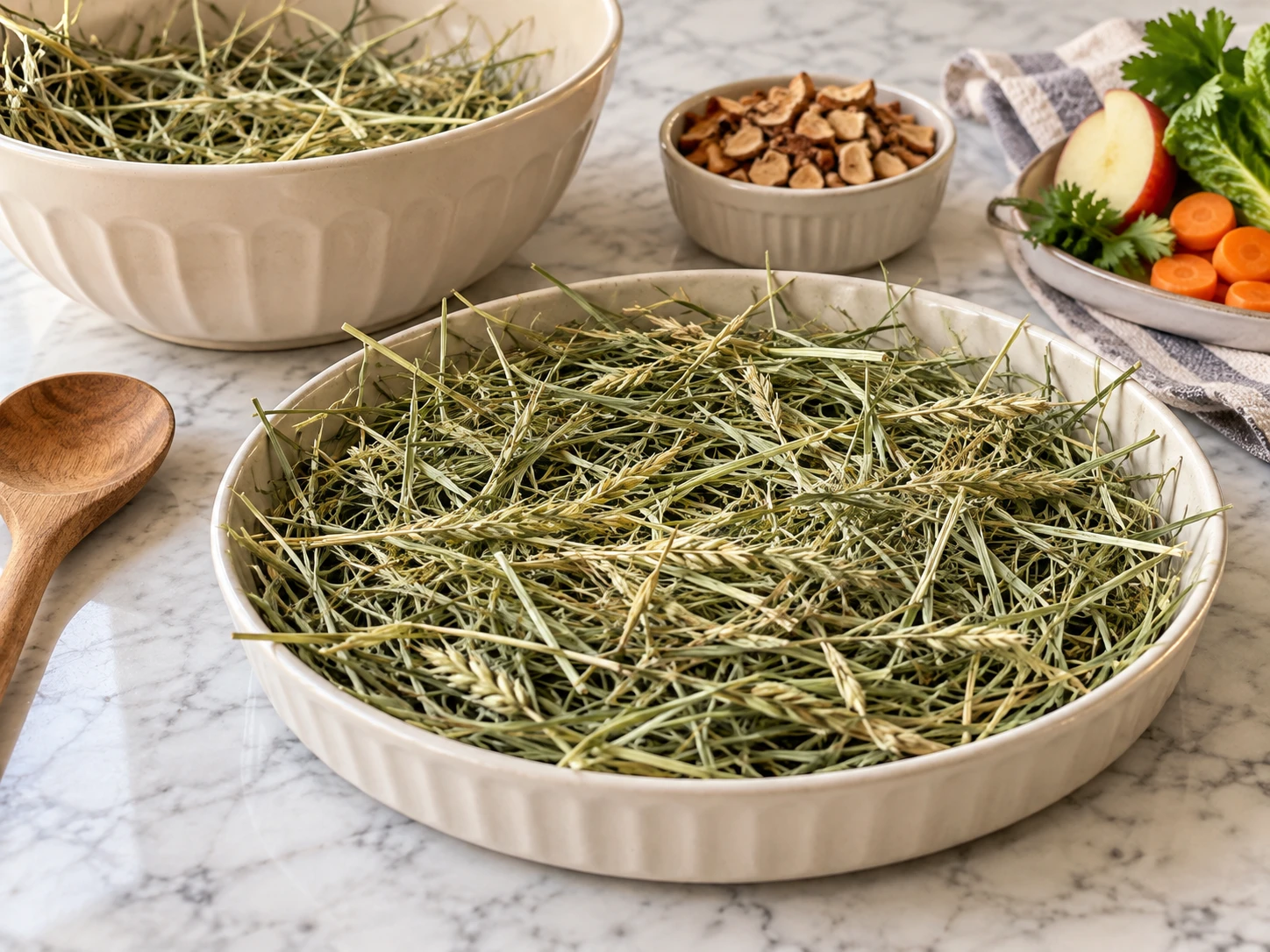
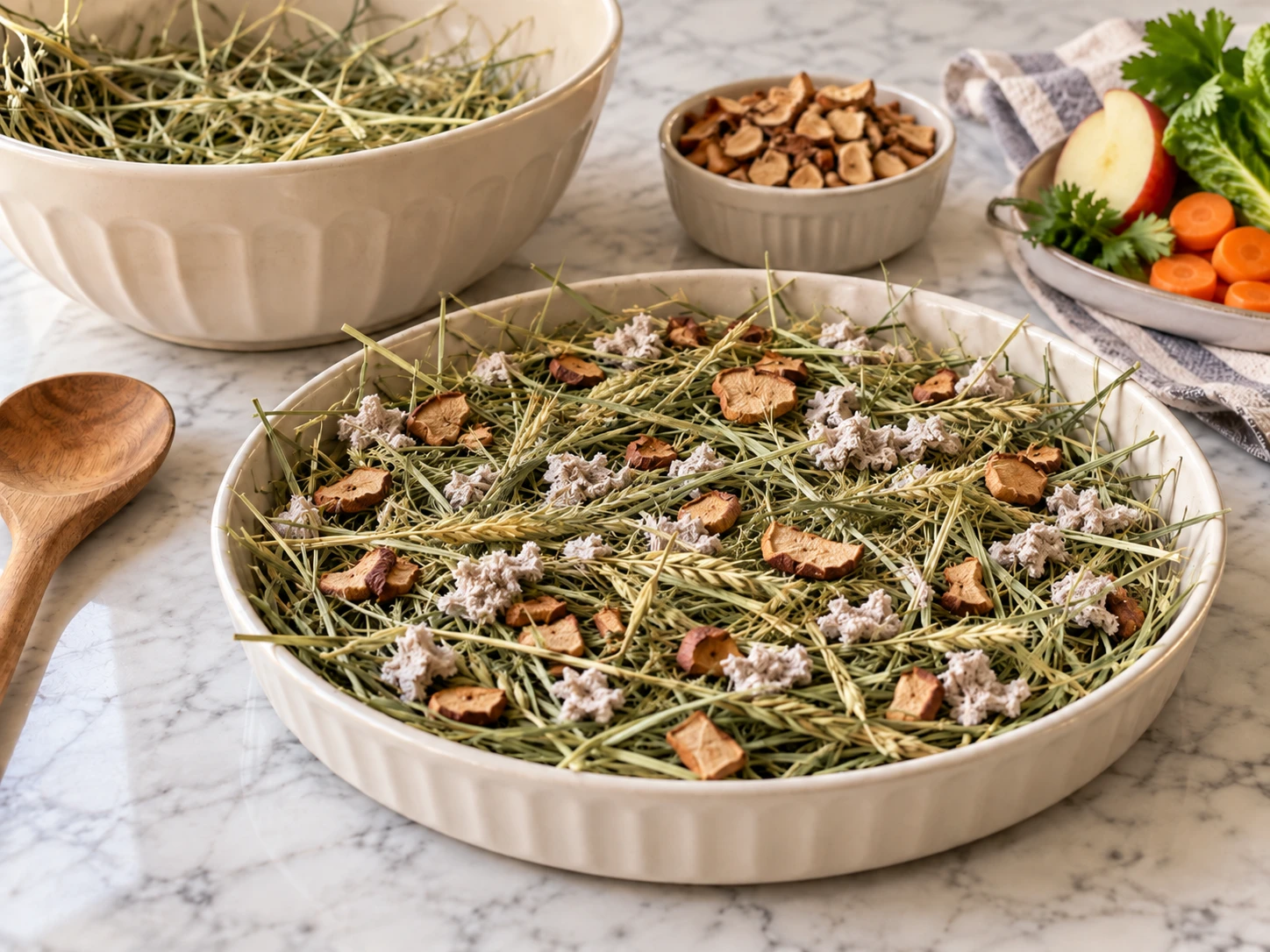
Add the forage textures: Scatter small amounts of dried applewood pieces and untreated paper bedding across the hay layer. Space the materials apart instead of creating a dense pile, which helps the arrangement stay interesting and allows easy movement through the forage.
Place fresh vegetables: Add romaine lettuce pieces, bell pepper pieces, and cilantro leaves in separate small sections on top of the hay. Keeping the fresh ingredients visible makes the arrangement inviting while preventing the mix from becoming overly wet or compact.
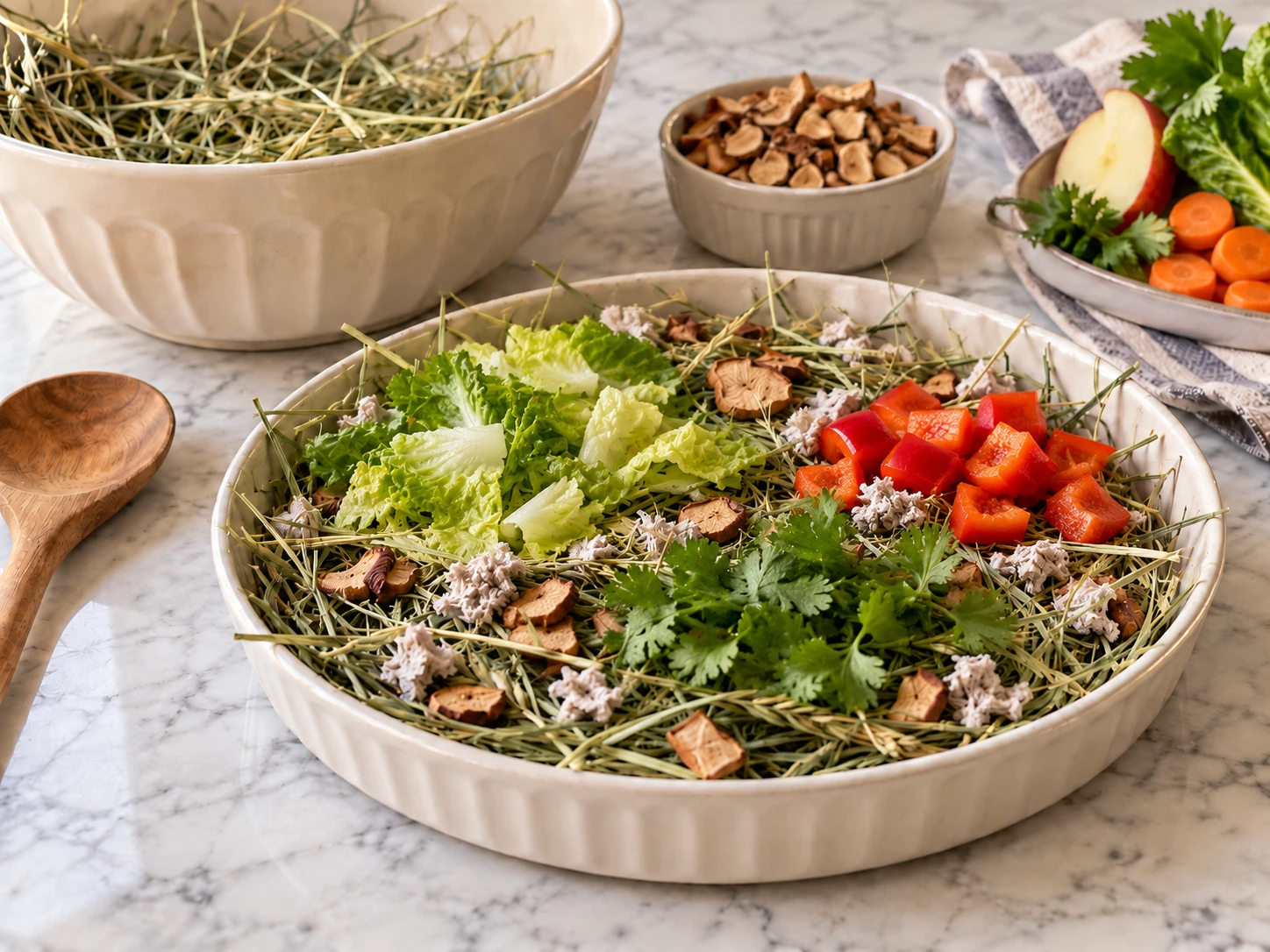
Finish the layered arrangement: Tuck a few strands of timothy hay around the fresh pieces to create a layered casserole style layout. Check that all materials are clean and that no ingredient pieces are too large, sharp, or difficult for a guinea pig to handle.
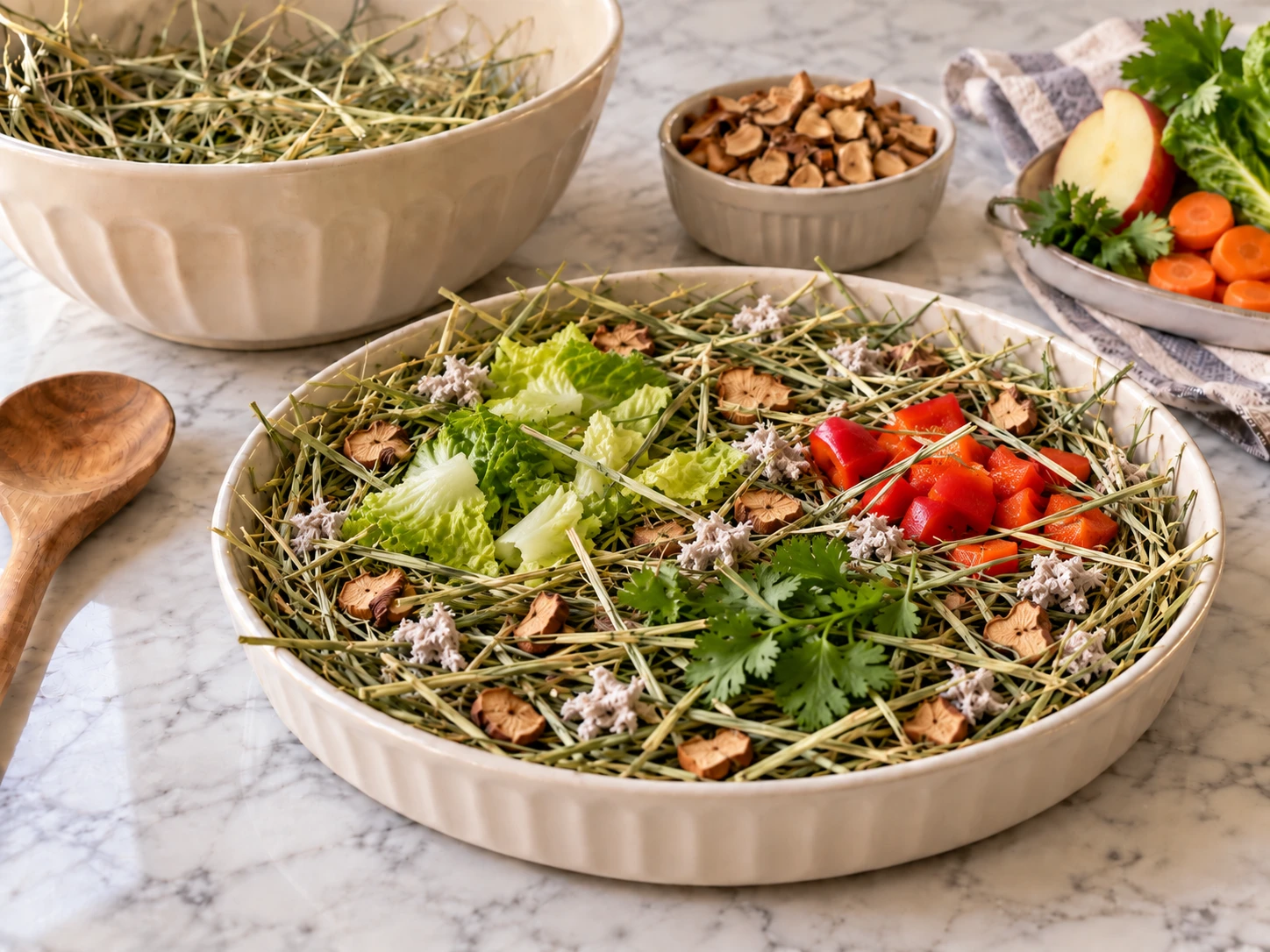
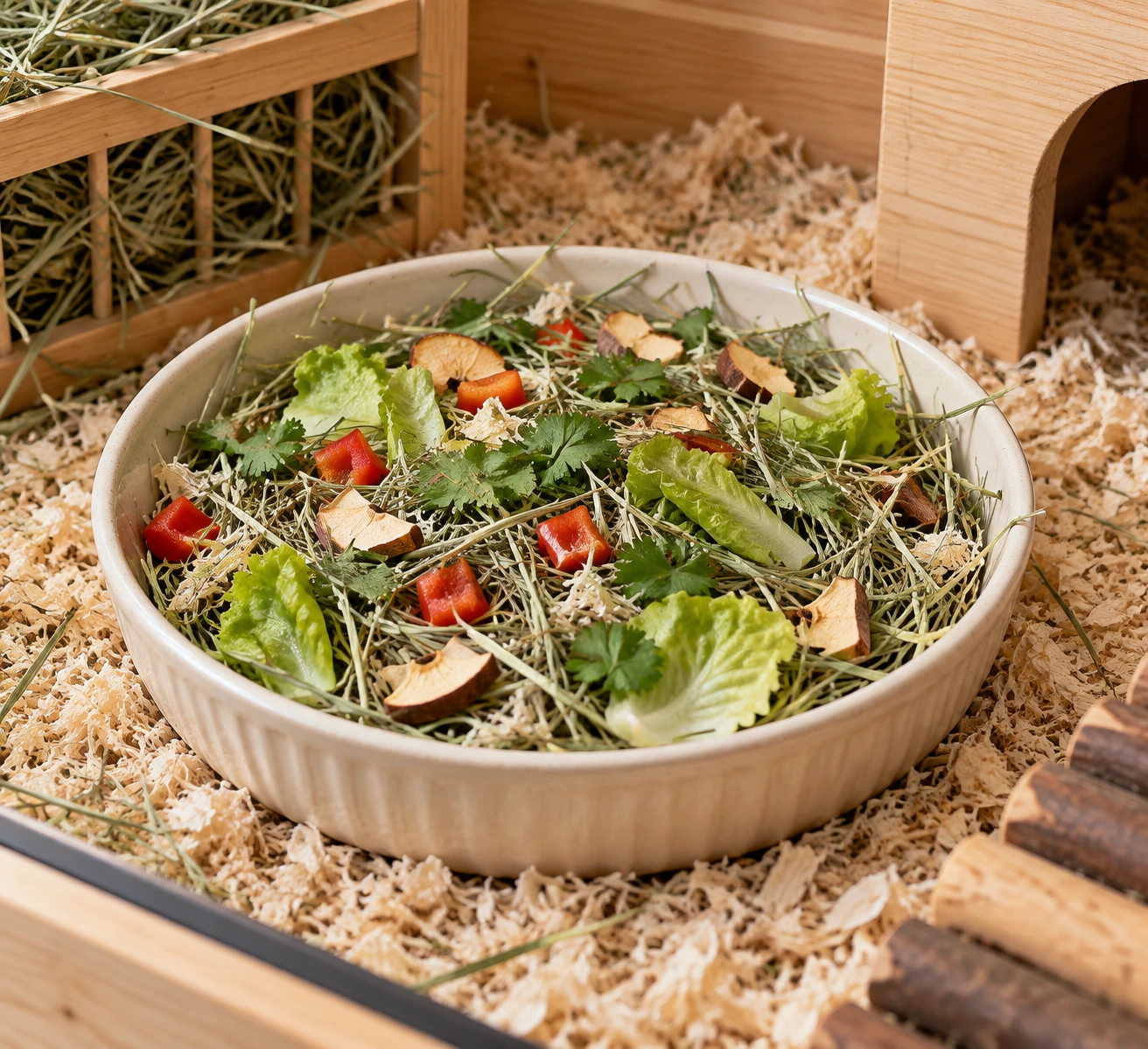
Offer and inspect the forage: Place the finished arrangement in the guinea pig enclosure during a supervised feeding period. Observe how quickly the fresh ingredients are used and remove damp or uneaten portions regularly to maintain a clean environment.
Made this recipe?
Tap the paw so other pet parents know it’s worth making.
Be the first to make it
Tips & serving
Offer this forage arrangement as a small enrichment activity alongside a guinea pigs usual hay and balanced diet. Remove uneaten fresh ingredients before they become damp or spoiled. Major diet changes should be discussed with a veterinarian before adjusting regular feeding routines.
- Encourages natural searching behaviors through layered textures and hidden forage areas.
- Creates an engaging feeding activity that adds variety to everyday guinea pig routines.
- Use fresh, clean ingredients and prepare small portions so the arrangement stays appealing and easy to inspect.
- Keep the hay loose instead of compressed because guinea pigs benefit from pulling and exploring the layers.
- Introduce unfamiliar ingredients separately before combining them into a larger enrichment arrangement.
Storage
Store unused dry hay and unopened preparation materials separately in clean containers away from moisture. Fresh vegetable portions should be refrigerated and used promptly, while any assembled leftover arrangement should not be stored for later feeding because mixed fresh ingredients can become damp.
Substitutions
If a listed fresh green is unavailable, replace it with another guinea pig safe leafy vegetable already familiar to your pet. Introduce substitutions gradually and discuss major diet changes with a veterinarian.
Small Pets recipe FAQ
Can Applewood Hay Layered Forage Casserole for Guinea Pigs replace my pet's regular diet?
Treat it as an occasional extra, not a meal plan. Offer this forage arrangement as a small enrichment activity alongside a guinea pigs usual hay and balanced diet. Remove uneaten fresh ingredients before they become damp or spoiled.
Is timothy hay okay for pets?
This recipe uses timothy hay in a small, pet-appropriate amount. Skip it if your pet has a known sensitivity, and read the foods-to-avoid note on this page before serving.
How do I store this fresh mix?
Store unused dry hay and unopened preparation materials separately in clean containers away from moisture. Fresh vegetable portions should be refrigerated and used promptly, while any assembled leftover arrangement should not be stored for later feeding.
How should I introduce this fresh mix?
Start with a taste-size portion next to your pet's usual food, and hold off on serving more until you have seen that it agrees with them.
Can this forage casserole replace regular hay feeding?
No. This arrangement is designed as an enrichment activity that uses timothy hay as part of the experience. Guinea pigs still need their normal daily feeding routine, and any significant dietary adjustments should be discussed with a veterinarian.
How often can I offer a layered forage arrangement?
The frequency depends on your guinea pigs existing diet, habits, and how quickly they finish fresh ingredients. Many owners use enrichment arrangements occasionally while keeping regular hay and feeding schedules consistent.
Sources